The Cosmic Kitchen
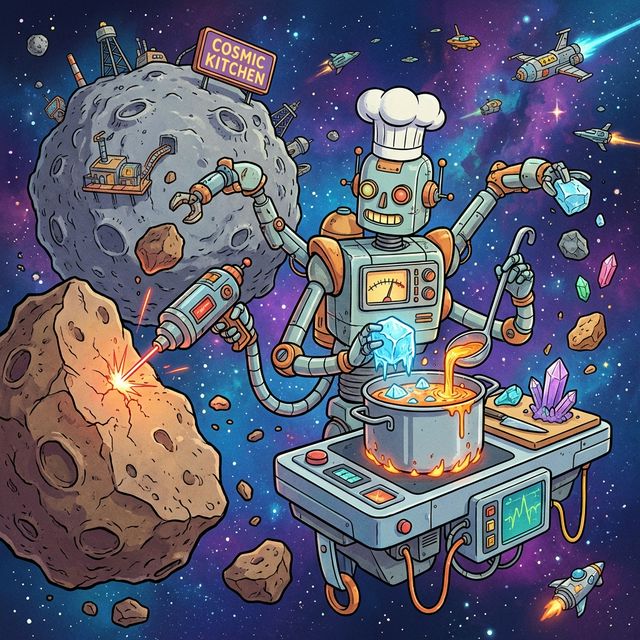
Hey there, space explorer! Welcome back to our asteroid mining adventure. If you've been following along from the previous chapters, you've just wrapped up Chapter 8, where we dove into the exciting world of digging up those cosmic treasures—using robot shovels, sunlight mirrors, magnets, and more to extract raw materials from asteroids. Now, imagine you've got a big pile of space rocks sitting in front of your robotic mining setup. They're full of goodies like metals, water ice, and other useful bits, but they're all mixed up like a jumbled puzzle or a messy kitchen after baking cookies. You can't just ship that chaotic mess back to Earth or use it as-is for building a space station. That's where processing comes in—it's like being a cosmic chef, sorting, separating, and transforming those raw ingredients into something deliciously useful.
In this chapter, we're going to break it all down step by step, just like turning flour, eggs, and chocolate chips into warm cookies. We'll cover why we process materials right there in space (on-site), the main methods for sorting and extracting the good stuff, how to handle special resources like water, and even some futuristic tricks like using tiny bugs or eco-friendly solvents. I'll use simple analogies from everyday life to make it fun and easy to picture—no fancy equations or tech jargon overload. Think of this as a hands-on cooking class in zero gravity. By the end, you'll see how processing turns asteroid "junk" into fuel, building blocks, and even high-tech gadgets. Let's get cooking—I mean, processing!
Why Process Materials in Space? The Smart Chef's Approach
First things first: Why not just grab the raw rocks and haul them back to Earth? Well, imagine you're on a camping trip and you've gathered a bunch of firewood, berries, and fish. If you process them at the campsite—chopping the wood, washing the berries, and filleting the fish—you save space in your backpack and make everything easier to carry or use right away. Same with asteroids. Processing on-site (called "in-situ" in space lingo, but think of it as "right where you are") has huge perks:
- Saves Energy and Money: Asteroids are massive, and shipping tons of useless dirt back to Earth would burn through rocket fuel like a car guzzling gas on a long road trip. By processing, you only send back the pure gold (literally, sometimes!) or use it locally for space bases.
- Handles Space Challenges: In zero gravity, everything floats around like confetti at a party. Processing helps contain the mess, turning loose particles into solid bars or gases you can store easily.
- Boosts Sustainability: Research from NASA and companies like TransAstra shows that processing lets us recycle space resources, reducing pollution from Earth mines. It's like upcycling old clothes into new outfits instead of buying more.
But it's not all smooth sailing—or floating. Challenges include no gravity to help separate heavy from light stuff (like how sand settles in water on Earth), extreme cold or heat, and the need for robots to do the work since humans aren't there yet. Solutions? Smart tech like magnets, lasers, and AI that act like automated kitchen gadgets. Okay, now let's roll up our sleeves and explore the steps.
Step 1: Prepping the Raw Stuff – Crushing and Grinding in Zero-G
Before you can separate the treasures, you need to break down the big chunks. This is like smashing graham crackers for a pie crust. In asteroid mining, we start with beneficiation—a fancy word for "sorting prep," but it's basically crushing the ore into smaller pieces.
How It Works Simply
Robotic crushers or grinders (like giant blenders) smash the asteroid material into powder or gravel. In space, we use spinning drums or hammers powered by solar panels to avoid dust flying everywhere. Enclose it in a bag or dome—like a sealed food processor—to keep particles contained.
Analogy Time
Picture making a smoothie. You chop fruits first so the blender can mix them evenly. Same here: Smaller pieces make it easier to sort metals from rocks.
Real-World Example
Concepts from the Colorado School of Mines suggest using kinetic drills (like gentle jackhammers) that tap and break without creating too much dust. Fun fact: One asteroid chunk could be ground into enough powder to fill a swimming pool!
This step is crucial because asteroids aren't uniform—they're like fruitcakes with nuts, fruits, and cake all mixed. Crushing exposes the valuables inside.
Step 2: Sorting the Goodies – Separation Methods
Now that you've got your crushed mix, it's time to separate the wheat from the chaff—or metals from worthless rock. This is where the magic happens, and there are tons of methods, each like a different kitchen tool for peeling, sifting, or straining. We'll cover the main ones in detail, starting simple and building up.
Magnetic Separation: The Magnet Trick
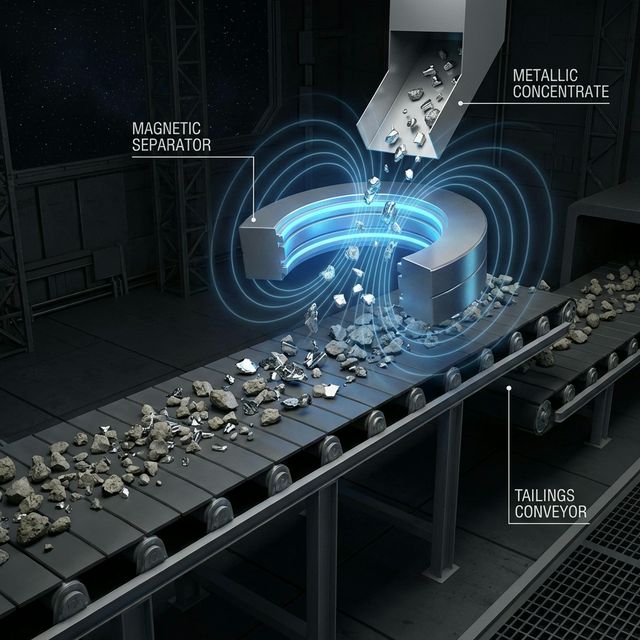
Simple Explanation: Many asteroids have iron and nickel, which are magnetic like fridge magnets. A robotic rake or conveyor belt with electromagnets pulls these metals out, leaving non-magnetic stuff behind.
Details and Flow: The crushed material floats onto a belt (in a contained chamber). As it moves, strong magnets attract the iron bits, sorting them into a separate pile. It's efficient and uses little energy—perfect for space where power comes from the Sun.
Analogy: Like using a magnet to pick up spilled pins from a carpet while leaving the fluff behind. Easy and mess-free!
Pros and Challenges: Great for M-type asteroids (the metallic ones from Chapter 3). Challenge? In zero gravity, particles might stick together, so we add gentle vibrations like shaking a sieve.
Other Twist: Combine with thermal heating to make metals easier to pull—heat softens the mix like warming butter for spreading.
Electrostatic Separation: The Static Cling Method
How It Works: Remember rubbing a balloon on your hair to make it stick? That's static electricity. In space, we charge the crushed particles (using solar-powered devices) so different materials cling to oppositely charged plates or drums.
Step-by-Step: Feed the powder into a chamber. Zap it with electricity. Metals and rocks get different charges and stick to rollers that spin them apart. Collect the sorted piles in bags.
Analogy: Sorting laundry by static—socks stick to shirts, but you peel them off. Here, we use that "stickiness" on purpose.
Real Example: NASA's ideas for moon mining adapt this for asteroids. It's low-energy and works well for dry, powdery regolith (asteroid surface dirt).
Thermal Separation: Heating Things Up
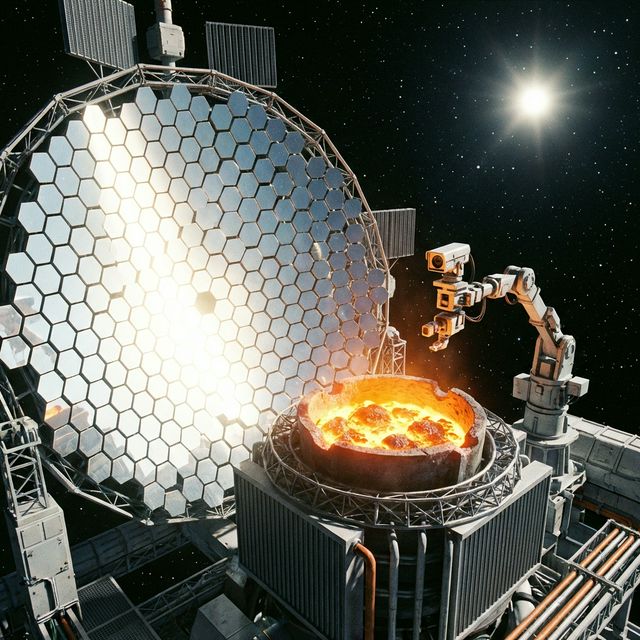
Simple Breakdown: Heat the material to melt or vaporize parts. For example, use solar furnaces (big mirrors focusing sunlight like a kid with a magnifying glass on ants—but for good!).
Flow: Enclose the ore in a chamber. Mirrors concentrate sunbeams to 3,000+ degrees Fahrenheit, melting metals into liquid you can pour and cool into bars. Volatiles (gassy stuff like water) evaporate and get collected separately.
Analogy: Baking cookies—heat separates dough into solid treats and yummy smells (gases). In space, the "smells" are useful fuels!
Advanced Note: Pyrometallurgy is a type of this, using heat without oxygen to avoid fires in vacuum. From search info, the carbonyl process uses heat and gases to turn metals like nickel into vapor for easy collection.
Optical Mining: Sun-Powered Vapor Blasts
Details: This futuristic method from companies like TransAstra uses giant mirrors to blast concentrated sunlight onto the asteroid, vaporizing rock and releasing gases or metals.
How It Flows: Wrap the asteroid chunk in a big bag (like a balloon). Focus sunlight to heat spots, cracking the surface. Gases escape into the bag for collection; solids get sorted later.
Analogy: Like using sunlight to pop popcorn—heat expands and separates kernels from husks.
Engaging Fact: In demos, this melts rock at 3,500 degrees without drills. Imagine a space robot "sunbathing" an asteroid to mine it!
Other Cool Methods: Chemical and Beyond
Don't stop at physical sorting—let's get chemical!
Chemical Leaching (Hydrometallurgy): Soak the crushed ore in liquids (like acids or solvents) to dissolve metals. In space, use water from the asteroid or eco-friendly deep eutectic solvents (DES)—mixtures of safe chemicals like choline chloride and ethylene glycol. Add oxidizers (like iodine) to "etch" metals out.
Simple Flow: Mix ore with solvent in a tank. Stir (with robots). Metals dissolve; filter the liquid and evaporate to get pure stuff.
Analogy: Like steeping tea—hot water pulls flavor from leaves, leaving soggy bits behind.
New Twist from Research: A 2023 study used DES on meteorites (asteroid proxies) to extract iron-nickel without water, perfect for dry space.
In-Situ Fluidization: Pump hot gases or fluids into the asteroid to loosen and extract materials without full digging. Like injecting steam into tough soil to pull out roots.
All these methods mix and match—like a chef combining recipes—for efficiency.
Step 3: Special Focus – Turning Water into Fuel
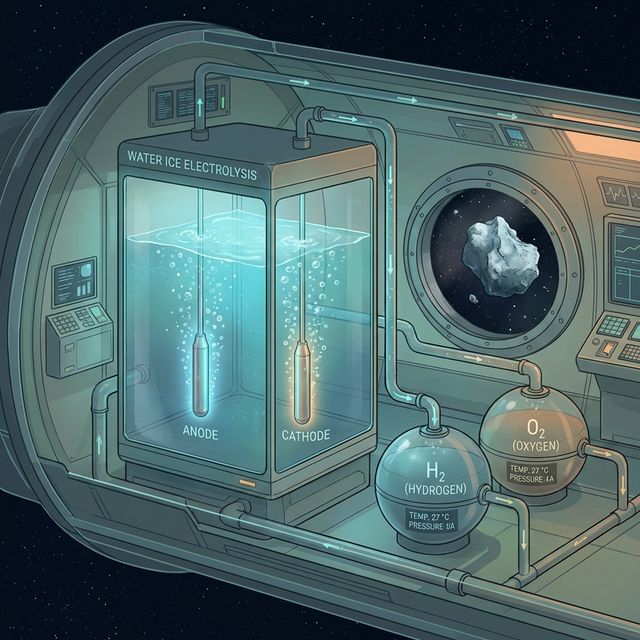
Water ice is asteroid gold! C-type asteroids (from Chapter 3) have it frozen in rocks.
How Electrolysis Works: Zap water with electricity (from solar panels) to split it into hydrogen and oxygen gases—like breaking an egg into yolk and white.
Step-by-Step: Heat ice to liquid (gently, to avoid explosions). Run current through it in a cell. Gases bubble out; store in tanks for rocket fuel or breathing air.
Analogy: Like a battery in reverse—electricity "unzips" water molecules.
Fun Application: NASA's OSIRIS-REx mission hinted at water on Bennu; processing it could fuel Mars trips, saving launches from Earth.
Step 4: Refining and Building – Melting, 3D Printing, and In-Situ Utilization
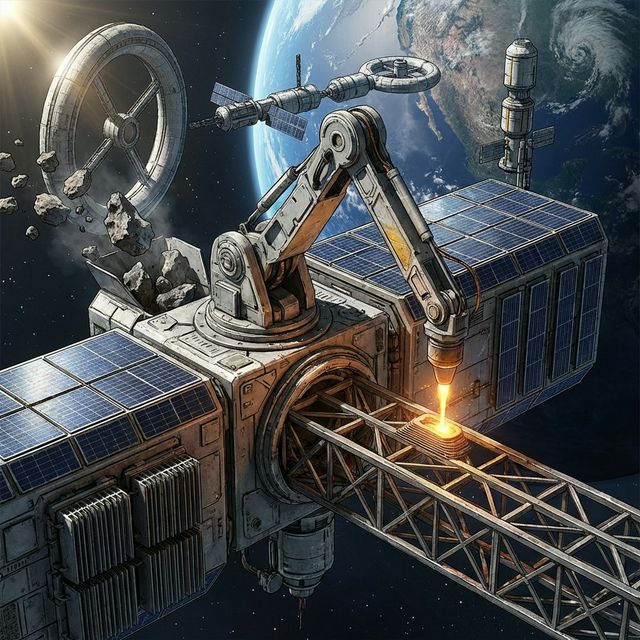
Once separated, refine for purity.
Solar Furnaces for Melting: Mirrors heat metals to liquid, pour into molds for bars. Like melting chocolate for candy.
3D Printing: Use mined metals as "ink" in space printers to build tools or habitats on-site. Analogy: Lego blocks from recycled plastic.
In-Situ Utilization (ISRU): Use resources right there—no shipping! Build fuel depots or shields from rock waste. It's like using campfire ashes to fertilize a garden.
Wrapping It Up: From Rocks to Rockets – The Big Picture
Whew, we've turned those floating rocks into fuel, metals, and more! Processing is the bridge between extraction (Chapter 8) and transport (coming in Chapter 10). It's engaging because it's creative—like alchemy in space—and covers every angle: physical sorting, chemical tricks, sun power, and even bug helpers (biomining: bacteria "eat" rocks to extract metals, like yeast rising bread).
Remember, this is still mostly concepts, but missions like Psyche are testing the waters. What if we could process an asteroid to build a whole space city? Mind-blowing, right? Stay tuned for Chapter 10, where we figure out how to bring these treasures home or keep them zooming in orbit. Got questions? Drop them in the comments—let's keep the conversation floating!
Key Citations:

Santhosh M Kunthe
✉️ santhoshmkska@gmail.com
📞 +91 9110460837