The Power of ISRU
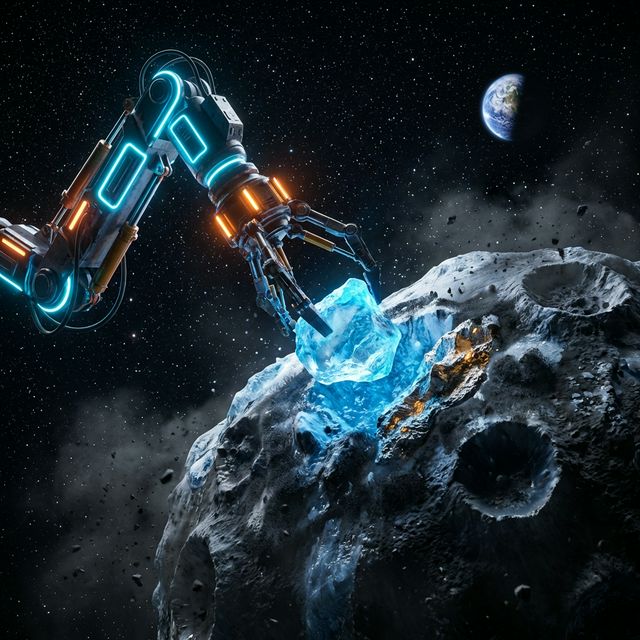
You’ve reached the asteroid. Your robot miners have scooped up water-rich dirt and metallic chunks. Now what? Do you try to lug everything back to Earth, or do you turn the asteroid itself into a handy workshop and fuel stop? This chapter explores the smartest answers to that question. We’ll keep everything straightforward—no heavy equations, just clear pictures, everyday analogies, and real-world examples that make the ideas stick.
Think of traditional space travel like driving across a desert with every drop of gas, every snack, and every spare tire crammed into your car. The car is heavy, the trip is expensive, and if you run out of anything you’re stuck. ISRU flips the script. It’s like discovering you can siphon fuel from roadside cacti, cook meals from desert plants, and even patch your tires with local clay. Suddenly the journey becomes sustainable.
What Exactly Is ISRU?
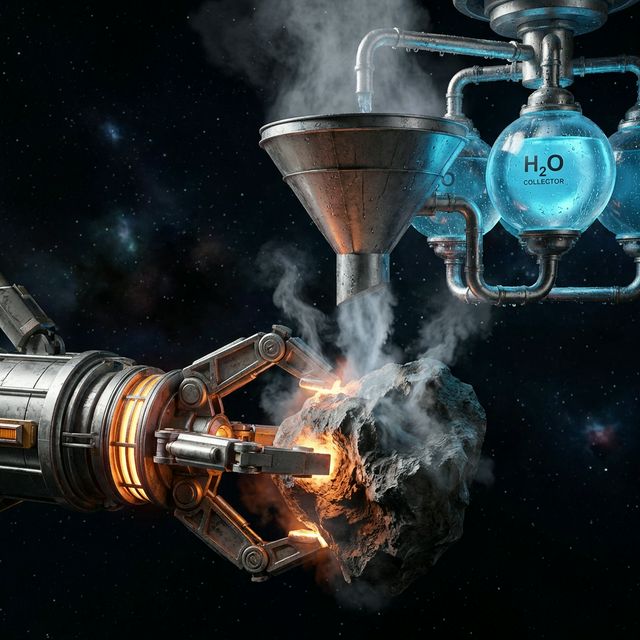
ISRU stands for In-Situ Resource Utilization. In plain English: “use what’s already there.” Instead of launching every kilogram of water, oxygen, or metal from Earth’s deep gravity well (which costs a fortune), you harvest and process materials on the asteroid, the Moon, or Mars. NASA describes it as “harnessing local natural resources at mission destinations” to make exploration cheaper and longer-lasting.
Water is the superstar. Many asteroids (especially C-type) contain water locked in minerals or as ice. Heat the rock and the water turns to vapor. Collect it, chill it, and you have liquid water. Run electricity through it (electrolysis) and you split H₂O into hydrogen and oxygen—perfect rocket fuel. The same water can become drinking water, breathable oxygen, or even fertilizer for space gardens.
Why ISRU Makes Transporting Resources Possible
Without ISRU, every mission to an asteroid would need to carry all its return fuel from Earth. That fuel itself needs fuel to launch, so the rocket grows enormous and the price skyrockets. With ISRU you produce propellant on-site. Studies show that water extracted from a small near-Earth asteroid could be turned into enough propellant to send a spacecraft back to lunar orbit or even to low-Earth orbit.
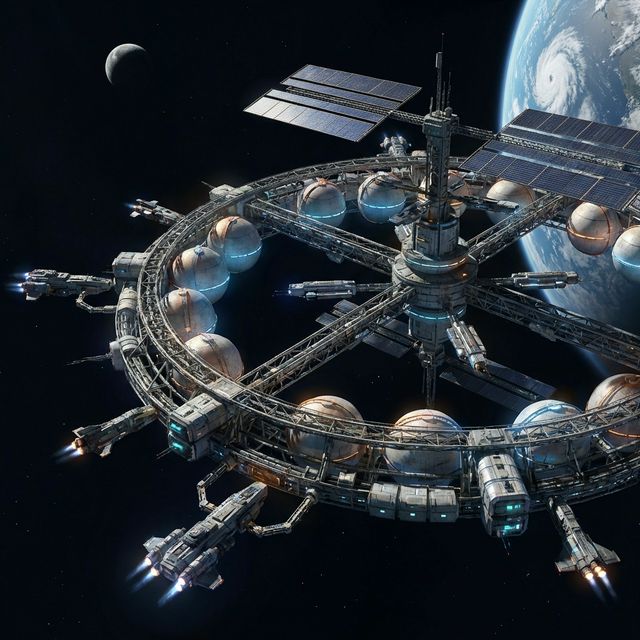
Picture a future “orbital gas station” parked between Earth and the Moon. Spacecraft stop there, top up with asteroid-made fuel, and continue to Mars or beyond. No more 90 % of a rocket’s mass being propellant launched from Earth. That single change could make regular travel to the Moon or Mars routine.
Two Main Paths: Use It in Space or Bring It Home
Path 1 – Stay in Space (the smarter near-term choice)
Most experts agree the first profitable use of asteroid resources will be in space, not on Earth. Here’s why:
- Launching from an asteroid is easy because gravity is tiny. Escape velocity can be as low as a few meters per second—throw a baseball and it never comes back!
- You can build fuel depots, radiation shields, solar-power satellites, or even parts for space stations using asteroid iron, nickel, and aluminum.
- Water becomes propellant for returning spacecraft or for new missions.
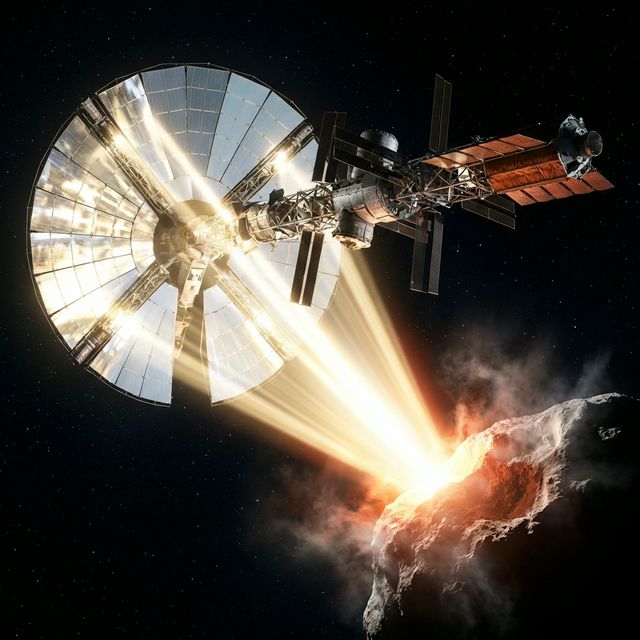
Real concept: NASA and private studies have looked at “optical mining.” Giant mirrors focus sunlight to heat asteroid rock, driving out water vapor that freezes into ice bags. One modest spacecraft could collect 100 metric tons of water from a 10-meter asteroid and deliver it to a stable orbit near the Moon.
Path 2 – Bringing Resources Back to Earth
This is harder and more expensive, but not impossible for high-value items.
- Process the asteroid on-site and return only pure platinum, gold, or rare metals in small, heat-shielded capsules.
- Some wild (but studied) ideas: gently nudge an entire small asteroid (a few meters across) into orbit around the Moon using solar-electric thrusters, then mine it safely near Earth.
- Another idea: shape refined metal into a glider or “artificial meteorite” that survives re-entry and lands in a desert.
Sample-return missions have already proved we can bring asteroid material home—OSIRIS-REx returned 121 grams from Bennu, Hayabusa2 brought back 5.4 grams from Ryugu. These were tiny scientific samples, but the technology is the same foundation for larger shipments later.
Simple Table: Asteroid Resources and What We Can Do With Them
| Resource | Where It Comes From | ISRU Process | Use in Space | Possible Earth Return? |
|---|---|---|---|---|
| Water / Ice | C-type asteroids | Heat rock → collect vapor → freeze | Rocket fuel, drinking, oxygen, gardens | Small amounts (refined) |
| Hydrogen & Oxygen | Split from water | Electrolysis | Propellant for spacecraft | Not practical |
| Iron, Nickel | M-type & S-type asteroids | Magnetic separation or melting | Construction beams, tools, 3D printing | Refined metals |
| Platinum-group metals | M-type asteroids | Chemical processing | Electronics, catalysts | Yes – high value |
| Volatiles (CO₂, etc.) | Carbon-rich rocks | Heating & chemical capture | Fuel, plant growth | Rarely |
How Do We Actually Move the Stuff?
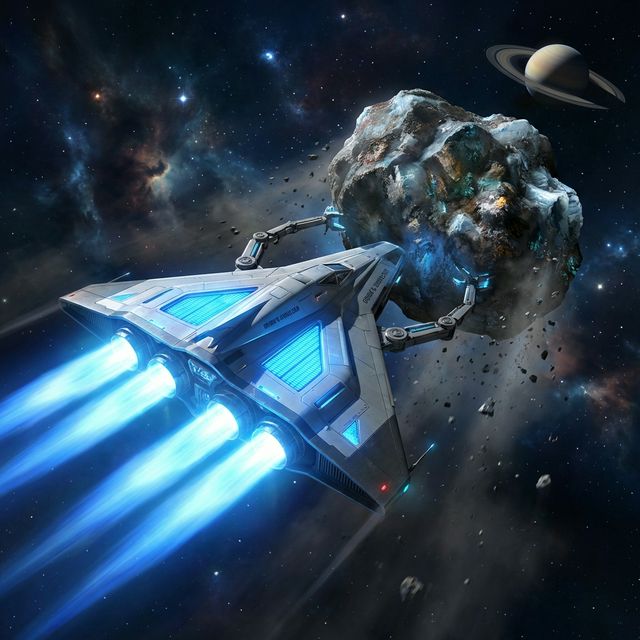
Once processed, you have choices:
- Solar-electric propulsion (ion thrusters) – slow but extremely fuel-efficient for moving refined cargo or even whole small asteroids.
- Asteroid-derived propellant – burn some of the hydrogen/oxygen you just made to push your loaded spacecraft home.
- Aerobraking – use Earth’s atmosphere to slow down returning capsules so you don’t need as much fuel.
- Tethers or space elevators (future idea) – one day a long cable from a moon like Phobos could fling payloads toward Earth with almost no fuel.
Challenges – Let’s Be Honest
Microgravity makes everything float—drills spin you instead of digging, dust clouds can blind cameras or jam gears.
Energy: You need reliable solar power or small nuclear reactors.
Economics: The first missions are expensive; profits may come only after several test runs.
Legal questions: Who owns the material? International rules are still being worked out, but the U.S. and others have passed laws allowing companies to keep what they mine.
Yet every challenge has an Earth parallel. Miners on Earth deal with dust, low-oxygen tunnels, and remote locations. Space miners will simply do it with robots, clever engineering, and lessons learned from the Moon and Mars.
Real Missions and Companies Already Working on This
- NASA’s OSIRIS-REx and the upcoming OSIRIS-APEX continue to teach us how to touch, sample, and understand asteroids.
- Companies like AstroForge are testing metal-refining in space.
- Concepts such as the Apis mission (optical mining) aim to deliver 100 tons of water to lunar orbit from one Falcon 9 launch.
- The Keck Institute studied capturing a small asteroid and bringing it to cislunar space—entirely doable with today’s solar-electric technology.
What This Means for You and the Future
In your lifetime we could see the first asteroid-derived fuel powering satellites, tourist flights to the Moon, and cargo runs to Mars. Kids watching this video series might one day work at an orbital refinery, turning space rocks into rocket fuel the way today’s workers refine oil on Earth.
The beauty of ISRU is that it turns a one-way trip into a cycle. You go out, you use what’s there, you come back stronger—and you leave the asteroid a little lighter but the solar system a little more ours.
What’s Next? Now that we know how to process and move resources, Chapter 11 explores the tested technologies that already give us artificial gravity—because once we start living and working on these floating rocks, floating ourselves becomes a real problem!
Key Citations
- NASA: In-Situ Resource Utilization (ISRU)
- Wikipedia: In situ resource utilization
- Wikipedia: Asteroid mining
- Congressional Research Service: Space Resource Extraction
- NASA TechPort: Demonstration of Optical Mining
- Forbes: Turning Near-Earth Asteroids Into Fuel Dumps
- Interesting Engineering: The future of asteroid mining

Santhosh M Kunthe
✉️ santhoshmkska@gmail.com
📞 +91 9110460837