Why Digging in Space Is Trickier Than on Earth
Hey there, space explorer! Welcome to Chapter 8 of our asteroid mining adventure. If you've been following along, we've journeyed from spotting these cosmic rocks to landing on them safely. Now, it's time for the fun part: actually digging in and grabbing those treasures. Imagine you're a kid at the beach, but instead of building sandcastles, you're scooping up gold nuggets from a floating island in the sky. Sounds exciting, right? But in space, things float away, there's no air, and everything's super cold or hot. Don't worry—we'll break it all down super simply, like chatting over a backyard barbecue. We'll use everyday analogies, throw in some "what if" scenarios, and cover every single method out there, from the basics in our syllabus to wild ideas scientists are dreaming up. By the end, you'll feel like you could mine an asteroid yourself (well, almost). Let's dive in—pun intended!
The Gravity of the Situation
Before we grab our space shovels, let's talk common sense. On Earth, gravity keeps dirt in place when you dig a hole. In space, on an asteroid? Nope—everything floats like confetti in a wind tunnel. Asteroids spin, sometimes wobble, and their surfaces are often loose dust or rubble, like a giant pile of gravel that's been shaken up. Plus, communication delays from Earth mean you can't just yell "Stop!" if something goes wrong—it could take minutes or hours for your signal to reach the robot miner. That's why everything relies on smart tech, like AI acting as a "brainy sidekick" that makes decisions on its own.
The goal? Extract stuff like water (for fuel or drinking), metals (iron for building, platinum for gadgets), and volatiles (gassy bits like hydrogen). We want to do this efficiently, without wasting energy or creating a mess of space junk. Pros of space mining: Endless resources, no Earth pollution. Cons: Super expensive right now, and tech is still in baby steps. But missions like NASA's OSIRIS-REx (which gently "kissed" asteroid Bennu and scooped up dust with a puff of gas) show it's possible. Okay, ready? Let's explore the methods one by one, starting with the hands-on stuff.
Mechanical Mining: The Robot Shovel Approach
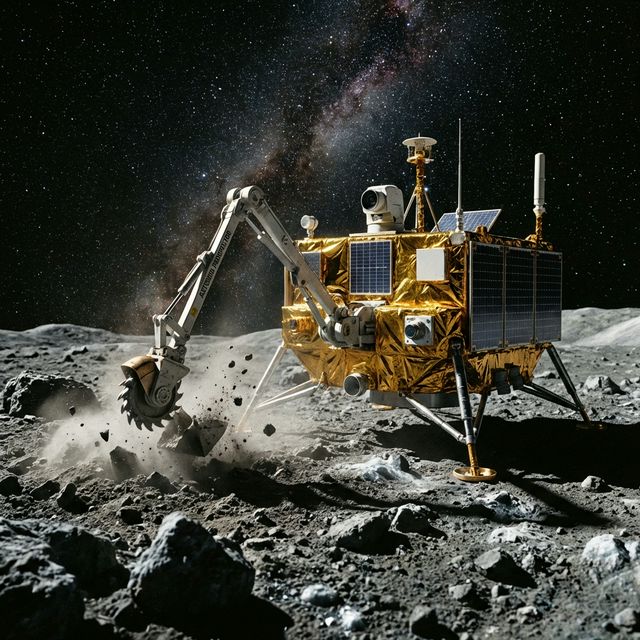
Think of mechanical mining as using a good old-fashioned shovel or drill, but robo-fied for space. It's like gardening in your backyard—poking, scooping, and pulling out weeds—but in zero gravity, where the "soil" (called regolith) floats away if you're not careful.
How It Works
You send a robotic lander with arms, drills, or scoops. It anchors itself (maybe with hooks or thrusters) and starts breaking up the surface. Drills twist in like a corkscrew opening a bottle, while scoops grab chunks like a claw machine at an arcade. For tougher spots, kinetic drilling comes in: That's like hammering nails with quick impacts to crack the rock without spinning the whole asteroid.
Step by step: 1) Anchor the robot so it doesn't float off. 2) Scan the spot with cameras or sensors (like X-ray vision to see what's inside). 3) Drill or scoop gently to avoid dust clouds. 4) Collect the bits in a bag or container—maybe under a big canopy net to catch flying pieces.
Analogies and Fun Examples
Imagine trying to dig a hole in a swimming pool: Everything bounces around! Or picture a vacuum cleaner robot on your floor, but it's sucking up gold dust from a bouncy castle. Real example: Japan's Hayabusa2 mission fired a tiny bullet into asteroid Ryugu to kick up dust, then scooped it like a quick snack. Pros: Simple and reliable for solid metals like iron in S-type asteroids. Cons: Creates dust that can clog machines or block sunlight (solar panels hate that). Automation magic: AI "smart helpers" adjust the drill speed if the rock is harder than expected, saving energy and time.
Why It's Engaging: What if you could 3D-print a drill from asteroid metal right there? That's the future—self-building robots! Fun fact: Some asteroids are like rubble piles, so mechanical mining feels like picking apart a giant Lego set.
Optical Mining: Magnifying Glass Magic
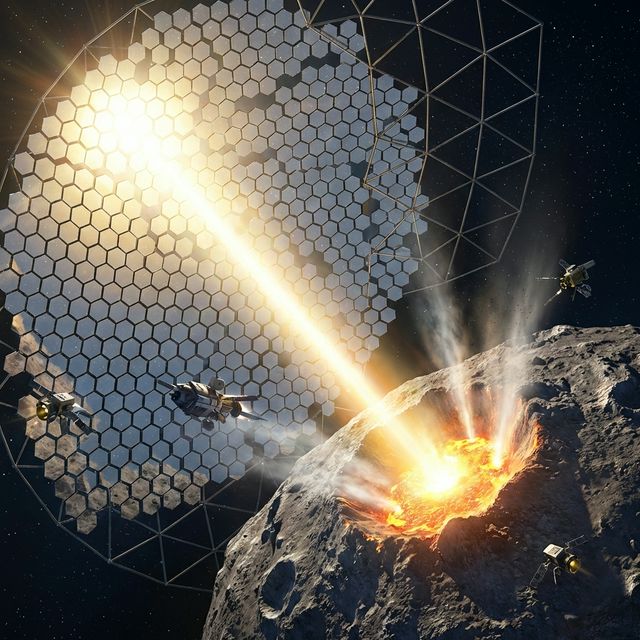
Now, let's get sunny! Optical mining uses light—yep, sunlight—to heat things up without touching them. It's like kids using a magnifying glass to burn ants (but way cooler and less mean—we're melting ice for water).
How It Works
Mirrors or lenses focus sunlight onto the asteroid's surface, heating it until ice or volatiles turn to gas. Then, you capture that gas in a cold trap (like a fridge condensing steam). For water-rich C-type asteroids, this vaporizes the ice without digging holes. Step by step: 1) Position big mirrors (solar concentrators) like satellite dishes. 2) Beam the light to a spot. 3) Heat until stuff bubbles out. 4) Collect the gas or melted bits.
Analogies and Fun Examples
Ever melted chocolate in the sun? Same idea, but scaled up to roast a rock! Or think of a solar oven cooking hot dogs—here, it's "cooking" water out of ice. Concept from NASA: They imagine "optical bees" (tiny robots) swarming to focus light. Pros: No moving parts, so less breakdown; perfect for icy spots. Cons: Needs lots of sun (far asteroids get dim), and heat can crack the surface unexpectedly. Automation: AI points the mirrors precisely, tracking the asteroid's spin like a smart telescope.
Why It's Engaging: Imagine turning sunlight into free fuel—talk about green energy in space! Quiz time: If an asteroid has 10% water, how much fuel could you make? (Hint: Split water into hydrogen and oxygen—boom, rocket power!)
Magnetic Mining: The Giant Magnet Trick
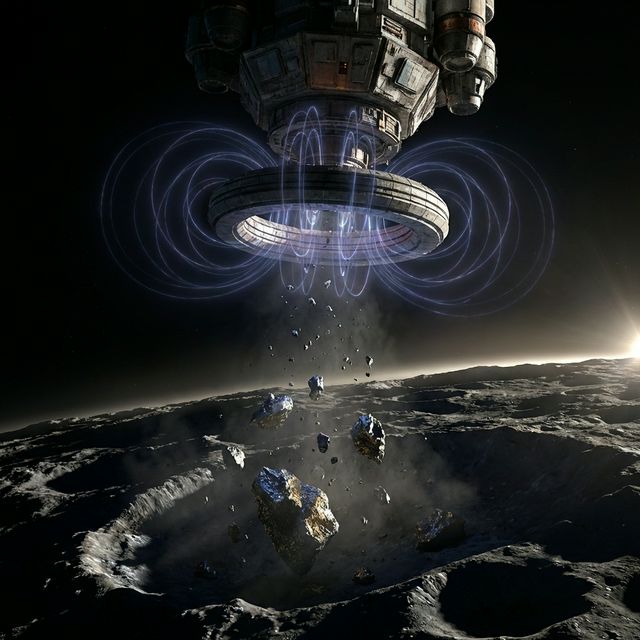
Magnetic mining is like fishing with a magnet in a pond full of nails. Super simple for metal-heavy asteroids.
How It Works
Use electromagnets (powered by solar panels) to attract magnetic metals like iron or nickel. Rake-like collectors sweep the surface, pulling bits into a hopper. For finer work, sort particles post-dig. Step by step: 1) Scan for magnetic zones. 2) Hover or anchor the magnet tool. 3) Activate and rake. 4) Collect in bags.
Analogies and Fun Examples
Remember fridge magnets sticking to metal? Scale that up—it's like a junkyard crane lifting cars, but in space. NASA's Psyche mission (heading to a metal asteroid) could test this. Pros: Low energy for iron-rich M-types; no dust mess. Cons: Useless on non-magnetic rocks like silicates. Automation: AI analyzes the haul in real-time, sorting good from bad like a smart recycling bin.
Why It's Engaging: What if an asteroid like Psyche is a giant metal ball worth trillions? Magnetic rakes could make you space-rich! Fun fact: Some asteroids are 90% metal—pure treasure!
Thermal and Chemical Mining: Heat It Up or Dissolve It
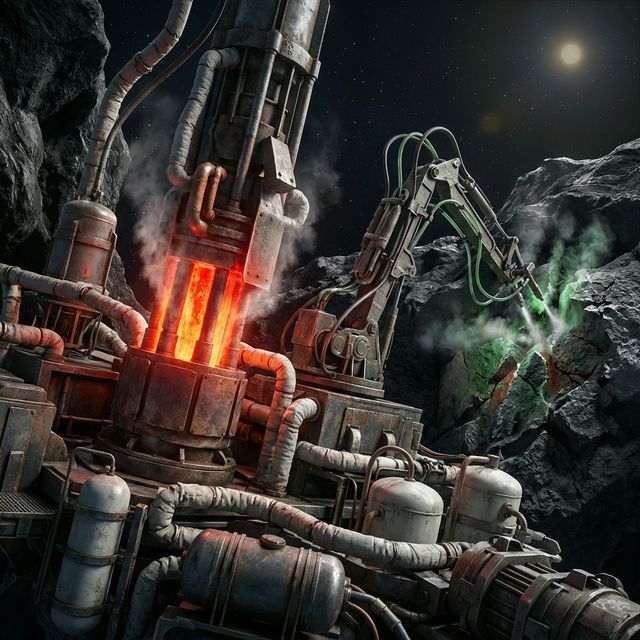
Thermal mining is all about heat, while chemical adds fluids—like baking or soaking rocks to loosen goodies.
Thermal: The Space Oven
Heat the surface with lasers, microwaves, or nuclear heaters to melt or vaporize volatiles. Analogy: Microwaving popcorn to pop kernels—here, pop out gases. Pros: Extracts hidden stuff deep down. Cons: Energy hog; risks melting the wrong things. Example: "Bag and boil" method—wrap the asteroid in a bag, heat it, and collect escaping gases.
Chemical: The Acid Bath
Inject fluids (like hot water or acids) into drilled holes to dissolve minerals, then suck out the soup. Analogy: Soaking stained clothes in detergent to lift dirt. Pros: Targets specific valuables. Cons: Messy in space—fluids float! Automation for both: AI monitors temps or reactions, adjusting like a smart chef.
Why It's Engaging: Combine them: Heat first, then chemical wash—like pressure-cooking dinner. Real concept: In-situ leaching for platinum.
Pneumatic Mining & Other Cool Methods
Ready for the wild stuff? These methods are for specific situations or future tech.
Pneumatic Mining: The Air Blast Party
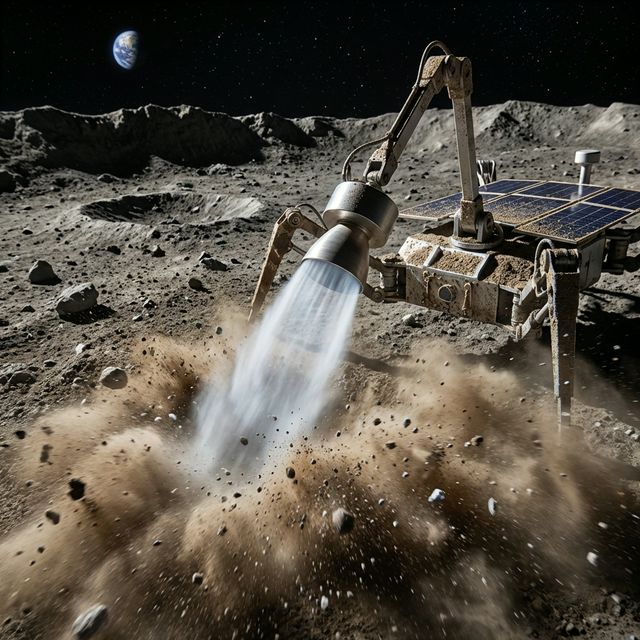
Pneumatic uses gas blasts to blow away material, like a leaf blower on steroids. Shoot compressed gas (nitrogen, maybe) to dislodge regolith, then vacuum it up. Analogy: Blowing dust off a book shelf. OSIRIS-REx did this with a gas puff. Pros: Quick for loose stuff. Cons: Creates huge dust clouds. Automation: AI controls pressure to avoid asteroid wobbles.
Electrostatic Separation: Static Cling Sorting
After digging, sort particles with electricity—like rubbing a balloon on hair to stick it to a wall. Charge particles and use fields to separate metals from rock. Analogy: Static sorter in a laundry dryer. Pros: No water needed. Cons: Power-heavy. Automation: AI tweaks voltages based on scans.
Other Cool Methods: Beyond the Basics
- Strip Mining: Scrape off layers like peeling an onion. Great for surfaces.
- Tunneling: Bore deep like a mole— for buried veins.
- Centrifugal Force: Spin the asteroid to fling out bits, like a salad spinner.
- Biomining: Use bacteria to "eat" rocks and pull metals—like tiny miners. Slow but eco-friendly.
- Hybrid Approaches: Mix 'em! Mechanical drill + thermal melt = super efficient.
- Laser Torch or Hot Knife: Cut with lasers or nuclear heat—like slicing butter.
Each has pros/cons: Hybrids are versatile but complex. Examples: AstroForge's platinum hunts use robots for on-site refining.
Simple Mining Techniques Table (Expanded)
| Method | How It Works (Simple) | Best For | Example Tech | Pros/Cons Example |
|---|---|---|---|---|
| Mechanical | Robot arms/drills to scoop or break | Solid metals | Bucket wheels, kinetic hammers | Pros: Reliable; Cons: Dusty |
| Optical | Mirrors focus sun to heat and extract | Water ice | Sunlight concentrators | Pros: Contact-free; Cons: Sun-dependent |
| Magnetic | Magnets attract metal pieces | Iron/nickel | Rake-like collectors | Pros: Easy sort; Cons: Metal-only |
| Thermal | Heat to melt or vaporize | Volatiles | Laser torches, nuclear heaters | Pros: Deep access; Cons: Energy use |
| Pneumatic | Air blasts to blow and collect | Loose regolith | Gas puff systems | Pros: Fast; Cons: Messy clouds |
| Chemical | Fluids to dissolve and extract | Specific minerals | Injection drills | Pros: Selective; Cons: Toxic risks |
| Electrostatic | Static electricity to sort particles | Mixed ores | Charged plates | Pros: Dry process; Cons: Power-heavy |
| Centrifugal | Spin to fling out material | Fragile asteroids | Rocket-assisted spin | Pros: No tools needed; Cons: Uncontrolled |
Wrapping Up: The Future of Space Digging
Whew, we've covered it all—from shovels to sunbeams! These methods turn asteroids from space junk into gold mines, but remember, it's all about teamwork with AI and robots. Next chapter? Processing those rocks into useful stuff—stay tuned!
Quiz Time
Which method would you use for an icy asteroid?
Click to reveal answer
Optical—melt that ice!
Keep dreaming big; space is our next frontier.
Key Citations:

Santhosh M Kunthe
✉️ santhoshmkska@gmail.com
📞 +91 9110460837