Welcome to the "Wobbly Waterbed"
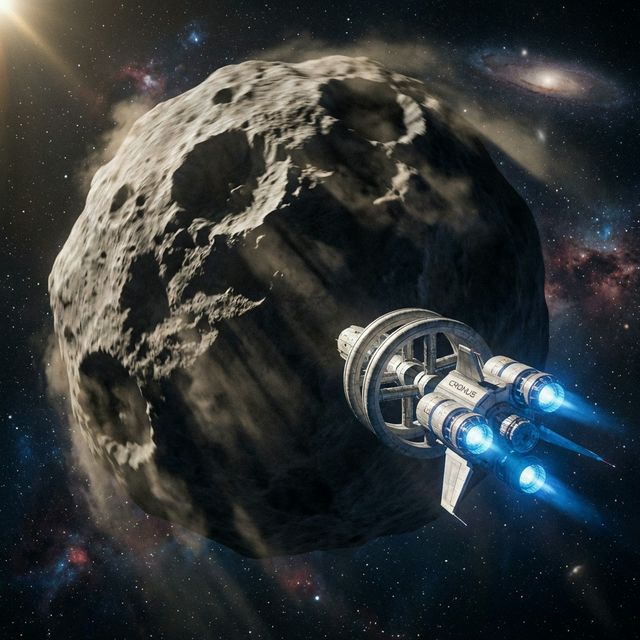
Welcome back to our journey through asteroid mining! If you've been following along from the previous chapters, you've learned about what asteroids are, why we'd want to mine them, the different types out there, how we find the best ones, and even how to get our spacecraft zooming across space to reach them. Now, picture this: Your spaceship has finally arrived at this giant, floating rock after months or years of travel. You're excited, ready to start digging for those precious metals or water ice. But wait—how do you actually "land" on something that's basically weightless, might be spinning like a top, and could kick up a storm of dust that blinds your cameras? That's what this chapter is all about: the art of landing and attaching to an asteroid, or as I like to call it, "sticking to a floating rock."
Think of it like trying to park your car on a giant, wobbly waterbed in the dark. On Earth, gravity does most of the work for us—plop down, and you stay put. But asteroids? They're tiny compared to planets, so their gravity is super weak, often less than 0.1% of Earth's. That means if you bump into one too hard, you might just bounce right off into space! And that's not even mentioning the dust—fine, sticky particles that can float around forever in zero gravity, gumming up your robots or even posing health risks if humans are involved. We'll break this down step by step, using simple analogies, real mission stories, and some fun facts to keep things exciting. By the end, you'll feel like you could plan your own asteroid touchdown. Let's dive in!
The Big Challenges: Why Sticking Isn't Easy
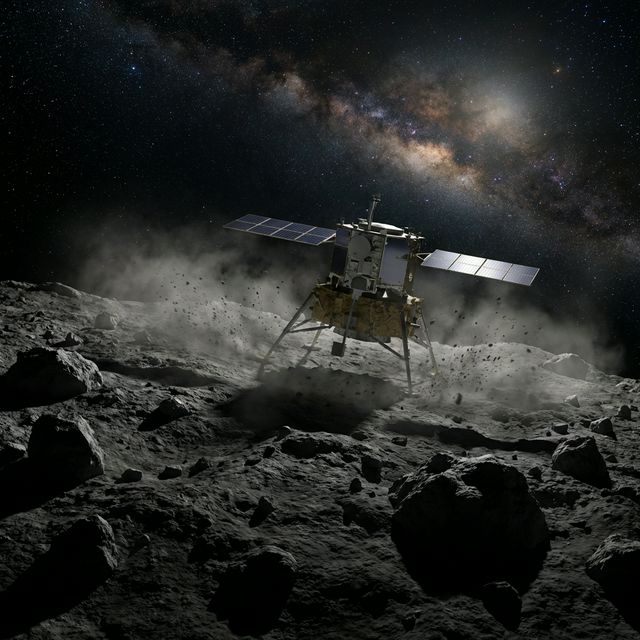
First things first: Why is landing on an asteroid so much harder than, say, landing on the Moon? The Moon has some gravity—about 16% of Earth's—so when astronauts like Neil Armstrong touched down, they stayed down (mostly). Asteroids? Not so much. Their pull is so feeble that even a gentle push could send your spacecraft drifting away. Scientists call this microgravity, and it's like trying to dig in a swimming pool where everything floats. If you're not careful, your lander could rebound or escape the asteroid entirely, turning a successful mission into a cosmic game of tag gone wrong.
Then there's the spinning. Many asteroids tumble end over end, sometimes slowly like a lazy barrel roll, other times faster. This rotation makes approaching them a nightmare—it's like trying to jump onto a moving merry-go-round blindfolded. Your spacecraft has to match that spin perfectly, or you'll miss or crash. Real missions have shown this in action: For example, when NASA's OSIRIS-REx approached asteroid Bennu, the team discovered it was spinning every 4.3 hours, forcing them to adjust their plans on the fly.
Dust is another sneaky villain. Asteroid surfaces are often covered in regolith—loose, powdery material that's super fine and abrasive, with lots of glassy bits from ancient impacts. In microgravity, any touch can kick up clouds of this stuff that linger for hours or days, blocking sensors, scratching lenses, or even infiltrating machinery. Remember the Apollo Moon missions? Lunar dust was a huge headache—it stuck to everything and smelled like gunpowder! Asteroid dust could be even worse, as it's stickier and more hazardous to health if inhaled. Fun fact: This dust is so problematic that engineers are designing "dust mitigation" tech, like domes or bubbles to trap it during operations, almost like putting a giant plastic sheet over your workspace.
And let's not forget the surface itself. Some asteroids are solid rock, others are "rubble piles"—loose collections of boulders held together by weak gravity. Landing on a rubble pile is like stepping on a pile of gravel; it might shift or collapse under you. That's why picking the right spot is key, using data from earlier chapters like telescopes and probes to map safe zones.
Getting Ready to Touch Down: The Approach Phase
Before you even think about landing, your spacecraft has to slow down and get close. This is where the propulsion systems from Chapter 5 come in handy—ion thrusters or chemical rockets gently nudge you into position. Think of it as easing into a parking spot rather than slamming on the brakes. Missions use something called "natural feature tracking" (NFT), where the spacecraft's cameras spot landmarks on the asteroid, like big boulders or craters, and adjust in real-time. It's like your car's parking assist, but in space!
For example, in NASA's OSIRIS-REx mission to Bennu (launched in 2016, sample returned in 2023), the spacecraft spent months orbiting and mapping the asteroid before attempting a landing. They used lasers and cameras to create a 3D model, avoiding hazards like the massive boulder nicknamed "Mount Doom." This prep work is crucial—without it, you'd be flying blind. The approach might take hours, with thrusters firing in short bursts to match the asteroid's speed and spin. Once you're hovering just meters above, it's time for the real magic: attaching.
Ways to Stick: Anchoring Techniques
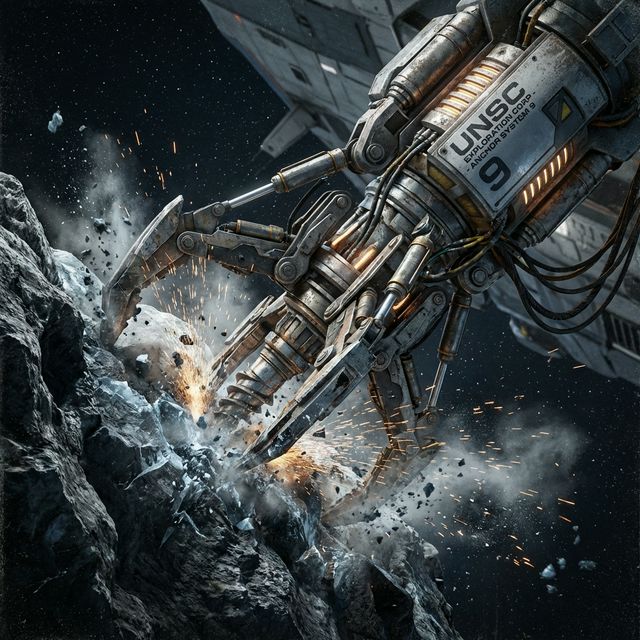
Okay, you've arrived—now how do you stay? Engineers have dreamed up some clever ways, all simple in concept but genius in execution. The goal is to create a secure hold without needing much force, since too much could send your spacecraft bouncing.
Harpoons and Anchors
One popular method is the harpoon or anchor system. Picture throwing a fishing hook with a cable attached: The harpoon shoots into the surface, burrows in, and then reels the spacecraft down. This works best on rigid asteroids where the surface is penetrable. The European Space Agency tried this with the Rosetta mission's Philae lander on comet 67P in 2014—it fired harpoons to anchor, but they failed due to the unexpectedly hard surface, causing Philae to bounce. Lesson learned: Test your assumptions! Future designs might use "helical anchors" that screw in like a corkscrew for a stronger grip.
Foam and Magnets
For softer, rubble-like asteroids, foam stabilization is a cool idea. NASA's TechPort describes a system where you inject foam that hardens around rubble, creating a solid anchor point. It's like pouring glue on a pile of pebbles to hold them together. This could be modular—decide on-site whether to use a sticky screen for rocks or foam for loose stuff. Another twist: If the asteroid is metallic (like M-types from Chapter 3), magnets could work! Strong neodymium magnets on landing feet might pull you close, though you'd need to be very near the surface— just a few meters—for it to stick.
Cables, Grapples, and Nets
Cables and grapples are simpler: Robotic arms or tethers latch onto boulders or crevices. Think of rock climbers using carabiners. For tiny asteroids, some concepts even suggest wrapping the whole thing in a net or ropes to reel it in, like catching a fish in a bag. And for dust control, domes or inflatable bubbles could enclose the area, containing particles like a tent over a sandbox.
Automation is key here. Robotic landers with auto-pilots adjust for spin and surprises, using AI as "smart helpers" to handle delays in Earth signals (which could be minutes long). No human? No problem—these bots think on their feet!
Touch-and-Go: The Quick Kiss Method
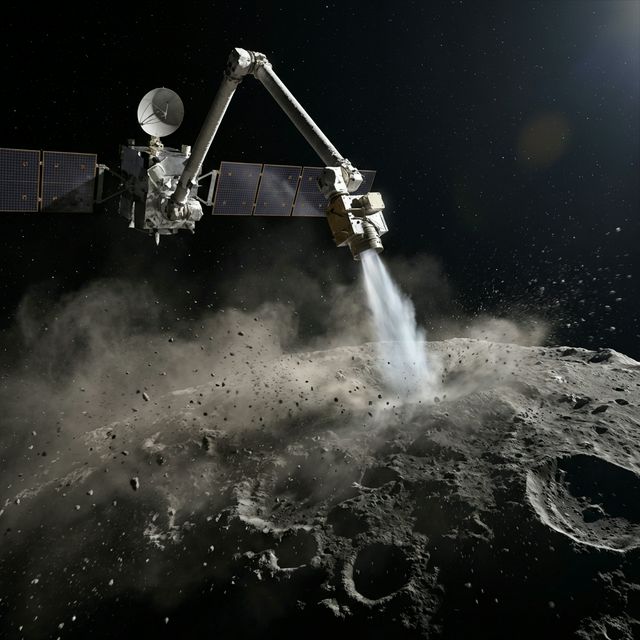
Not every "landing" has to be permanent. Many missions use a touch-and-go (TAG) approach: Swoop in, touch briefly, grab what you need, and back away. It's safer and uses less fuel. NASA's OSIRIS-REx nailed this on Bennu in 2020. The spacecraft descended slowly over four hours, fired thrusters for precision, and extended an 11-foot robotic arm called TAGSAM (Touch-And-Go Sample Acquisition Mechanism). At contact, it blasted nitrogen gas to stir up dust and pebbles, scooping them into the head like a vacuum cleaner on steroids. The whole touch lasted about 10 seconds—long enough to collect over 60 grams of material, but short enough to avoid getting stuck.
Japan's Hayabusa2 did something similar on asteroid Ryugu in 2019. It touched down twice, using a meter-long horn to collect surface samples. For the second touchdown, it even fired a projectile to create a crater, exposing subsurface material for grabbing—talk about making your own opportunity! This mission returned 5.4 grams to Earth in 2020, proving TAG works even on spinning, dusty rocks. Fun fact: Hayabusa2 also deployed tiny hopping rovers that "jumped" around Ryugu using internal wheels, showing how mobility in microgravity can be fun and functional.
These methods aren't full landings—they're more like drive-by collections—but they're perfect for mining scouts, grabbing samples to test before committing to bigger ops.
Future Ideas: Robots and Beyond
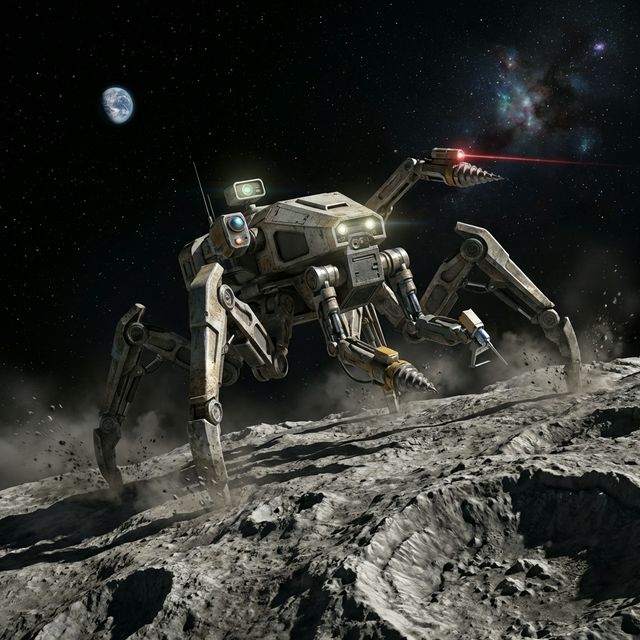
Looking ahead, asteroid mining will get even cooler. Chinese scientists recently unveiled a six-legged robot inspired by insects, with claw-spines for gripping in microgravity. Three legs for walking on flat spots, three with claws for rough terrain—it's like a space spider ready to mine the Moon or asteroids. Companies like AstroForge are planning missions to near-Earth asteroids, using automated probes to test attachment and extraction. One wild concept: "Optical mining," where mirrors focus sunlight to heat the surface, vaporizing ice without touching much—though you'd still need to anchor the setup.
For really small asteroids, centrifugal propulsion could spin and eject material while anchored, gradually changing the asteroid's path. Or use "area-of-effect soft-bots" (AoES) to dismantle rubble piles without assuming subsurface structure. And don't forget radiation shielding—future landers might use mined rocks as barriers against cosmic rays.
Anchor Method Comparison
| Method | How It Works (Simple Analogy) | Best For | Pros | Cons | Example Mission/Concept |
|---|---|---|---|---|---|
| Harpoon/Cable | Shoots hook, reels in (fishing) | Rigid, penetrable surfaces | Strong hold, reusable cable | May fail on hard/soft spots | Rosetta's Philae (failed, but lessons learned) |
| Foam Stabilization | Injects hardening foam (gluing pebbles) | Rubble piles | Modular, adapts to loose material | Needs time to set | NASA TechPort proposal |
| Magnetic Attachment | Strong magnets pull close (fridge magnets on steroids) | Metallic asteroids | No penetration needed | Only works on iron/nickel | Conceptual for M-type asteroids |
| Grapples/Arms | Robotic claws grab rocks (rock climbing hooks) | Bouldery surfaces | Flexible, adjustable | Requires good surface maps | OSIRIS-REx TAGSAM arm |
| Nets/Ropes | Wraps around small body (catching a ball in a net) | Tiny asteroids (<10km) | Secures entire object | Not for large or spinning ones | Conceptual for small bodies |
| Six-Legged Robots | Insect-like claws and wheels (spider walking) | Uneven, loose terrain | Mobile, adaptive grip | Complex to build | Chinese CUMT prototype |
This table sums up the options—pick based on your asteroid type!
Wrapping Up: What's Next?
Landing and attaching is the "parking" step before the real fun of mining begins in Chapter 8. We've covered the challenges (microgravity, dust, spin), methods (harpoons, foam, magnets), real examples (OSIRIS-REx, Hayabusa2), and future tech (robots, optical methods). Remember, it's all about being gentle and smart—space is unforgiving, but with these tools, we're getting closer to turning asteroids into resource hubs. Teaser for next time: Once stuck, how do we start digging? Stay tuned!
Quiz Time
1. What's microgravity like?
Click to reveal answer
Trying to dig in a pool.
2. Name a mission that used touch-and-go.
Click to reveal answer
OSIRIS-REx.
Think about it, and revisit if needed. No prior knowledge required—we're building this together!
Key Citations:
- Position-attitude coupling guidance and control for asteroid landing with a flexible lander
- Anchoring a lander on an asteroid using foam stabilization - NASA TechPort
- Why Landing on Asteroids is Harder Than You Think! - YouTube
- Capturing Non-Cooperative Objects
- Can we use magnetic devices to anchor to asteroids? - Space Exploration Stack Exchange
- Dismantling Rubble Pile Asteroids with AoES (Area-of-Effect Soft-bots) - NASA Technical Reports Server
- Asteroid Operations - OSIRIS-REx Mission
- OSIRIS-REx (Origins, Spectral Interpretation, Resource Identification, and Security‒Regolith Explorer) - eoPortal
- Hayabusa2 - Wikipedia
- Hayabusa2, Japan's mission to Ryugu and other asteroids - The Planetary Society
- The future of asteroid mining: Missions, resources, and challenges explained
- Chinese scientists unveil six-legged robot for future asteroid and lunar mining - Space Daily
- Asteroid mining - Wikipedia

Santhosh M Kunthe
✉️ santhoshmkska@gmail.com
📞 +91 9110460837