The Basics: What Exactly is the ITN?
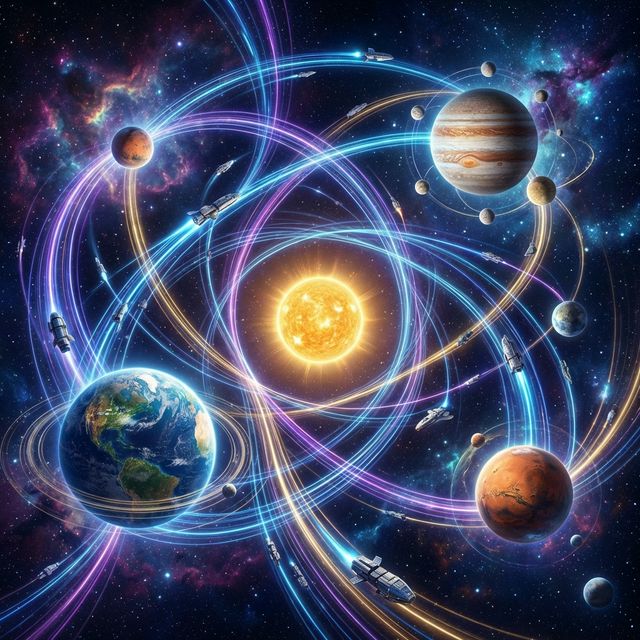
Hey there, space enthusiast! Welcome to Chapter 5 of our asteroid mining adventure. If you've been following along from the previous chapters, you've learned about what asteroids are, why they're worth chasing, the different types out there, and how we spot the best ones for mining. Now, imagine you've picked your perfect asteroid target—maybe a watery C-type one that's like a floating gas station in space. But how do you actually get there without burning through a fortune in rocket fuel? That's where the Interplanetary Transport Network, or ITN, comes in. Think of it as the Solar System's secret shortcut system—a cosmic web of "free rides" that lets spacecraft hitchhike using gravity instead of guzzling propellant.
In this chapter, we're going to unpack the ITN like we're planning a road trip across the stars. We'll start with the basics: what it is and why it's a big deal. Then, we'll dive into the science that makes it tick, using simple analogies so you don't need a PhD to follow along. We'll explore real examples from space missions, how it ties into asteroid mining, the ups and downs, and what the future might hold. By the end, you'll feel like you could plot your own space journey. Grab a snack, hit play on some epic space music, and let's cruise down this interplanetary highway!
What Exactly is the ITN?
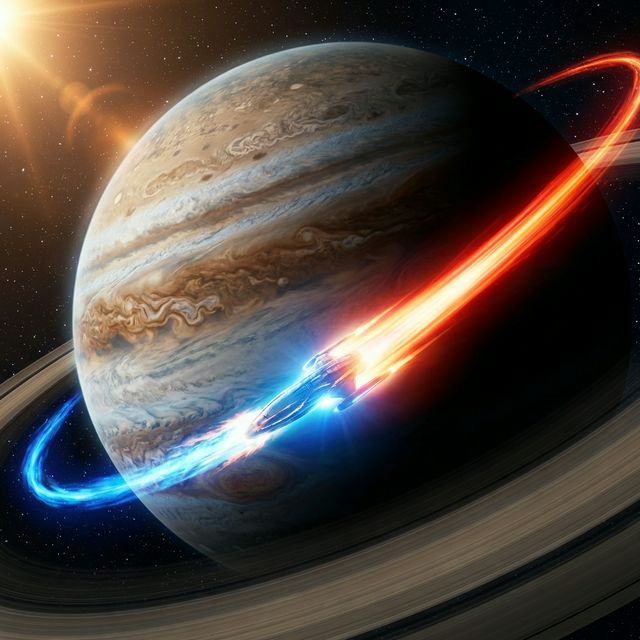
Picture this: You're on a highway road trip from New York to California. Instead of flooring the gas pedal the whole way (which would drain your tank fast), you find a network of scenic routes where the road dips and curves just right, letting you coast downhill most of the time. That's the ITN in a nutshell—a vast collection of natural pathways weaving through the Solar System, shaped by the gravitational pulls of the Sun, planets, and their moons. These paths allow spacecraft to travel huge distances with barely any energy input beyond a gentle nudge to get started.
The ITN isn't a fixed road; it's more like a river system that shifts with the tides. Planets are constantly moving, so the paths change over time. But here's the cool part: Once you're on one of these routes, gravity does the heavy lifting. You can hop from Earth to Mars, swing by Jupiter, or even detour to a near-Earth asteroid, all while sipping fuel like it's a casual Sunday drive. Scientists call it the "Interplanetary Superhighway" because it connects everything in our cosmic neighborhood efficiently.
Fun fact: The idea sprang from math wizards in the 1990s at places like Caltech and NASA's Jet Propulsion Laboratory. They were playing with equations about how three bodies (like the Sun, Earth, and a spacecraft) interact, and boom—they uncovered this hidden network. It's based on chaos theory, which sounds fancy but just means small changes can lead to big, unpredictable paths, like a butterfly flapping its wings causing a storm. In space, that "butterfly" is a tiny gravitational tug that sends you sailing.
The Science Behind the Magic: Gravity's Balancing Act
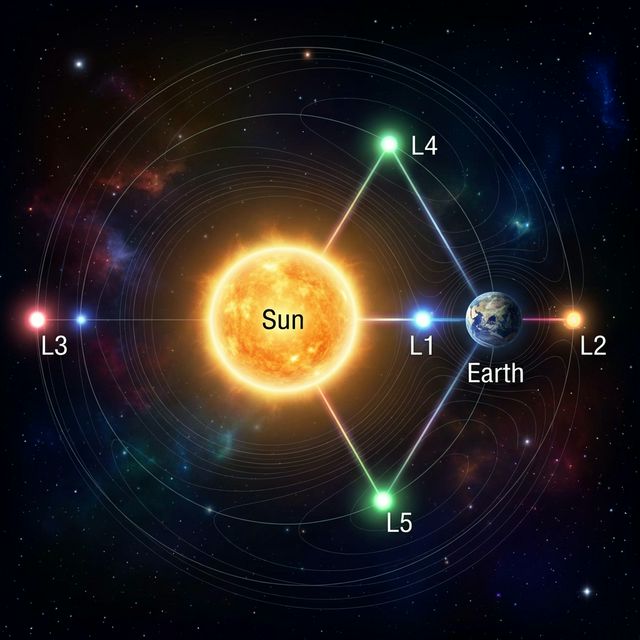
Okay, let's break it down without the jargon. The ITN works because of something called the three-body problem. Imagine two big kids (the Sun and a planet) playing tug-of-war with a rope. A smaller kid (your spacecraft) can stand in spots where the pull is equal from both sides, letting them hover without much effort. These spots are Lagrange points, named after the mathematician Joseph-Louis Lagrange who figured them out back in the 1700s.
There are five Lagrange points (L1 through L5) for any pair of bodies. L1, L2, and L3 are along the line connecting the two big bodies—L1 is between them, L2 is behind the smaller one, and L3 is way out on the opposite side. L4 and L5 are off to the sides, forming triangles. For the ITN, L1 and L2 are superstars because they're like gateways. At these points, gravity balances with the centrifugal force (that outward push you feel on a spinning ride), creating zones where objects can orbit nothing—yep, they're stable(ish) spots in empty space!
From these points, invisible "tubes" or manifolds branch out. These are like gravitational tunnels connecting different Lagrange points across the Solar System. A spacecraft entering one tube gets gently guided to another planet's Lagrange point, using the planet's gravity for a free boost. It's chaotic because tiny tweaks in position can send you on wildly different paths, but that's what makes it flexible.
Analogy time: Think of the Solar System as a pinball machine. Planets are the bumpers, Lagrange points are the flippers, and the ITN paths are the grooves where the ball rolls smoothly without you hammering the buttons. No fuel-wasting blasts—just smart, gravity-powered flips.
To visualize, here's a simple table summarizing the key Lagrange points used in the ITN:
| Lagrange Point | Location (Simple) | Why It's Useful for ITN | Real-World Example |
|---|---|---|---|
| L1 | Between two bodies (e.g., Sun and Earth) | Entry/exit gate for inner Solar System paths; allows easy shifts to other planets | SOHO satellite parks here to watch the Sun |
| L2 | Behind the smaller body (e.g., beyond Earth from Sun) | Gateway for outer journeys; great for deep space hops | James Webb Space Telescope uses it for stable viewing |
| L4/L5 | Off to the sides, forming triangles | Stable "parking lots" for long-term stays; collect asteroids or Trojans here | Jupiter's Trojan asteroids hang out in its L4/L5 |
| L3 | Opposite side of the orbit | Less used, but connects far-flung paths | Hypothetical for counter-Earth ideas, but rare in missions |
This table shows how these points aren't just dots—they're hubs in a giant connect-the-dots game across space.
Real-World Examples: ITN in Action
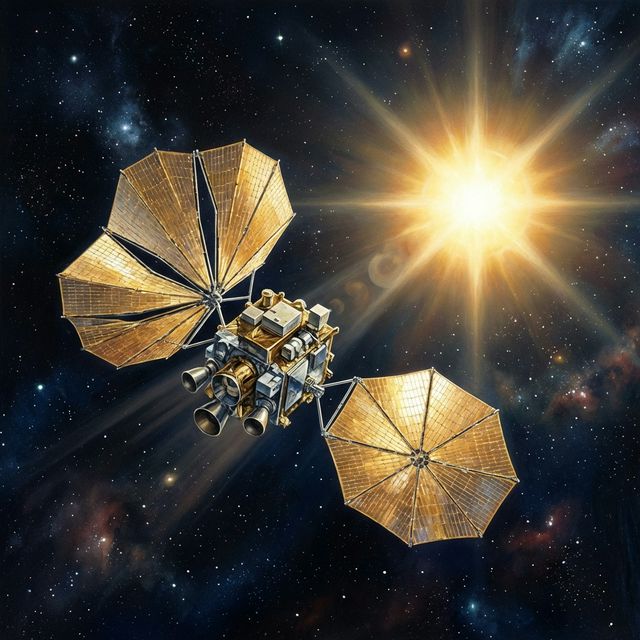
The ITN isn't just theory; it's been road-tested! Take NASA's Genesis mission in 2001. This plucky probe collected bits of solar wind (the Sun's "breath") by looping through the Sun-Earth L1 point. It used the ITN to orbit there for a while, then slingshot back to Earth with samples, all on a shoestring fuel budget. Without the ITN, it would've needed way more propellant.
Another hero: Japan's Hiten spacecraft in 1990. It was supposed to go to the Moon but lost its main engine. Engineers improvised using ITN principles, bouncing it through gravitational paths to reach the Moon anyway. Talk about a comeback story!
More recently, missions like NASA's ARTEMIS probes in 2010 used ITN tubes to transfer from Earth orbit to the Moon's Lagrange points with tiny fuel burns. And in 2026 (yep, right now!), ongoing plans for asteroid missions, like potential follow-ups to OSIRIS-REx, are eyeing ITN for low-cost trips to near-Earth objects.
Imagine you're a mission planner: Instead of a straight-shot rocket burn (like Apollo to the Moon), you plot a curly path that swings by Venus for a gravity assist, dips into a Lagrange tube, and coasts to your asteroid. It's slower—maybe years instead of months—but your fuel tank thanks you.
Tying It to Asteroid Mining: The Perfect Match
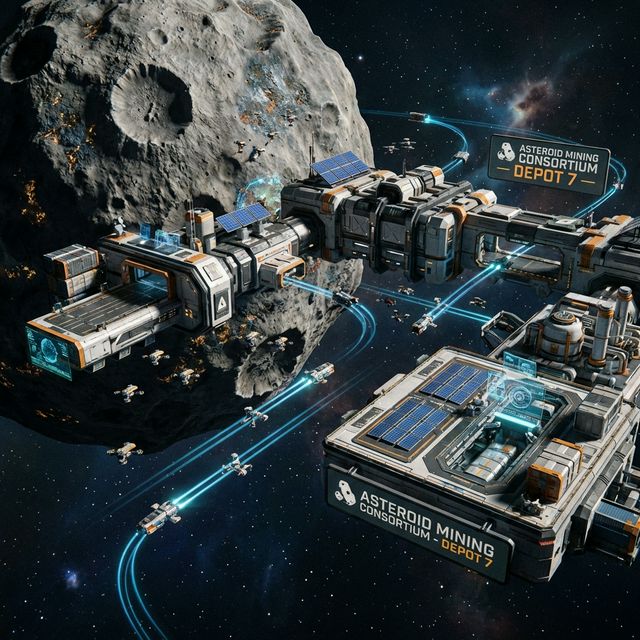
Now, let's connect this to our main quest: asteroid mining. Asteroids, especially near-Earth ones (NEAs), are prime targets because they're close-ish. But launching a mining robot with enough fuel to get there, dig, and return? That's expensive! The ITN changes the game by offering low-energy routes to these floating rocks.
For example, many NEAs orbit in paths that intersect ITN tubes. A spacecraft could launch from Earth, enter the Sun-Earth L2 gateway, and ride a gravitational wave to an asteroid like Bennu (visited by OSIRIS-REx). Once there, mine water for fuel or metals for building, then use another ITN path to head back or to a space station.
Pros for Mining:
- Fuel Savings: Research estimates ITN can cut propellant needs by 90% compared to direct flights. That's huge for hauling heavy mining gear.
- Sustainability: Less fuel means fewer emissions and cheaper missions, making space mining viable sooner.
- Access to More Targets: Even distant asteroids become reachable without monster rockets.
But it's not all smooth sailing—more on that next.
Challenges: The Bumps in the Road
Like any highway, the ITN has potholes. First, it's slow. A trip to Mars via ITN might take 2-3 years instead of 6-9 months on a direct path. For time-sensitive mining ops, that's a drag.
Second, paths are dynamic—planets move, so your route today might vanish tomorrow. Navigation requires super-precise calculations, accounting for chaos. A tiny error? You could end up lost in space!
Third, entering the network needs an initial boost, and weak gravity means corrections are tricky. Plus, radiation and debris in these paths pose risks to electronics and solar panels.
Solutions? Advanced AI for real-time path adjustments, better telescopes for mapping, and hybrid systems mixing ITN with small thrusters. Debates rage on who "owns" these paths—international treaties like the Outer Space Treaty say space is for everyone, but mining companies might compete for prime routes.
The Future: ITN and Beyond Asteroids
Looking ahead, the ITN could be the backbone of a bustling space economy. Imagine fleets of mining drones shuttling between asteroids and Earth orbit, refueling at Lagrange depots. NASA's Psyche mission (launched in 2023, arriving in 2029) is testing ITN-inspired paths to a metal-rich asteroid. Private players like SpaceX or Astroforge might use it for commercial mining by 2030.
In the big picture, ITN supports human expansion: Build colonies on Mars by sending supplies via cheap routes, or mine asteroids for water to sustain life. It's empathetic too—by reducing fuel use, we lessen Earth's environmental burden from launches.
As we wrap up, ponder this: The ITN shows the Solar System isn't a barrier; it's an invitation to explore smartly. What's next? In Chapter 6, we'll zoom into the nuts and bolts of getting to asteroids with rockets and thrusters. Teaser: Ever heard of solar sails? They're like kites pushed by sunlight!
Quick Quiz to Test Your Grasp
1. What's one analogy for the ITN?
Click to reveal answer
Space highways or rivers.
2. Name two Lagrange points key to ITN.
Click to reveal answer
L1 and L2.
3. Why is ITN great for asteroid mining?
Click to reveal answer
Low fuel costs.
Keep questioning the cosmos—space is waiting!
Key Citations:
- Wikipedia on Interplanetary Transport Network
- Universe Today: What Is The Interplanetary Transport Network?
- American Scientist: The Interplanetary Transport Network
- NASA: Lagrange Points
- ResearchGate: The Interplanetary Transport Network
- 365 Days of Astronomy: The Interplanetary Transport Network
- Grokipedia: Interplanetary Transport Network
- Space Exploration Stack Exchange: How useful is the Interplanetary Transport Network?

Santhosh M Kunthe
✉️ santhoshmkska@gmail.com
📞 +91 9110460837