Welcome to the Chocolate Box
Welcome back to our journey through the stars! If you've been following along from Chapter 1, where we chatted about asteroids as those quirky floating rocks left over from the solar system's messy birthday party, and Chapter 2, where we dreamed big about why we'd even bother mining them (hello, solving Earth's metal shortages and fueling space adventures!), then you're in for a treat. Today, we're diving into the "flavors" of asteroids.
Think of this chapter like sorting through a box of assorted chocolates—each type looks different, tastes different, and offers something unique. We'll keep it fun, simple, and packed with real-world analogies so you can picture it all without needing a PhD. No heavy math here; just common-sense explanations, a few wow-worthy facts, and even a quiz at the end to test your asteroid smarts.
By the time we're done, you'll know the three main types of asteroids, what goodies they hide inside, and why they're exciting for future miners. We'll use everyday examples, like comparing asteroids to things in your kitchen or backyard, to make it stick. And remember, this builds right on what we've covered—asteroids aren't just space junk; they're potential treasure troves. Let's get sorting!
How Do We Even Classify Asteroids?
A Quick Peek Behind the Curtain
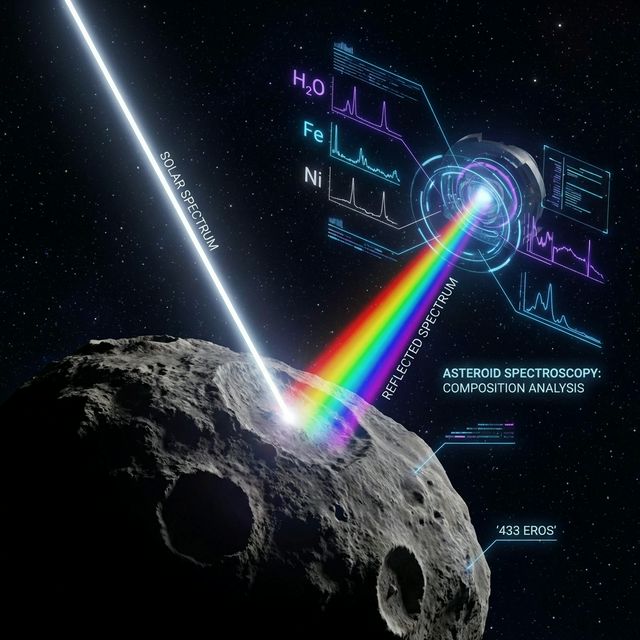
Before we jump into the types, let's talk about how scientists figure this out without hopping on a spaceship every time. It's all thanks to a nifty tool called spectroscopy. Imagine you're at the grocery store, and you scan a barcode to learn everything about a product—price, ingredients, origin. Spectroscopy does something similar but with light.
Astronomers point telescopes at asteroids and study the colors of light bouncing off them. Different materials absorb and reflect light in unique ways, like fingerprints. For example, if an asteroid reflects a lot of red light, it might be metal-rich; if it's dark and absorbs most light, it's probably carbon-heavy.
This tech is super handy because we can do it from Earth or with space probes. It's not perfect—sometimes asteroids have a dusty coating that hides their true self—but it's gotten us a ton of info. Fun fact: The first big asteroid classification system came from studying meteorites that fell to Earth, which are basically asteroid bits. So, when we say "types," we're basing it on real samples we've held in our hands. Now, onto the main stars of the show: the C, S, and M types. These make up about 90% of all known asteroids, with C-types being the most common crowd-pleasers.
C-Type Asteroids: The Watery, Carbon-Rich Helpers
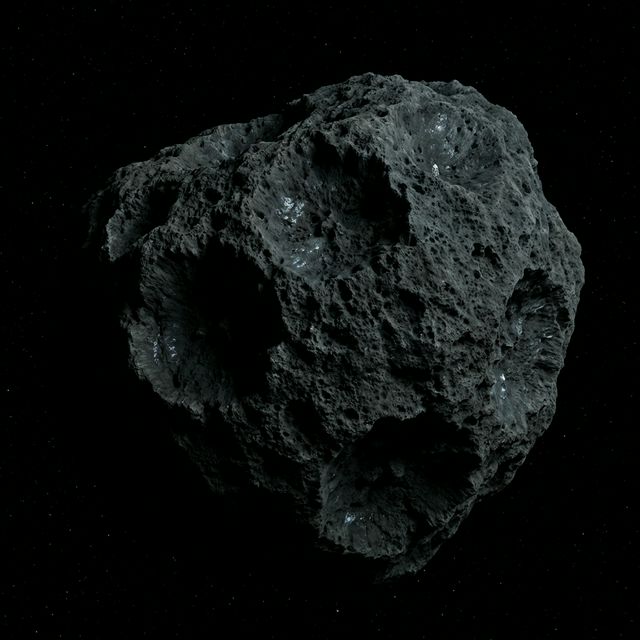
Picture a wet sponge soaked in garden soil—that's your C-type asteroid in a nutshell. These are the most abundant, making up around 75% of all asteroids out there. They're dark and dull-looking because they're packed with carbon-based stuff, like the charcoal in your barbecue grill, mixed with clays, rocks, and—get this—ice or water locked in minerals. Why dark? Carbon absorbs light, so they don't shine like stars; they're more like shadowy figures in the asteroid belt.
What's Inside?
The big draw here is water and organics (think carbon compounds that could help with life support). Water isn't just for drinking; in space, you can zap it with electricity (a process called electrolysis) to split it into hydrogen and oxygen. Hydrogen for fuel, oxygen for breathing—boom, instant rocket gas station! Organics might sound fancy, but they're like the building blocks for fertilizers or even plastics. Some C-types have volatiles, which are gassy elements that evaporate easily, useful for cooling systems or more fuel.
Real-Life Uses and Examples
Imagine setting up a space farm on Mars; C-type resources could provide the water and nutrients to grow veggies. Or, for mining, they're like a one-stop shop for basics. A famous example is Bennu, visited by NASA's OSIRIS-REx mission. It grabbed a sample and brought it back, showing us dusty, water-rich material. Fun fact: If we mined just one average C-type asteroid, it could supply enough water to fill thousands of swimming pools—talk about quenching thirst in space! But here's a common-sense tip: These asteroids are fragile, like crumbly cookies, so mining them would need gentle tools to avoid turning everything to dust.
Why are they exciting for mining? Earth's running low on some basics, and C-types could help without digging up our planet more. Plus, they're often closer to us in near-Earth orbits, making them easier to reach. But debates swirl: Some say focusing on water first makes sense for space travel, while others argue metals are flashier. Evidence from missions leans toward C-types being practical starters—abundant and versatile.
S-Type Asteroids: The Rocky Builders
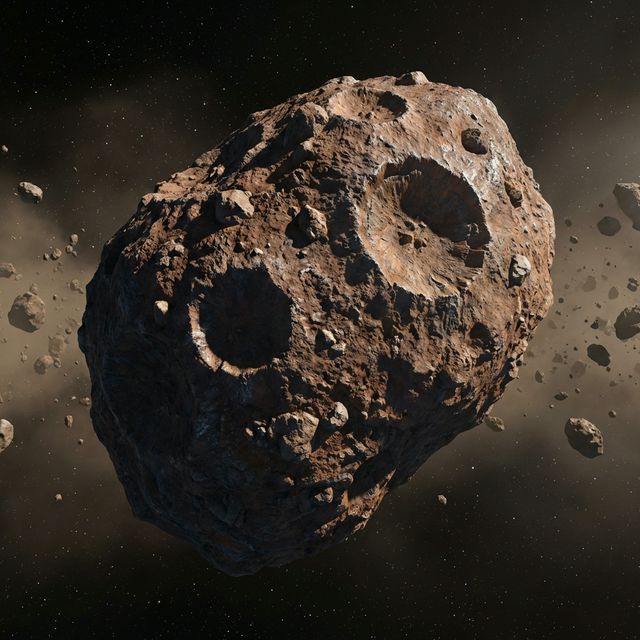
Now, shift gears to something sturdier. S-type asteroids are like the bricks and mortar of the space world—rocky, reliable, and full of silicate minerals (think sand or quartz from beaches) mixed with metals. They make up about 17% of asteroids and are common in the inner asteroid belt, closer to the Sun. These guys formed in hotter spots during the solar system's early days, so they're a bit "cooked" compared to C-types, with silicates and iron-nickel blends giving them a higher density.
What's Inside?
Key resources include nickel, iron, and magnesium. Iron and nickel are like the steel in your car—great for building structures. Magnesium is used in everything from lightweight alloys for planes to vitamins (but here, more for tech). They're not as watery as C-types, but they might have some hidden pockets of useful stuff.
Real-Life Uses and Examples
Picture constructing a space station; S-type materials could be melted down on-site for beams and panels, saving the hassle of launching everything from Earth. An example is Eros, explored by NASA's NEAR Shoemaker probe—it landed and sent back data showing a rocky, metal-speckled surface. Fun fact: S-types are linked to many meteorites that hit Earth, like the one that made Arizona's Meteor Crater. If you mined an S-type, you could get enough iron to build a small city in space! Common sense says they're tougher than C-types, so drilling might be easier, but you'd need to sort the rocks from the metals.
For mining potential, S-types bridge the gap—they're not the rarest treasures, but they're practical. Research shows they're prime for structural stuff, helping with sustainability. There's some overlap with other types, but overall, they're the workhorses.
M-Type Asteroids: The Shiny Metal Vaults
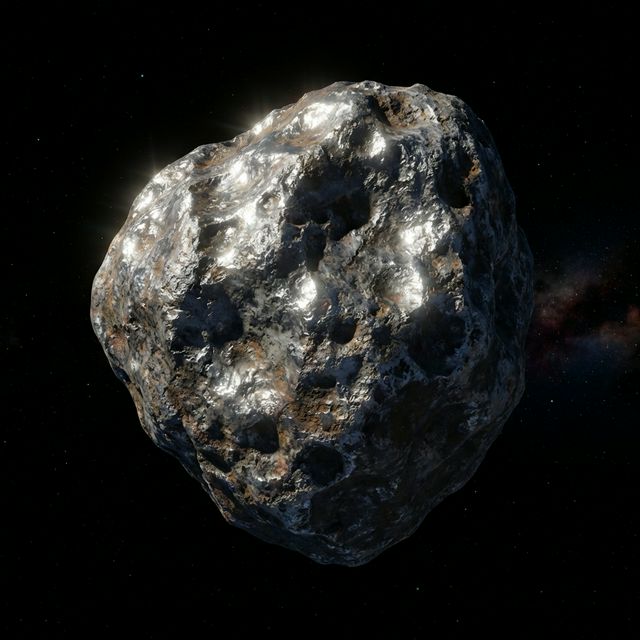
Ah, the crowd favorites—the M-types! These are the rare gems, only about 8-10% of asteroids, but boy, do they pack a punch. Imagine a giant lump of shiny metal floating in space, like a vault full of coins. They're mostly iron and nickel, with sprinkles of precious metals that sank to their cores during formation (think how oil separates in salad dressing).
What's Inside?
The stars here are platinum, gold, cobalt, and other platinum-group metals (PGMs like rhodium or palladium). Platinum's used in jewelry, car parts, and electronics; gold for circuits and solar panels; cobalt for batteries. An average M-type could hold more PGMs than all Earth's mines combined—trillions in value!
Real-Life Uses and Examples
For high-tech gadgets or clean energy, these are goldmines (pun intended). NASA's Psyche mission is heading to the asteroid Psyche, believed to be an exposed metal core worth quadrillions if mined. Fun fact: One small M-type could supply Earth's platinum needs for years, potentially crashing prices but boosting space tech. Common sense warning: They're dense and tough, so mining might involve magnets or lasers, not shovels. And ethically? Debates on "who owns space gold" are heating up, with calls for fair sharing.
Why target them? The economic payoff could fund entire space programs, but they're rarer and farther out. Evidence from spectra and meteorites suggests they're fragments of smashed proto-planets—cool history lesson!
Beyond the Big Three: A Nod to the Others
While C, S, and M cover most, there are outliers like X-types (mysterious metals) or primitive ones with unique mixes. Some asteroids are hybrids, but for mining, we stick to the mains. Spectroscopy helps spot these too.
Summarizing with a Handy Table
To make it visual, here's a quick table recapping the types—like a cheat sheet for your asteroid shopping list:
| Type | Description | Main Resources | Simple Use Example |
|---|---|---|---|
| C-type | Dark, carbon-based, often icy | Water, organics | Fuel for spaceships, fertilizer for space farms |
| S-type | Rocky, common in inner belt | Nickel, iron, magnesium | Building materials for space stations |
| M-type | Shiny, metal-heavy | Platinum, gold, cobalt | Electronics, jewelry, or high-tech gadgets |
This table helps without overwhelming—think of it as your asteroid menu!
Challenges and Cool Twists in Classification
Not everything's straightforward. Asteroids can have weathered surfaces hiding their true type, or collisions mix them up. But tech advances, like better telescopes, are clarifying things. Fun twist: Some C-types might have hidden metals, blurring lines—nature's way of keeping us guessing!
Quiz Time: Test Your Knowledge!
How'd you do? If you aced it, you're ready for Chapter 4: Finding and Selecting Asteroids—The Hunt Begins. We'll talk about spotting these treasures. Until then, ponder: If you could mine one type, which would it be and why? Drop your thoughts in the comments!
1. Which type is like a wet sponge?
Click to reveal answer
C-type
2. What's the tool for scanning asteroids?
Click to reveal answer
Spectroscopy
3. Name an M-type example.
Click to reveal answer
Psyche
Key Citations:
- EBSCO: Asteroid Mining
- NASA: Asteroid Facts
- Wikipedia: Asteroid Mining
- Fiveable: Asteroid Classification
- GSU: Mining Near Earth Asteroids
- MIT: Asteroid Mining
- ScienceDirect: Precious and Structural Metals
- AstroForge: Story of the Asteroid
- Cosmofluencer: Asteroid Mining
- HowStuffWorks: How Asteroid Mining Will Work

Santhosh M Kunthe
✉️ santhoshmkska@gmail.com
📞 +91 9110460837