Asteroids We're Eyeing for Mining Adventures

Hey there, space explorers! Welcome to Chapter 17, where we zoom into the "near future" of asteroid mining. If you've been following along in this series, you've learned about spotting asteroids, getting to them, digging them up, and even turning their goodies into useful stuff. Now, let's talk about the exciting part: which asteroids are next on our list? We're not talking about pie-in-the-sky dreams here—these are real rocks floating out there that scientists, companies, and space agencies are seriously considering for mining in the coming years or decades.
Think of this chapter like planning a road trip to the best hidden gems. We've got a shortlist of asteroids that are packed with treasures like iron, nickel, cobalt, gold, and platinum-group metals (PGMs)—stuff we use every day in phones, cars, and even jewelry. These aren't just random picks; they're chosen because they're relatively close (in space terms), valuable, and feasible with today's tech or what's coming soon. We'll break down each one, chat about why they're cool, how long it takes to get there, and what challenges we might face. Plus, I'll throw in some fun analogies to keep things light—like comparing an asteroid to a giant piggy bank in the sky.
By the end, you'll see why the near future of asteroid mining feels like it's right around the corner. It's not happening tomorrow, but with missions launching soon and companies gearing up, we're getting closer. Let's dive in!
Why Focus on These Asteroids? The Big Picture
Before we meet our star asteroids, let's set the scene. The "near future" means we're looking at rocks we could potentially visit or mine within the next 10-30 years. Why? Because space travel is getting cheaper and smarter—thanks to reusable rockets like SpaceX's Falcon Heavy and new propulsion tricks like ion thrusters (remember those from Chapter 6? They're like efficient electric engines for space).
These asteroids are mostly M-type (metallic ones, from Chapter 3), loaded with metals that are getting scarce on Earth. Mining them could help build space stations, fuel rockets, or even bring back rare stuff to boost our tech here at home. But it's not all easy: We have to deal with travel times, landing in zero gravity (like trying to park on a spinning balloon), and figuring out who owns what (hello, international space laws from the Key Points in our intro).
Experts say full-scale mining might be 20-30 years away, but demos and surveys are happening now. For example, companies like AstroForge are testing extraction tech in 2026, and NASA's Psyche mission is zooming toward one of our picks. Exciting, right? Now, meet the candidates!
Asteroid 1986 DA: The Trillion-Dollar Neighbor
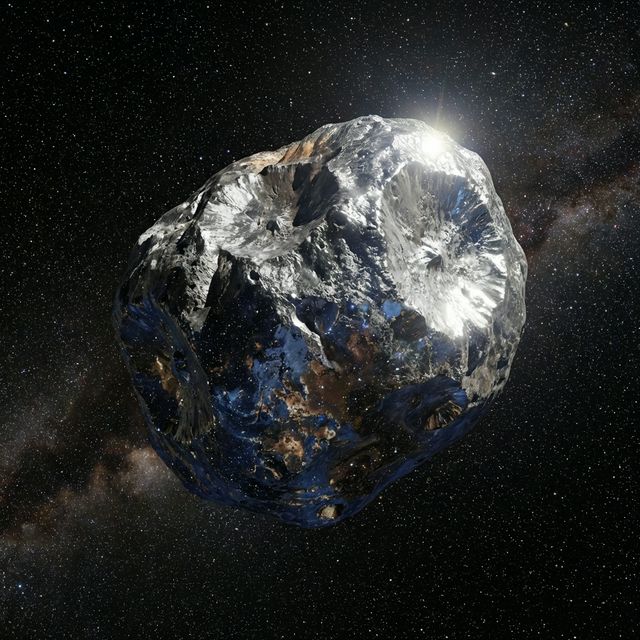
First up is 1986 DA, a near-Earth asteroid (NEA) that's like the friendly next-door neighbor who's secretly a billionaire. Discovered in 1986 (hence the name), this rock is about 2-3 kilometers wide—think of it as a floating mountain roughly the size of a small town. It's zipping around in an orbit that crosses Earth's path, but don't worry, it's not on a collision course anytime soon.
What's Inside?
This guy's a metal lover's dream: Mostly iron (Fe), nickel (Ni), cobalt (Co), gold (Au), and those fancy PGMs like platinum. Scientists estimate it's 85% metallic—way more metal than rock. If we could mine it all, the precious metals alone could be worth around $12 trillion! That's like finding a treasure chest that could pay off a country's debt. Fun fact: The iron and nickel could exceed Earth's global reserves, meaning we could use it for building stuff in space without digging up our planet more.
Travel Time and Access
About 1 year to get there with current tech. It's one of the easier NEAs to reach because of its low "delta-v" (that speed change we talked about in Chapter 4—like not needing much gas for a short drive). But its orbit is a bit tilted, so launch windows are picky.
Mining Potential and Status
Confirmed metallic by telescopes and radar—NASA's got great data on it. It's a top pick for future mining because it's close and valuable. Imagine robots (from Chapter 8) scooping up chunks like kids grabbing candy from a piñata. Challenges? The surface might be rubble-y, so we'd need smart anchors (like harpoons from Chapter 7). No missions yet, but it's on lists for companies like AstroForge, who plan tests in 2026.
Why is this engaging? Picture this: If we mined 1986 DA over 50 years, it could pump out $233 billion in metals yearly—enough to fund space colonies or green tech on Earth. But remember, flooding the market could drop prices, so it's more about sustainability than getting rich quick.
Asteroid 2016 ED85: The Mini-Psyche Powerhouse
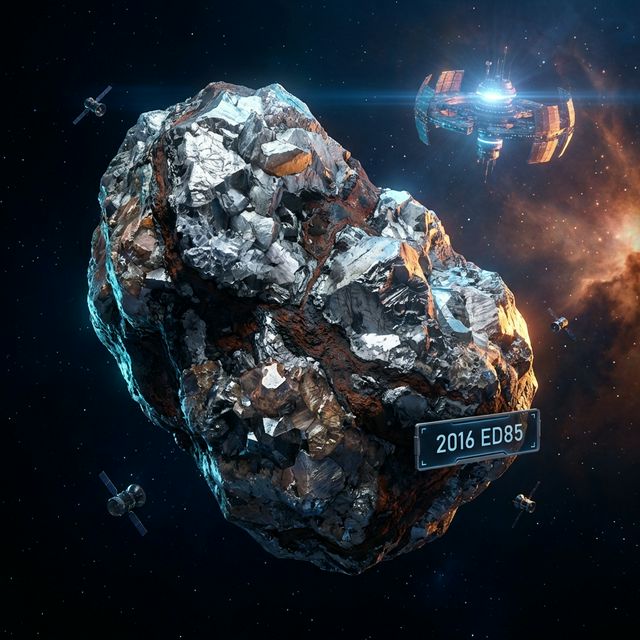
Next, say hello to 2016 ED85, the "mini-Psyche" of the bunch. Discovered in 2016, this one's smaller—about 1 kilometer across, like a big city park floating in space. It's another NEA, zipping close to Earth sometimes, making it a tempting target.
What's Inside?
Similar to 1986 DA: Iron, nickel, cobalt, gold, and PGMs. It's 85% metal, with estimates putting its value at around $2 trillion. Not as huge as some, but still massive—think of it as a compact car packed with gold bars instead of groceries. Scientists call it a "mini-Psyche" because its light signature (from spectroscopy in Chapter 3) matches bigger metal asteroids, hinting it might be a chip off an old planet core.
Travel Time and Access
Just 0.75 years! Super quick in space terms—like a weekend getaway compared to longer trips. Low delta-v means less fuel, which saves money.
Mining Potential and Status
Confirmed as a metal-rich rock by infrared telescopes. It's a candidate for mining because of its size—easier to handle than giants. We could use optical mining (sunlight mirrors from Chapter 8) to vaporize and collect bits. No dedicated mission yet, but it's eyed for surveys. Fun analogy: It's the convenience store of asteroids—quick stop for high-value grabs using mechanical drills (Chapter 8).
Challenges? Its small size means less gravity, so robots might float away if not careful (dust mitigation from Chapter 7 helps). But overall, it's a stepping stone to bigger things.
Asteroid 16 Psyche: The Metal Giant on the Horizon
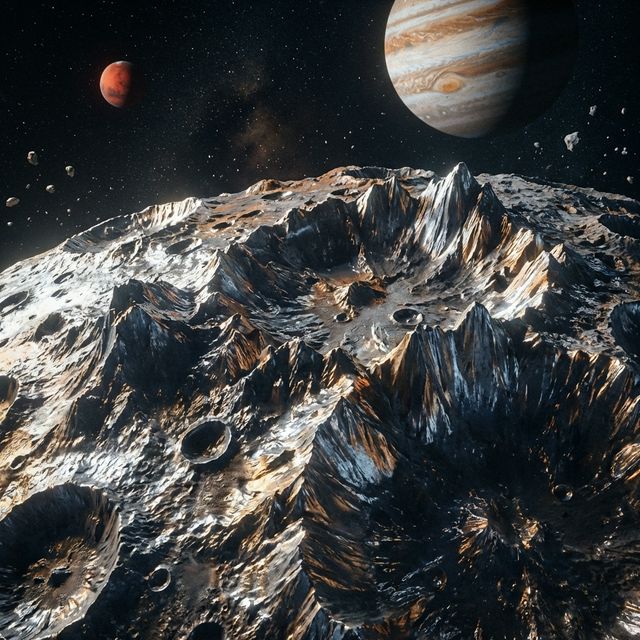
Now, the big kahuna: 16 Psyche, the largest metal asteroid we know. This one's not an NEA—it's in the main belt between Mars and Jupiter—but it's so intriguing we're sending a spaceship there! About 226 kilometers wide (like driving from New York to Philadelphia), it's thought to be the exposed core of a baby planet that got smashed billions of years ago.
What's Inside?
Iron, nickel, cobalt, gold, PGMs—potentially worth a mind-blowing $27 quintillion (that's 27 followed by 18 zeros!). It's mostly metal, maybe with some rocky bits. If true, it's like the ultimate scrapyard in space, with enough iron to build cities on Mars.
Travel Time and Access
Around 6 years. It's farther out, so we need gravity assists (like swinging by Mars, from Chapter 5).
Mining Potential and Status
Confirmed metallic by telescopes, and NASA's Psyche mission is on its way! Launched in October 2023, it'll fly by Mars in May 2026 (that's this year—exciting!) for a boost, arriving at the asteroid in 2029. The probe will map it, check for a magnetic field, and snap pics—no mining, but it's scouting for future ops. Companies see it as a long-term goldmine (pun intended).
Why engaging? Imagine uncovering a planet's heart—Psyche could rewrite how we think about solar system formation. For mining, we'd use big-scale methods like magnetic rakes (Chapter 8). Challenge: Distance means communication delays (AI helpers from Chapter 8 fix that). But if we crack it, it could fuel human expansion to the stars.
Asteroid 3554 Amun: The Quick-Access Vault
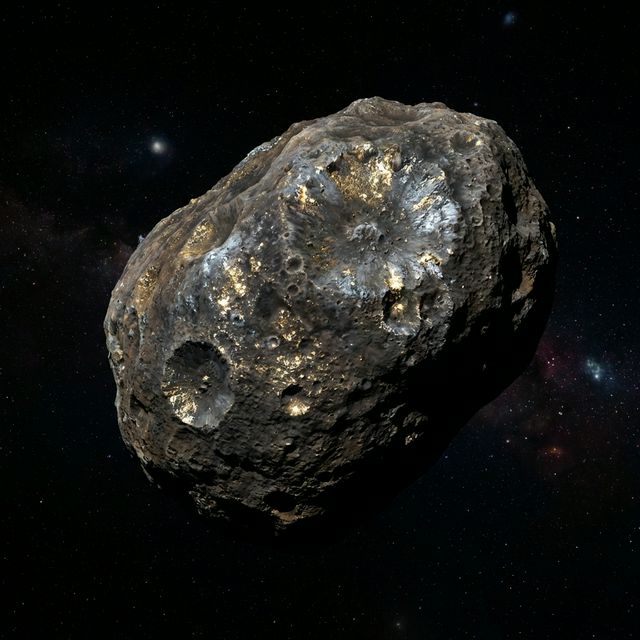
Last but not least, 3554 Amun—named after an Egyptian god, fitting for its riches. This 2-kilometer-wide NEA is the most accessible M-type out there, discovered in 1986.
What's Inside?
Iron, nickel, cobalt, gold, PGMs—valued at up to $50 trillion! Early estimates said $20 trillion, but updated calcs bump it higher. It's like a natural bank vault, with platinum alone worth trillions for electronics and jewelry.
Travel Time and Access
Only 0.5 years! Shortest on our list, with a "short window" for launches due to its orbit. Low delta-v makes it cheap to reach.
Mining Potential and Status
Confirmed M-type, prime for mining. No mission yet, but it's a top target for startups like Karman+, planning demos in 2027. Analogy: It's the convenience store of asteroids—quick stop for high-value grabs using mechanical drills (Chapter 8).
Challenges? Eccentric orbit means timing is key, and its tilt adds complexity. But its accessibility could make it the first mined asteroid.
Summing It Up: A Table of Near-Future Treasures
Here's a quick visual recap, like our tables from earlier chapters. We've expanded it with a bit more detail for fun.
| Asteroid | Metals | Est. Value | Travel Time | Status & Notes |
|---|---|---|---|---|
| 1986 DA | Fe, Ni, Co, Au, PGMs | ~$12T | ~1 yr | Confirmed 85% metallic; trillion-dollar potential; tilted orbit challenge. |
| 2016 ED85 | Fe, Ni, Co, Au, PGMs | ~$2T | ~0.75 yr | Mini-Psyche NEA; 1km diameter; efficient for starter mining. |
| 16 Psyche | Fe, Ni, Co, Au, PGMs | ~$27Q | 6 yrs | NASA mission en route; Mars flyby May 2026; core of a lost planet? |
| 3554 Amun | Fe, Ni, Co, Au, PGMs | ~$50T | ~0.5 yr | Most accessible M-type; short launch windows; quick-access riches. |
This table shows why these are hot picks—value, closeness, and confirmation.
Challenges and the Road Ahead
No adventure without hurdles! Common issues: Zero-gravity mining (stuff floats away), tech for processing in space (ISRU from Chapter 10), and ethics—who gets the profits? International cooperation (from our Key Points) is key. But progress is real: China's Tianwen-2 (launched 2025) is sampling another NEA, and private firms like OffWorld are building robot swarms.
Fun fact: Market forecasts say asteroid mining could hit $2 billion by 2026, growing to $7 billion by 2032. We're in the prospecting phase now, like gold rush scouts.
Wrapping Up: Your Ticket to the Stars
Whew, what a lineup! These asteroids aren't just rocks—they're gateways to a multi-planetary future (tying into Chapters 14-15). From 1986 DA's neighborly trillions to Psyche's epic core, the near future looks bright. Watch for Psyche's Mars flyby this May—it's our teaser for what's next.
If this sparks your curiosity, revisit earlier chapters or check quizzes. Next up? Maybe a bonus on space laws. Stay curious, space fans— the mining era is dawning!

Santhosh M Kunthe
✉️ santhoshmkska@gmail.com
📞 +91 9110460837