Our Robotic Adventures
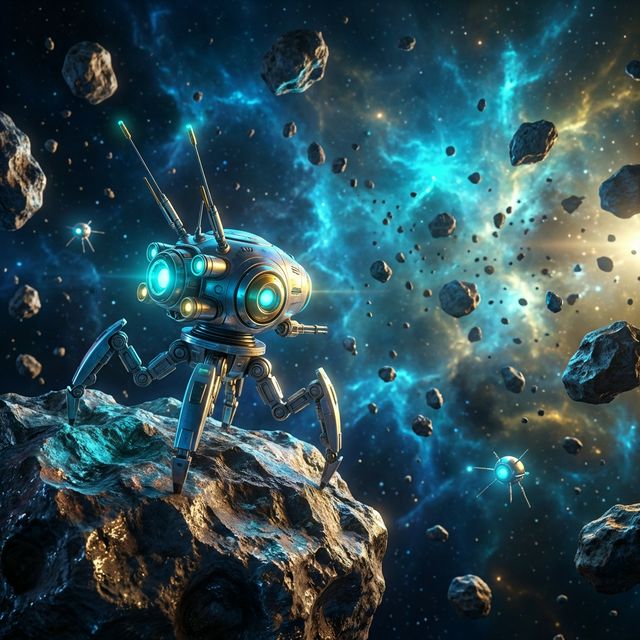
Hey there, space enthusiast! Imagine you're on a treasure hunt, but instead of digging in your backyard, you're sending robot explorers millions of miles away to floating boulders in the void. That's the thrill of asteroid missions. These aren't just random jaunts; they're carefully planned voyages that have taught us heaps about what asteroids are made of, how they behave, and why they might be key to our future in space. In this chapter, we'll dive into the successes that have made headlines (and a few that quietly changed science forever). We'll keep it simple—like chatting over coffee—using everyday examples to explain the tech and triumphs. Think of asteroids as giant, dusty pinatas in the sky, and these missions as the sticks we've used to crack them open.
We'll break it down by categories, just like organizing your photo album: sample returns (grabbing bits to bring home), orbiters (circling for close-ups), flybys (quick hellos), and impact tests (testing a cosmic shove). Each one has pushed the boundaries, overcoming glitches like engine fails or unexpected dust clouds. By the end, you'll see how these pave the road to asteroid mining—turning space junk into useful stuff like fuel or metals. Let's blast off!
Why Bother with These Missions? A Quick Setup
Before we zoom in, let's set the scene. Asteroids are leftovers from when our solar system formed, like crumbs from a cosmic bakery. Some are rocky, others icy or metallic, and they're packed with goodies: water for rocket fuel, metals for building spaceships, even clues to life's origins. But getting there? It's like mailing a package to a moving target—tricky, expensive, but oh-so-rewarding. Successful missions prove we can do it, gathering data that could make mining feasible. For instance, knowing an asteroid's surface is loose gravel helps design better landing gear. Plus, they spark fun debates: Who owns asteroid gold? How do we avoid space litter? Research from these trips suggests international rules will keep things fair. Now, onto the stars of the show!
Sample Return Missions: Bringing Home the Bacon (or Space Dust)
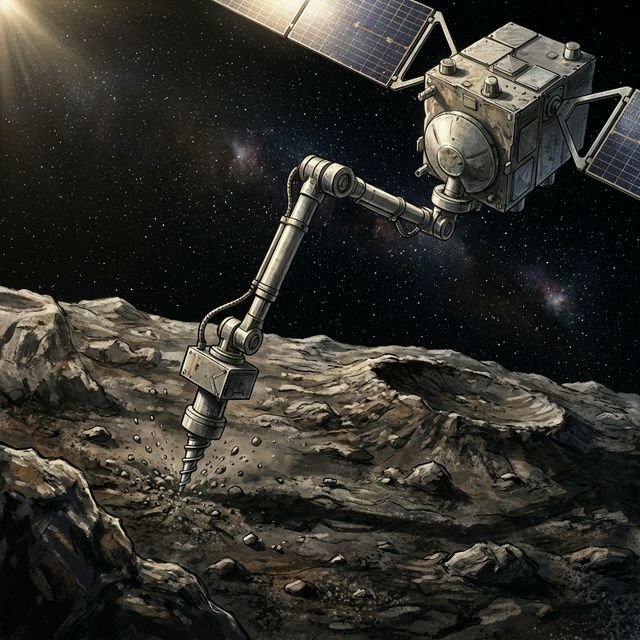
Picture this: You send a robot to a far-off beach, have it scoop some sand, and mail it back for analysis. That's sample return in a nutshell— the holy grail of exploration because we get to touch real asteroid bits on Earth. These missions test tech for mining, like how to collect materials without everything floating away in zero gravity. They've revealed asteroids aren't sterile rocks; some have water and organics, hinting at resources for space bases or even clues to how life started.
Hayabusa: The Plucky Pioneer
Japan's Hayabusa (meaning "peregrine falcon" – cool, right?) was like the little engine that could. Launched in 2003 by JAXA (Japan Aerospace Exploration Agency), it aimed for the near-Earth asteroid Itokawa, a peanut-shaped rock about the size of a football field. The goal? Touch down, grab samples, and return them— a first for humanity.
Key events: After a two-year cruise, Hayabusa arrived in 2005. But drama ensued! A fuel leak, solar flare damage, and a bumpy landing meant it only grabbed tiny grains (about 1,500 particles). Still, it limped home, parachuting its capsule into Australia in 2010 after engine failures and communication blackouts.
Achievements: Despite the hiccups, scientists confirmed the samples were from Itokawa—mostly silicate minerals like olivine, showing it's an S-type asteroid (stony, with metals). Fun fact: Hayabusa survived three years longer than planned, teaching us resilience in space tech.
Relevance to mining: This proved we can collect and return materials from a low-gravity world. The tiny samples showed asteroids have loose surfaces (regolith), so future miners might use vacuums or gentle scoops instead of drills. Itokawa's composition suggests iron and nickel riches, perfect for space construction.
Hayabusa2: The Upgraded Hero
Learning from its sibling's woes, Hayabusa2 launched in 2014, targeting Ryugu—a dark, diamond-shaped C-type asteroid (carbon-rich, possibly with water and organics). Think of it as Hayabusa on steroids: better engines, rovers, and even a mini-bomber!
Objectives: Collect surface and subsurface samples to study solar system origins. Ryugu's like a time capsule, less altered by heat.
Key events: Arrived in 2018, deployed cute hopping rovers (HIBOU, OWL, MINERVA-II) that bounced around like space frogs, sending back gritty photos. In 2019, it touched down twice—once gently, once after blasting a crater with a copper projectile (boom!). Departed with samples, dropping them in Australia in 2020. Now on an extended mission to more asteroids until 2031.
Achievements: Nabbed 5.4 grams (way over the 0.1g goal!) with amino acids and water—proof of life's building blocks from space. The crater exposed fresh material, showing Ryugu's rubble-pile nature (loose rocks glued by gravity).
Relevance to mining: Demonstrated subsurface access via impact—key for reaching hidden resources like ice without deep drilling. Organics could mean biofuels; the rovers tested low-grav mobility, vital for mining bots.
OSIRIS-REx: NASA's Sample Snatcher
NASA's OSIRIS-REx (fancy acronym for Origins, Spectral Interpretation, Resource Identification, Security-Regolith Explorer) is like a vacuum cleaner in space. Launched in 2016, it headed to Bennu, a spinning-top C-type asteroid the size of the Empire State Building.
Objectives: Map Bennu, grab at least 60g of regolith, return by 2023 to study early solar system and potential hazards (Bennu's a possible Earth-crasher).
Key events: Arrived 2018, spent two years orbiting (Bennu has wonky gravity!). In 2020, "tagged" the surface with a robotic arm, stirring up dust like a leaf blower. Returned 70.3g (bonus!) in 2023 to Utah. Now extended as OSIRIS-APEx to Apophis in 2029.
Achievements: Samples packed with sugars (life's precursors), supernova dust, and gum-like organics. Bennu's surprisingly active—spewing particles like mini-geysers.
Relevance to mining: Showed how to handle fragile, active asteroids. High carbon content suggests fuel sources; the arm's gentle touch inspires non-destructive extraction. Plus, hazard data helps plan safe mining ops.
| Mission | Target Asteroid | Launch/Return | Key Haul | Fun Fact |
|---|---|---|---|---|
| Hayabusa | Itokawa (S-type) | 2003/2010 | 1,500 grains | Survived a solar flare zap! |
| Hayabusa2 | Ryugu (C-type) | 2014/2020 | 5.4g with amino acids | Dropped a bomb to dig deeper. |
| OSIRIS-REx | Bennu (C-type) | 2016/2023 | 70.3g with sugars | Bennu "sneezes" rocks into space. |
These hauls? Like opening a gift box from the universe—full of surprises that make mining dreams real.
Orbiters: Circling for Secrets
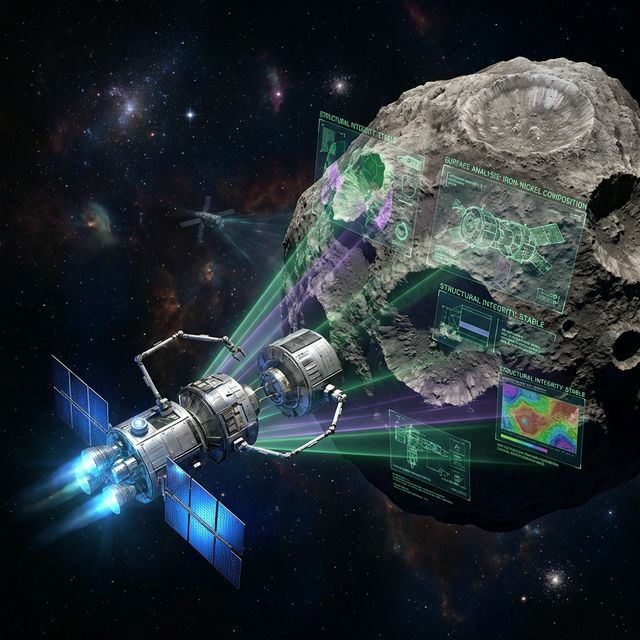
Orbiters are like drones hovering over a mystery island, mapping every nook. They give us 3D views, compositions, and gravity data—crucial for planning mining landings. No quick flyby; these stay months or years, revealing if an asteroid's solid or a rubble pile (important to avoid sinkholes!).
NEAR Shoemaker: The First Orbiter
Named after asteroid guru Gene Shoemaker, NASA's NEAR (Near Earth Asteroid Rendezvous) launched in 1996 for Eros, a potato-shaped near-Earth rock.
Objectives: Orbit, study surface, and land—firsts all around.
Key events: Flew by Mathilde (1997), arrived Eros 2000. Orbited a year, then gently landed in 2001 (unplanned but awesome!). Sent data till batteries died.
Achievements: Mapped Eros' craters and boulders; found it's a solid chunk with iron-nickel hints. Density like Earth's crust, suggesting metallic core.
Relevance to mining: Proved orbiting low-grav bodies possible; landing showed surfaces are dusty but stable. Eros' metals could be mined for tools.
Dawn: Double Duty Dynamo
Dawn, launched 2007, was NASA's ion-thruster champ—zipping to two targets like a road tripper.
Objectives: Study Vesta (protoplanet asteroid) and Ceres (dwarf planet in belt).
Key events: Orbited Vesta 2011-2012, then Ceres 2015-2018. Ran out of fuel, now silent sentinel.
Achievements: Vesta's huge crater revealed layered structure; Ceres has bright salt spots, ice volcanoes, and possible subsurface ocean—hinting at habitability.
Relevance to mining: Ceres' water ice could be fuel goldmine; Vesta's basalts show volcanic past, useful for building materials. Ion tech efficient for mining hauls.
Psyche: Metal World Mystery
Launched 2023, Psyche heads to its namesake—a metal asteroid, possibly a stripped planetary core.
Objectives: Orbit from 2029, map surface, measure magnetism.
Key events: Mars flyby 2026 for boost; arrival July 2029, two-year study.
Achievements (as of 2026): En route, healthy; early data teases iron-nickel riches.
Relevance to mining: If Psyche's metallic, it's a jackpot—trillions in value. Mission tests laser comms for remote ops.
| Mission | Targets | Duration | Big Reveal | Mining Angle |
|---|---|---|---|---|
| NEAR Shoemaker | Eros, Mathilde flyby | 1996-2001 | Solid with metals | Stable for landing gear. |
| Dawn | Vesta, Ceres | 2007-2018 | Ice on Ceres | Water for fuel stations. |
| Psyche | Psyche | 2023-2031+ | Metal core? | Bulk metal extraction. |
Orbiters turn asteroids from dots to detailed worlds!
Flybys: Quick Peeks with Big Payoffs
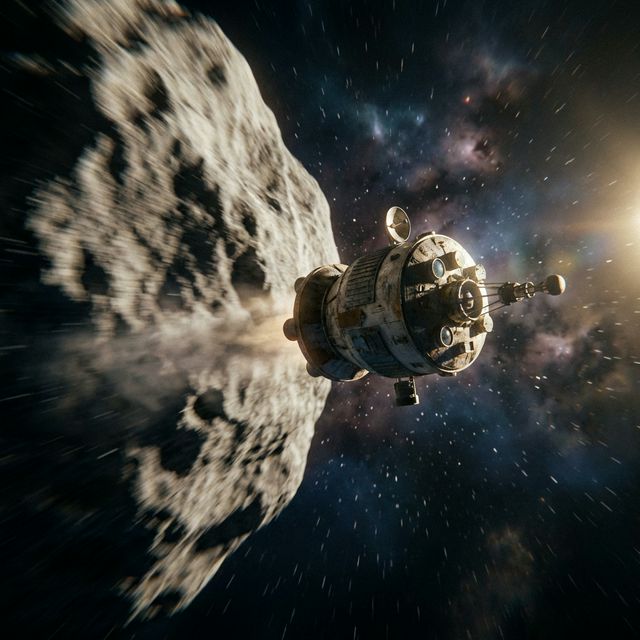
Flybys are drive-bys in space—fast passes for photos and scans without stopping. Cheap and quick, they spot surprises like moons or compositions, helping pick mining targets. Like glancing at a menu before ordering.
Galileo: The Trailblazer
NASA's Galileo, en route to Jupiter (launched 1989), snagged first asteroid close-ups.
Flybys: Gaspra (1991)—cratered, potato-like; Ida (1993)—bigger, with moon Dactyl (first discovered!).
Discoveries: Both magnetic; Ida's density low, rubble-pile.
Relevance: Showed asteroids can have satellites—mining hazard or bonus? Magnetic fields hint at metals.
Rosetta: Comet Chaser with Asteroid Stops
ESA's Rosetta (2004-2016) focused on comet 67P but detoured for asteroids.
Flybys: Steins (2008)—diamond-shaped E-type; Lutetia (2010)—dense, ancient survivor.
Achievements: Steins' crater chain like a necklace; Lutetia's mix of metals and rock.
Relevance: Lutetia's density suggests mining potential; shows flybys reveal diversity.
Lucy: Trojan Tour Guide
Launched 2021, NASA's Lucy explores Jupiter's Trojan asteroids—time capsules.
Flybys (as of 2026): Dinkinesh (2023) with moon Selam; Donaldjohanson (2025). Upcoming: Eurybates (2027), more till 2033.
Achievements: Dinkinesh's binary surprise; healthy post-2025.
Relevance: Trojans' primitives could hold volatiles for mining; multi-target efficiency.
| Mission | Key Flybys | Dates | Surprise | Mining Insight |
|---|---|---|---|---|
| Galileo | Gaspra, Ida | 1991-93 | Dactyl moon | Watch for satellites! |
| Rosetta | Steins, Lutetia | 2008-10 | Dense Lutetia | Metal mixes vary. |
| Lucy | Dinkinesh, etc. | 2023+ | Binaries | Primitives for volatiles. |
Flybys: Low risk, high reward!
Impact Test: Punching Asteroids for Safety
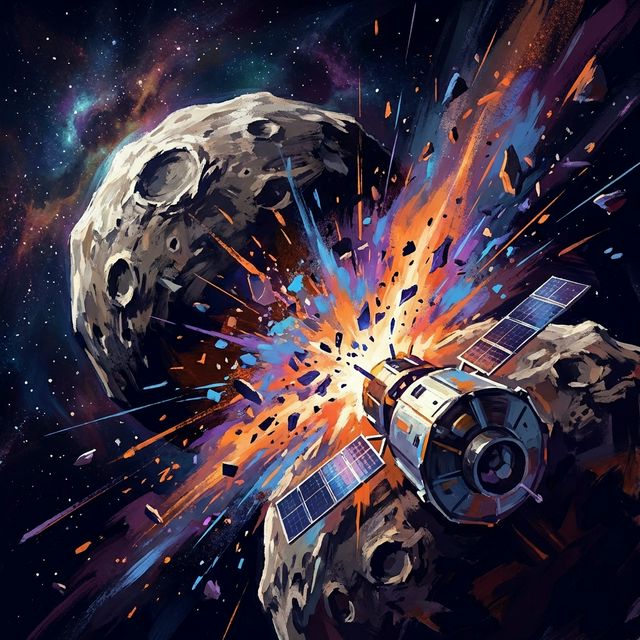
Sometimes, you need to test defenses. Impact tests show if we can nudge asteroids—vital for Earth protection or redirecting mining targets.
DART: The Cosmic Billiard Shot
NASA's DART (2021) was a kamikaze craft testing kinetic impact.
Objectives: Smash into Dimorphos (moonlet of Didymos) to alter orbit.
Key events: Launched 2021, hit 2022 at 14,000 mph. Shortened orbit by 32 minutes!
Results: Proved deflection works; debris tail like a comet.
Relevance to mining: Could redirect threats to ops or nudge resources closer. Follow-up Hera (2026) checks damage.
| Category | Missions | Why It Matters |
|---|---|---|
| Impact Test | DART | Deflect hazards for safe mining. |
Wrapping Up: From Missions to Mining
These successes? Like training wheels for asteroid mining. Samples show resources exist; orbiters map them; flybys scout; impacts protect. Challenges remain—costs, laws—but excitement builds. As Psyche and Lucy continue (2026 updates: both cruising smoothly), imagine: Your phone's platinum from space? It's closer than you think. Quiz time: Which mission found a moon first? (Galileo!) Stay curious—next chapter teases near-future targets.
Key Citations:
- The Planetary Society: Every mission to an asteroid
- Space.com: The greatest asteroid missions
- JPL: Cosmic Detective Work
- Wikipedia: List of missions to minor planets
- Britannica: Asteroid Exploration
- Max Polyakov: Asteroid Missions
- Chemistry World: Do asteroids hold the key to life?
- Astra's Guide to Asteroid Exploration
- CJSS: History and Implications of Asteroid Exploration
- MDPI: Radar in Asteroid Exploration
- Wikipedia: Asteroid
- Planetary Society: Asteroids, comets, small worlds
- Asteroid Day: NEAR-Shoemaker Anniversary
- Knowable Magazine: Seeking surprises
- NASA: Psyche
- NASA: Lucy
- ESA: Rosetta
- NASA: OSIRIS-REx
- JAXA: Hayabusa2
- NASA: Dawn
- NASA: Galileo
- NASA: DART

Santhosh M Kunthe
✉️ santhoshmkska@gmail.com
📞 +91 9110460837