The Hunt for Hidden Treasures
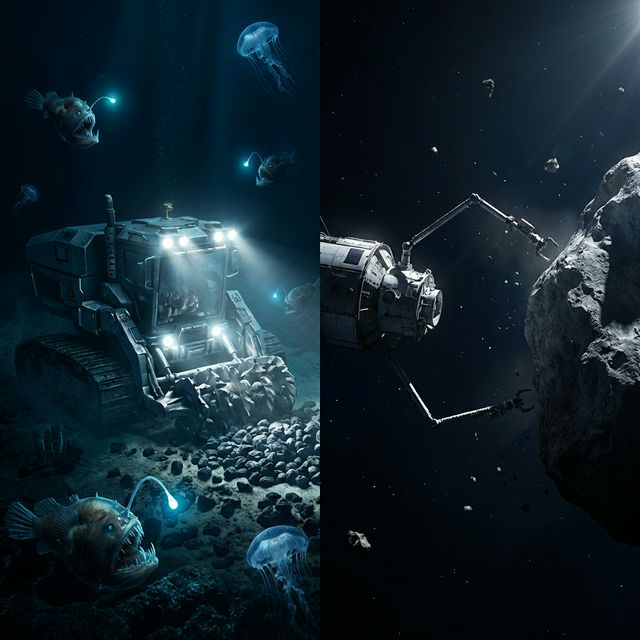
Picture this: You're on a ship in the middle of the ocean, miles from land, lowering a robot into waters deeper than Mount Everest is tall. It's cold, dark, and the pressure could crush a car like a soda can. Now flip the scene— you're in a control room watching a spacecraft zoom toward a rocky asteroid, where there's no air, no gravity to speak of, and temperatures swing from freezing to scorching. These two worlds couldn't seem more different, right? But here's the exciting part: they're more alike than you think. Both are remote, hostile places packed with valuable metals we need for electric cars, wind turbines, and smartphones. And the tools we build for one can often work for the other.
This chapter dives into the technological synergies—the clever overlaps and transferable ideas—between deep-sea mining (DSM) and asteroid mining. We'll explore why the world needs these resources, the shared challenges, and how innovations from the ocean floor are jump-starting space ventures. Think of it like borrowing your neighbor's ladder to reach the high shelf; deep-sea tech is that ladder for asteroid dreams. We'll keep it simple, like chatting over coffee, but cover every angle: from robots crawling on seabeds to drills biting into space rocks, and even the big-picture stuff like laws and the environment. By the end, you'll see how these frontiers aren't just about digging up stuff—they're about building a sustainable future.
Why the Rush? The Global Demand for Critical Materials
Let's start with the basics. Our world is shifting to green energy fast. Electric vehicles (EVs) need batteries, solar panels crave rare metals, and gadgets gobble up electronics. Metals like cobalt, nickel, manganese, and platinum-group elements (PGEs) are the stars here. On Earth, we're running low on easy-to-get supplies, and mining them on land often harms forests, rivers, and communities. Enter the alternatives: the deep-sea floor, with its potato-sized nodules full of goodies, and near-Earth asteroids, which might hold trillions in metals and even water ice for rocket fuel.
Deep-sea spots like the Clarion-Clipperton Zone (a vast Pacific seabed) could supply enough cobalt for millions of EVs. Asteroids, like Psyche (a metal-rich rock NASA is eyeing), might have more platinum than we've ever mined on Earth. But getting there? That's the adventure. Deep-sea mining is closer to reality—companies like The Metals Company are testing collectors now. Asteroid mining? Startups like AstroForge and TransAstra are launching demos, but it's still sci-fi-ish. The synergy? Ocean tech, battle-tested in real ops, gives space folks a head start, cutting costs and risks.
Environmental Twins: Hostile Worlds with Common Problems
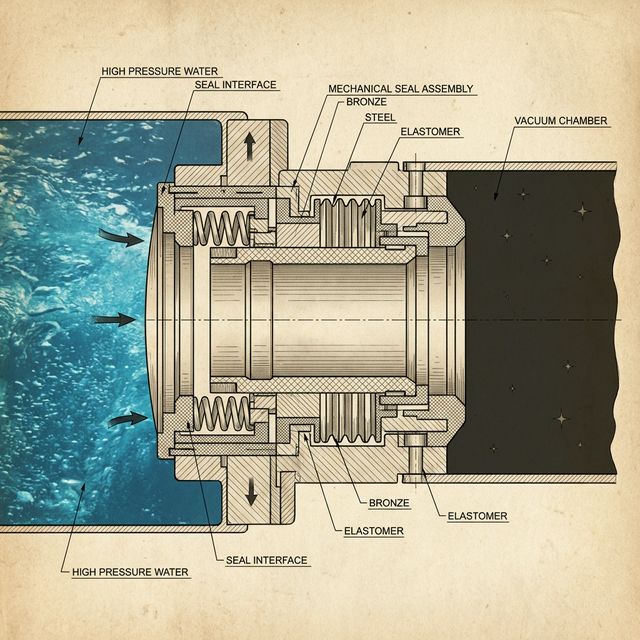
Both realms are "global commons"—no one owns them, so everyone shares the responsibility. Think of them as international parks: we need rules to avoid a free-for-all. In the deep sea, it's the crushing pressure (like 40-60 times atmospheric at 4-6 km deep) and cold (around 2-4°C). Asteroids? Vacuum (near-zero pressure), wild temps (-173°C to 120°C), and radiation zaps.
But common fixes emerge. For pressure: Deep-sea vehicles use tough housings or oil-filled boxes to balance forces. In space, it's the opposite—keeping air in—but the same strong composites (like titanium alloys) work. Sealing tech from ocean gear, designed to block salty water and silt, adapts to keep asteroid dust out. Dust is a killer in both: ocean sediment plumes clog machines, while asteroid regolith (jagged, charged particles) sticks like static cling. Solutions? Silicon carbide seals with lubricants like molybdenum disulfide, tested in vacuums, keep joints moving smoothly.
Table 1: Environmental Variables and Engineering Fixes
| Environmental Variable | Deep-Sea Benthic Layer | Asteroid Surface/Orbit | Engineering Implication |
|---|---|---|---|
| External Pressure | 40–60 MPa | Near-zero (1.322 × 10⁻¹¹ Pa) | Pressure vessels vs. vacuum hardening |
| Temperature Range | 2°C to 4°C (stable) | -173°C to +120°C | Active/passive thermal control |
| Medium | Seawater (corrosive/conductive) | Vacuum (abrasive dust/radiation) | Corrosion vs. radiation shielding |
| Particulate Matter | Silt/fines (abrasive) | Regolith (jagged/electrostatic) | Advanced sealing and filtration |
| Navigation Signal | Acoustic (high latency) | Radio/optical (time-delay) | Autonomous TRN and SLAM |
These parallels mean ocean-tested seals and filters directly transfer, saving space engineers years of trial-and-error.
Robots on the Move: From Seabed Crawlers to Space Hoppers
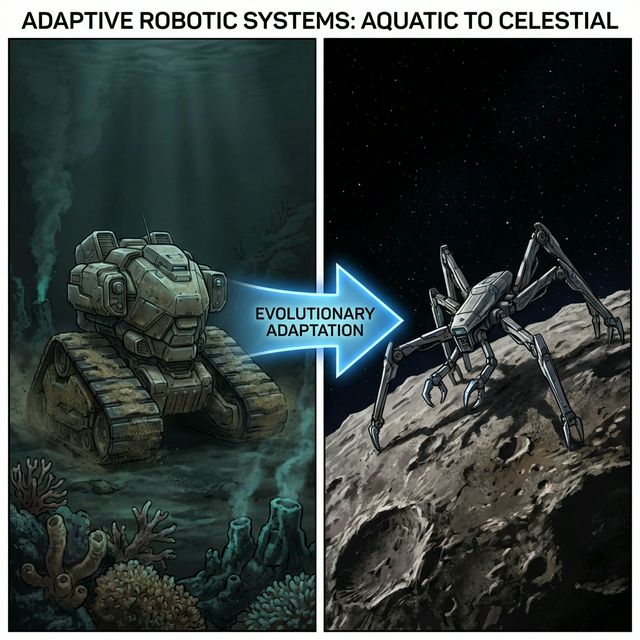
Robots are the heroes here—no humans can survive these spots. Deep-sea mining started with tethered ROVs (remotely operated vehicles) like those fixing oil rigs, but now it's AUVs (autonomous underwater vehicles) and crawlers that roam free. Picture the "Sea Otter" crawler: a tank-like bot that trudges over soft mud without sinking, using tracks and low profile to hug the bottom.
In space, gravity's absence makes wheels useless—tires spin without traction. So, ocean crawlers inspire: NASA's SCAR-E (Space Capable Asteroid Robotic Explorer) is a six-legged spider-bot that grips regolith like insect claws. Developed by Asteroid Mining Corporation, it's set for a 2026 Moon demo. Why? Soft seabed mud mimics loose asteroid dirt. Both need "anchoring" for drilling—ocean bots use spines; space ones add claws for microgravity.
Navigation's another overlap. No GPS in either place. Deep sea uses acoustics (sound waves) and inertial systems, but they drift. Space has radio delays (minutes for asteroids). Fix? Terrain Relative Navigation (TRN)—cameras match landmarks to maps. NASA's Jet Propulsion Laboratory teamed with Woods Hole Oceanographic Institution to adapt TRN from Mars rovers to ocean AUVs like Orpheus. Now, it's back to space for asteroid landings on spinning, odd-shaped rocks.
Table 2: Robot Classes and Transfers
| Robot Class | Deep-Sea Function | Asteroid Repurposing | Technology Transfer |
|---|---|---|---|
| ROV (Remotely Operated) | Precise repair/sampling | Teleoperated orbital mining | Master-slave haptic control |
| AUV (Autonomous) | Large-scale mapping | Proximity mapping/scouting | TRN and acoustic/LiDAR fusion |
| Benthic Crawler | Seafloor excavation | Regolith excavation/anchoring | Tracked traction in low-bearing soil |
| Swarm CubeSats | Cooperative sensing | Detumbling and distributed mining | Decentralized swarm algorithms |
Swarms add fun: Ocean bots team for pipeline checks; space CubeSats could spin-stop an asteroid together, like ants moving a leaf.
Digging In: Extraction Tools That Bite Through Extremes
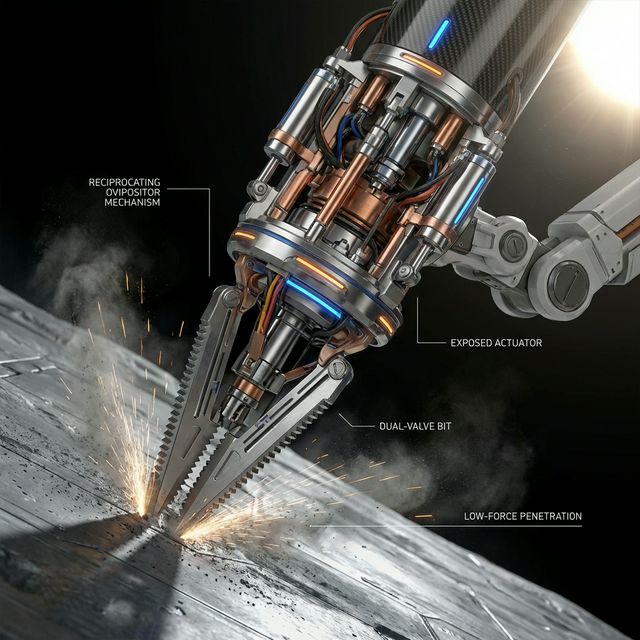
Breaking rock is core to both. Deep-sea sulfides and nodules are hard; asteroid regolith and ice, abrasive. Tungsten carbide bits rule—super-hard, they grind ocean rock and transfer to space drills like Honeybee Robotics' Planetary Deep Drill, which penetrates icy asteroids drawing from subsea coring.
Cool Trick: Reciprocating Drills
In low gravity, traditional drills slip. Ocean-inspired reciprocating drills (like a wood wasp's back-and-forth sting) generate force without heavy weight. Physics differs: Ocean water cools bits; space uses radiators. Power needs triple in cold ice, so high-torque motors from sea crawlers adapt.
Biomimicry shines: Wasp drills for space, insect grips for bots. NASA's Optical Mining uses sunlight focused like a magnifying glass to vaporize rock—tested on Earth analogs, it could mine asteroids without drills.
Moving the Goods: Transport Systems That Lift and Shift
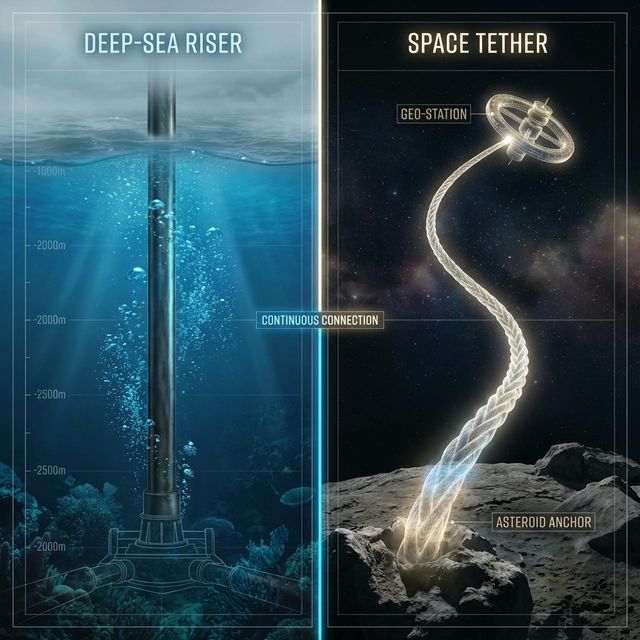
Got the stuff? Now move it. Deep sea: Vertical transport systems (VTS) bridge 5 km to ships. Riser Air-Lift System (RALS) injects air bubbles to suck up nodules via density drop (physics: P = ρgh, lower ρ lifts). Asteroids: No gravity, so conveyors flop. Adapt RALS with asteroid volatiles (water vapor or CO₂) for pneumatic push—like a vacuum cleaner in reverse.
Up top: Centrifuges separate slurry in ocean ships. In space microgravity, spinning does the job—no settling needed. Hydrocyclones grade particles in both, prepping for smelters.
Table 3: Transport Components and Repurposing
| Transport Component | Deep-Sea Utility | Asteroid Repurposing |
|---|---|---|
| Riser Pipe | Vertical fluid column | Pneumatic transport line |
| Air-Lift Pumps | Buoyancy-driven suction | Volatile-driven pneumatic lift |
| Centrifugal Separator | Slurry dewatering | Microgravity mineral isolation |
| Jumper Hose | Flexible tool-riser link | Robotic arm-conduit integration |
| Booster Stations | Maintaining flow velocity | Inline pneumatic acceleration |
This cuts mass for Earth return, making asteroid mining viable.
Tough Tech and Smart Ops
Hardening Systems for Survival
Electronics fry in both: Ocean pressure squishes; space radiation zaps. Solution: Oil-filled enclosures from deep sea equalize pressure and cool via conduction—perfect for space's no-convection vacuum. Oils shield radiation too.
Smart Ops: Telepresence and Swarms
Humans stay safe: Ocean ops from ships; space from Earth/orbit. NASA's SUBSEA project uses Hawaii's Lō`ihi volcano as Enceladus analog, testing low-latency telerobotics (LLT) with xGDS software for data viz—mirrors asteroid delays. Swarms: Ocean for sensing; space for mining. Bio-inspired: Ant colonies for roles, fireflies for signaling in noise.
Bio-Mining: Nature's Helpers
Microbes leach metals cleanly. Ocean bio-leaching cuts waste; space ISS tests show bacteria extract in microgravity, even powering RTGs with uranium. Greener than smelting.
Big Builds: Infrastructure Dreams
Tethers: Ocean risers inspire space elevators with carbon nanotubes. Autonomous bots: Ocean ROVs evolve to space "spiders" for habitats.
Impacts and Governance
Life cycle assessments (LCAs) show asteroid mining's lower CO₂ vs. Earth platinum (150kg vs. 40,000kg per kg). Deep sea claims less biodiversity hit than land, but plumes worry. Sustainability paradox: Mining aids climate fight but risks ecosystems.
Rules of the Game
International Seabed Authority (ISA) for oceans; Outer Space Treaty for space. Share tech/benefits, avoid tragedy of commons. ISA's nodule rules mirror proposed asteroid equitable access.
Wrapping Up: A Path to Stars Via the Depths
Deep-sea mining's maturity— with real crawlers, drills, and lifts—fuels asteroid leaps. Key transfers: mobility, extraction, transport, hardening, ops. But it's not just tech; it's about responsible harvesting for Earth's green shift and space homes. As companies like Impossible Metals refine ocean bots and AstroForge eyes asteroids, synergies promise a resource-rich future. Challenges remain—costs, ethics—but the flow from sea to space feels inevitable, like tides pulling us forward.
This chapter shows how everyday engineering puzzles in one extreme unlock another. Whether you're a YouTuber curious about robots or a student dreaming of space, remember: innovation bridges worlds.
Quick Quiz
Pause here and quiz yourself:
What is one key technology transferred from deep-sea mining to asteroid mining?
Click to reveal answer
Tungsten carbide drill bits, TRN navigation, or oil-filled electronics!
Key Citations:
- Developing technological synergies between deep-sea and space research | Elementa: Science of the Anthropocene | University of California Press
- SPACE RESOURCE UTILIZATION: TECHNOLOGIES AND POTENTIAL SYNERGISM WITH TERRESTRIAL MINING, Gerald B. Sanders, NASA Johnson Space
- New mining frontiers: from the ocean floor to space - Mining Technology
- Are we on the verge of mining metals from the asteroids above Earth? - BBC
- Before mining asteroids, sell the tech - Metal Tech News
- Building an economy in space with asteroid mining - AVEVA
- SUBSEA - NASA

Santhosh M Kunthe
✉️ santhoshmkska@gmail.com
📞 +91 9110460837