Vision for Tier 3 and Tier 4
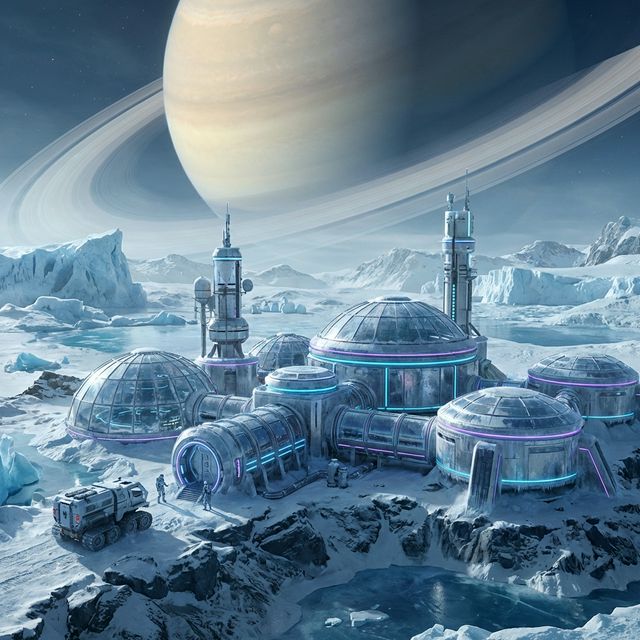
Imagine stepping out of your habitat module onto a frozen landscape where the sun is just a distant pinpoint, and the sky is dominated by the swirling bands of a giant planet. Or picture gliding through thick, hazy air over lakes of liquid methane, harvesting resources that could fuel entire starships. This isn't science fiction—it's the vision for Tier 3 and Tier 4 in our multi-planetary roadmap. While Tier 1 and 2 focus on accessible spots like the Moon and Mars, these farther frontiers represent the bold leap into the outer solar system. They're "futuristic" because getting there and staying there will demand technologies we haven't fully mastered yet: faster propulsion systems like nuclear thermal rockets, self-replicating robots for building bases, and advanced life support that turns ice into breathable air and food. But the payoff? Endless supplies of water, organics, and metals that could end Earth's resource crunches forever. Let's dive in, starting with Tier 3, where we're talking about moons and asteroids that feel like stepping stones to the stars. We'll use simple analogies—like comparing a moon's ocean to a hidden underground pool—to keep things relatable, and I'll sprinkle in fun facts to spark your imagination.
Understanding the Tiers: Why Tier 3 and 4 Matter
Before we zoom in on specific spots, let's set the scene. Tier 3 includes bodies around 4–9 AU from the Sun (about 600 million to 1.3 billion kilometers), where sunlight is faint, temperatures plunge to -200°C or lower, and travel times from Earth could stretch to years with current rockets. Tier 4 pushes even farther, beyond 30 AU, into the Kuiper Belt's icy wilderness. These aren't quick pit stops; they're for long-haul expansion when humanity needs new homes or outposts. Think of it like pioneering the Wild West: early settlers (us) scout for gold (resources like water ice for fuel), but the real architecture—domed habitats, underground tunnels, or floating cities—comes later. Research shows these sites could support life through subsurface oceans and volatiles (gassy compounds like methane), but challenges like low gravity (which might weaken bones) and cosmic radiation require clever solutions, such as burying habitats in ice for natural shielding. International treaties, like the Outer Space Treaty, will likely guide fair use, avoiding conflicts over who "owns" a moon's water.
A quick table to compare the tiers at a glance:
| Tier | Distance from Sun (AU) | Key Resources | Main Challenges | Example Architecture |
|---|---|---|---|---|
| 3 | 4–9 | Water ice, organics, metals | Radiation, cold, travel time | Subsurface bases, domed greenhouses |
| 4 | 30+ | Nitrogen, methane ices | Extreme isolation, low energy | Automated mining stations, cryogenic habitats |
This setup ensures we're building sustainably—using local stuff to grow colonies without constant Earth resupplies.
Tier 3: The Gateway to the Giants
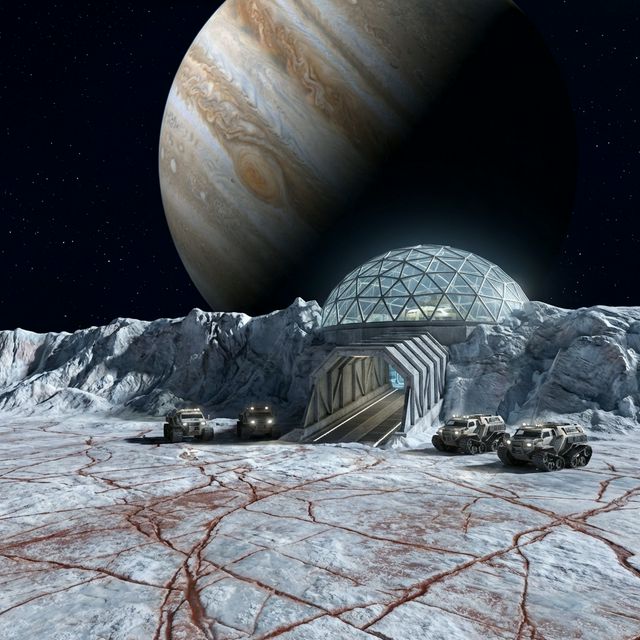
Tier 3 orbits the gas giants Jupiter and Saturn, plus some hefty asteroids. These spots are futuristic because they're energy-rich (from planetary gravity assists) but harsh. Jupiter's moons face intense radiation from the planet's magnetic field, like living near a constant solar storm, while Saturn's are chillier but calmer. Asteroids add mining vibes, like space quarries. Let's break it down by group.
Jupiter's Icy Trio: Callisto, Europa, and Ganymede
Jupiter's Galilean moons are like a family of frozen worlds, each with hidden treasures. Start with Callisto, the outermost—it's the "ugly duckling" turned swan for colonization. About the size of Mercury but mostly ice and rock, Callisto has a thin atmosphere and a possible salty ocean deep underground. Radiation here is low compared to its siblings (only 12 times Earth's levels), so you could build surface domes with radiation-blocking glass, like a giant greenhouse overlooking Jupiter's storms. Resources? Tons of water ice for drinking, oxygen, and rocket fuel via electrolysis (zapping water to split it into hydrogen and oxygen). Fun fact: Callisto's craters are ancient, making it a time capsule for studying solar system history. Architecture might include lava-tube shelters (natural caves from old volcanism) for protection, supporting a base of thousands harvesting silicates for building materials.
Next, Europa—the shiny, cracked ice ball that's got everyone excited about life. Its surface is smoother than a skating rink, hiding a vast ocean twice the volume of Earth's seas. This water contacts rocky mantle, leaching minerals that could feed microbes (or future farms). But radiation is brutal—700 times Earth's— so habitats would burrow under 10-20 meters of ice, like submarine bases with drills melting through to the ocean for exploration. Imagine robotic subs hunting biosignatures while humans grow food in hydroponic labs. Challenges: Tidal heating from Jupiter causes quakes, so flexible structures are key. Europa's potential for life makes it a scientific hub, but we'd need bio-containment to avoid contaminating it.
Ganymede, the biggest moon in the solar system (larger than Mercury), has its own magnetic field—a natural shield against some radiation. Like Europa, it boasts a subsurface ocean, plus silicates and organics for ISRU. Gravity is low (about 15% Earth's), so colonists might use centrifuges for "spin gravity" to stay healthy. Architecture: Vast underground cities powered by solar sails or nuclear reactors, mining iron and nickel for exports. Fun fact: Ganymede's auroras glow from radiation interactions, like a natural light show. Together, these moons could form a "Jovian network," with Callisto as the safe harbor, Europa for bio-research, and Ganymede for industry.
Saturn's Diverse Satellites
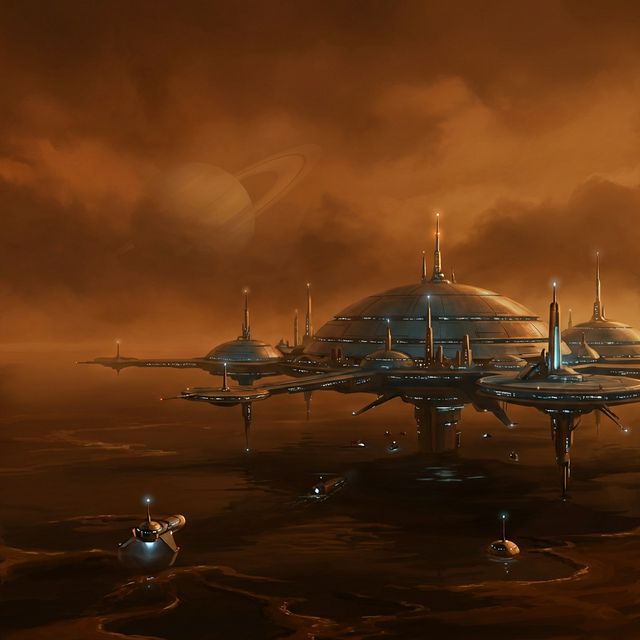
Titan, Enceladus, Rhea, Iapetus, Dione, Tethys, Mimas
Saturn's moons are a mixed bag, from foggy Titan to geyser-spewing Enceladus. Titan is the star—Earth-like with a thick nitrogen atmosphere (1.5 times Earth's pressure) and lakes of methane, like a cold, alien Venice. You could fly with wings due to low gravity and dense air! Resources abound: Methane for fuel, organics for plastics, and possible subsurface water. Colonization might involve floating cities or domed settlements harvesting "tholins" (red organic goo) for chemicals. Challenges: -180°C temps require insulated suits, but it's radiation-free compared to Jupiter. A colony of 300 million could thrive with solar, wind, or hydropower from methane rivers. Fun fact: Rain on Titan is methane, not water—umbrella optional, but fireproof.
Enceladus is the "geyser moon," with plumes shooting water, organics, and even lipids (life-building blocks) from its south pole. This hints at a warm ocean beneath, potentially habitable. Architecture: Ice-tunnel bases tapping geysers for easy water access, like natural fountains. Silicate core provides building materials. Low gravity means easy launches, ideal for refueling stations.
The mid-sized ones—Rhea, Iapetus, Dione, Tethys, Mimas—are icy worlds with craters and tectonics, suggesting past activity. Rhea and Dione have thin atmospheres and possible oceans; Iapetus's two-tone color (dark leading side) could hide organics. Mimas looks like the Death Star with its giant crater! These are mining spots: Water ice for fuel, silicates for construction. Habitats: Buried outposts linked by maglev trains, using E-ring particles (from Enceladus) for surface coatings. As a group, Saturn's moons could be the "Persian Gulf" of space, exporting helium-3 and volatiles.
Asteroid Powerhouses
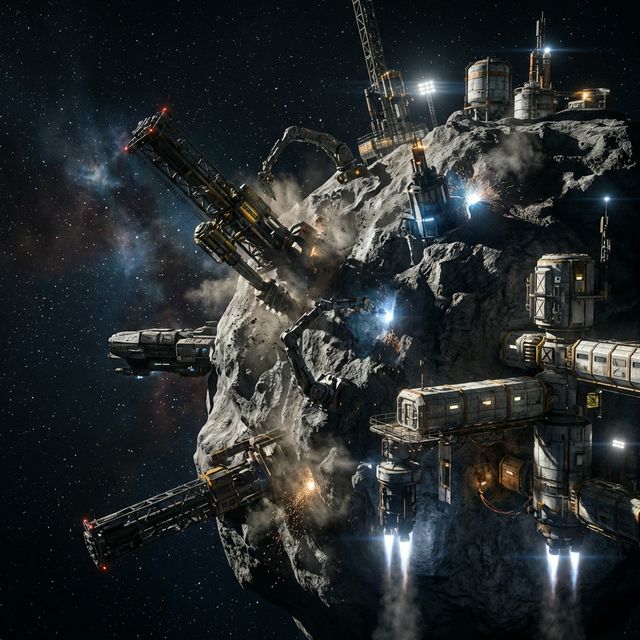
2 Pallas, 10 Hygiea, 511 Davida, 624 Hektor
These aren't moons but massive asteroids, perfect for mining ops. 2 Pallas, a C-type giant (third-largest in the belt), is rich in water and carbons—like a floating fertilizer factory. Colonization: Rotating habitats for gravity, drilling for volatiles. Value: Trillions in resources.
10 Hygiea, potentially a dwarf planet, has hydrated minerals for water extraction. It's stable, ideal for long-term bases.
511 Davida could yield $27 quadrillion in metals—platinum, gold—like a space vault. Robotic mining swarms, human overseers in orbital stations.
624 Hektor, a Trojan asteroid (sharing Jupiter's orbit), is oddly shaped like a dumbbell, possibly two bodies fused. D-type with organics, great for fuel. Architecture: Tethered colonies spinning for gravity. These asteroids bridge tiers, supplying metals for moon bases.
Tier 4: The Distant Icy Frontier
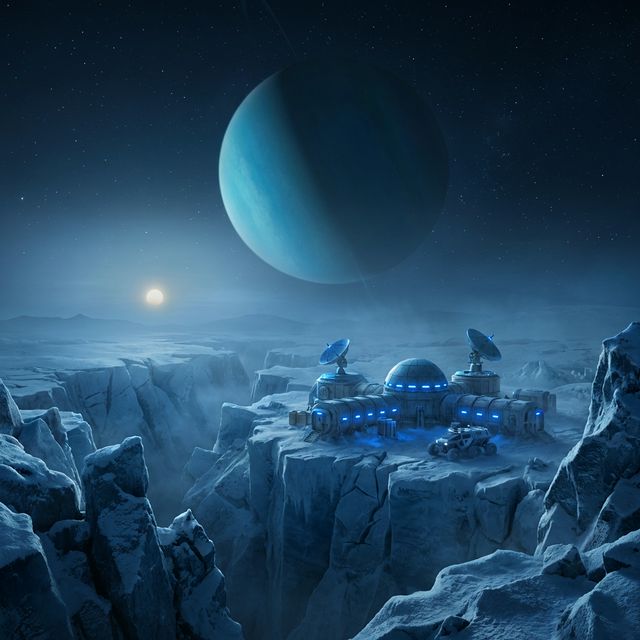
Now we're venturing where sunlight is a whisper—beyond 30 AU. These are for automated pioneers first, with humans following centuries later. Think robotic factories paving the way, like scouts in uncharted territory.
Uranus's Moons: Titania, Oberon, Ariel
Uranus's largest moons are icy, tilted worlds. Titania, the biggest, has canyons and possible cryovolcanism (ice volcanoes), with water and organics. Low radiation makes it safer; habitats: Ice-carved domes using ammonia for antifreeze.
Oberon, rugged with craters, hides potential subsurface water. Ariel, brighter and geologically young, might have oceans—drill for volatiles. These are quiet outposts for astronomy, far from light pollution.
Neptune's Triton
Triton, Neptune's captured moon, orbits backward with nitrogen geysers like mini volcanoes. Atmosphere thin but usable; resources: Nitrogen for air, methane for fuel. Colonization: Geothermal (tidal heating) powered bases, harvesting geysers. Challenges: -230°C, but feasible with nuclear heat. Fun fact: Triton's pink hue from frozen nitrogen— like a strawberry snow cone.
Kuiper Belt Dwarves
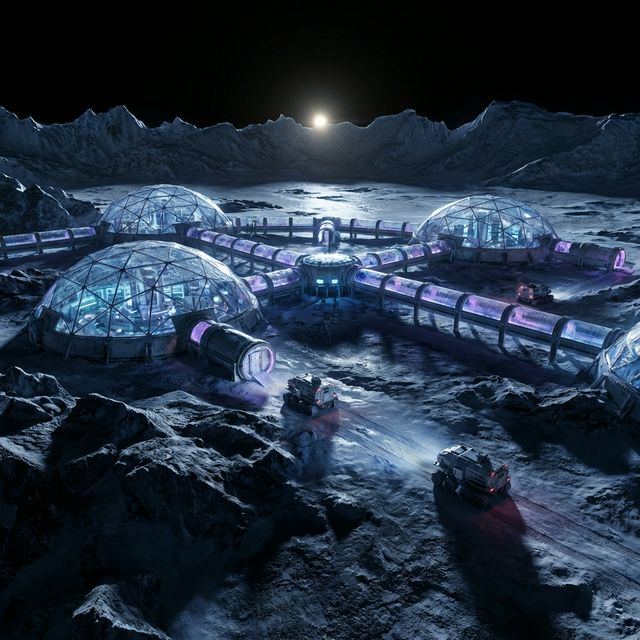
Pluto, Charon, Eris, Haumea, Makemake, Gonggong, Quaoar, Sedna, Orcus, Salacia, Varuna
These icy worlds are treasure troves of frozen gases. Pluto and Charon form a binary system; Pluto's heart-shaped plain hides nitrogen ices, potential oceans. Habitats: Underground, using methane for energy. Charon: Water ice mountains for mining.
Eris, similar to Pluto but farther, has methane surface—fuel depot potential. Haumea spins fast, egg-shaped, with crystalline ice. Makemake: Red tholins for organics. Gonggong (with moon Xiangliu): Water ice, possible cryovolcanism. Quaoar: Crystalline ice, dense ring. Sedna: Reddest, distant orbit—outpost for interstellar scouting. Orcus: Like anti-Pluto, with water. Salacia: Binary, icy. Varuna: Elongated, potential volatiles.
Architecture: Cryogenic storage for ices, AI-managed farms. These could be "waystations" for Oort Cloud exploration, exporting nitrogen to inner colonies.
Wrapping Up: Building the Future
Tier 3 and 4 aren't just dots on a map—they're the blueprint for humanity's cosmic legacy. From Titan's foggy shores to Sedna's lonely ice, these sites offer resources to sustain billions, spark discoveries, and ensure survival. But it starts with us: Investing in tech, fostering cooperation, and dreaming big. What's next? Maybe your grandkids mining on Ganymede. Stay curious—the stars await!
Key Citations:

Santhosh M Kunthe
✉️ santhoshmkska@gmail.com
📞 +91 9110460837