Dreaming Bigger: Beyond Spinning Ships
Hey there, space enthusiast! Welcome back to our asteroid mining series. If you've been following along, you know from Chapter 11 that we've got some cool, tested ways to create artificial gravity—like spinning parts of spaceships or using centrifuges on the International Space Station (ISS). Those are practical steps we're already experimenting with today. But what if we dream bigger? What if we could build entire worlds in space where gravity feels just like home, or even bend the laws of physics in wild new ways to make floating feel like standing on solid ground?
In this chapter, we're diving into the futuristic, theoretical, and conceptual side of artificial gravity. Think of it as the "what if" section—ideas that might sound like science fiction now but could become reality as our tech advances. Why does this matter for asteroid mining? Well, mining those space rocks means long stays in zero gravity, which can mess with our bodies (remember the cereal bowl example from last chapter?). These big ideas could let us build massive mining bases or habitats right next to asteroids, turning them into comfy outposts for digging up metals and water without our muscles turning to jelly. We'll keep things simple, fun, and full of everyday analogies, just like explaining how a playground swing works. Let's spin into the future!
Building Giant Homes in Space
Picture this: Instead of tiny spaceships, we construct enormous structures in orbit that feel like mini-planets. These "megastructures" are designed to house thousands or even millions of people, with farms, cities, and yes—mining operations built right in. They're called orbital megastructures because they're huge, self-sustaining worlds floating around the Sun or Earth. The key trick? They spin to create artificial gravity, using that outward push (centrifugal force) to make "down" feel real. This isn't just for living; for asteroid miners, these could be hubs where we process resources on-site, avoiding the hassle of shipping everything back to Earth.
These ideas come from visionaries like physicist Gerard K. O'Neill, who in the 1970s imagined using asteroids and the Moon as "quarries" to build them cheaply. Fun fact: O'Neill's designs were inspired by his Princeton students brainstorming wild space ideas! Let's break down three famous ones: the O'Neill Cylinder, the Stanford Torus, and the Bernal Sphere. Each has its own shape and perks, like choosing between a tube, a donut, or a ball for your space house.
The O’Neill Cylinder (Island Three): A Spinning Tube of Wonders
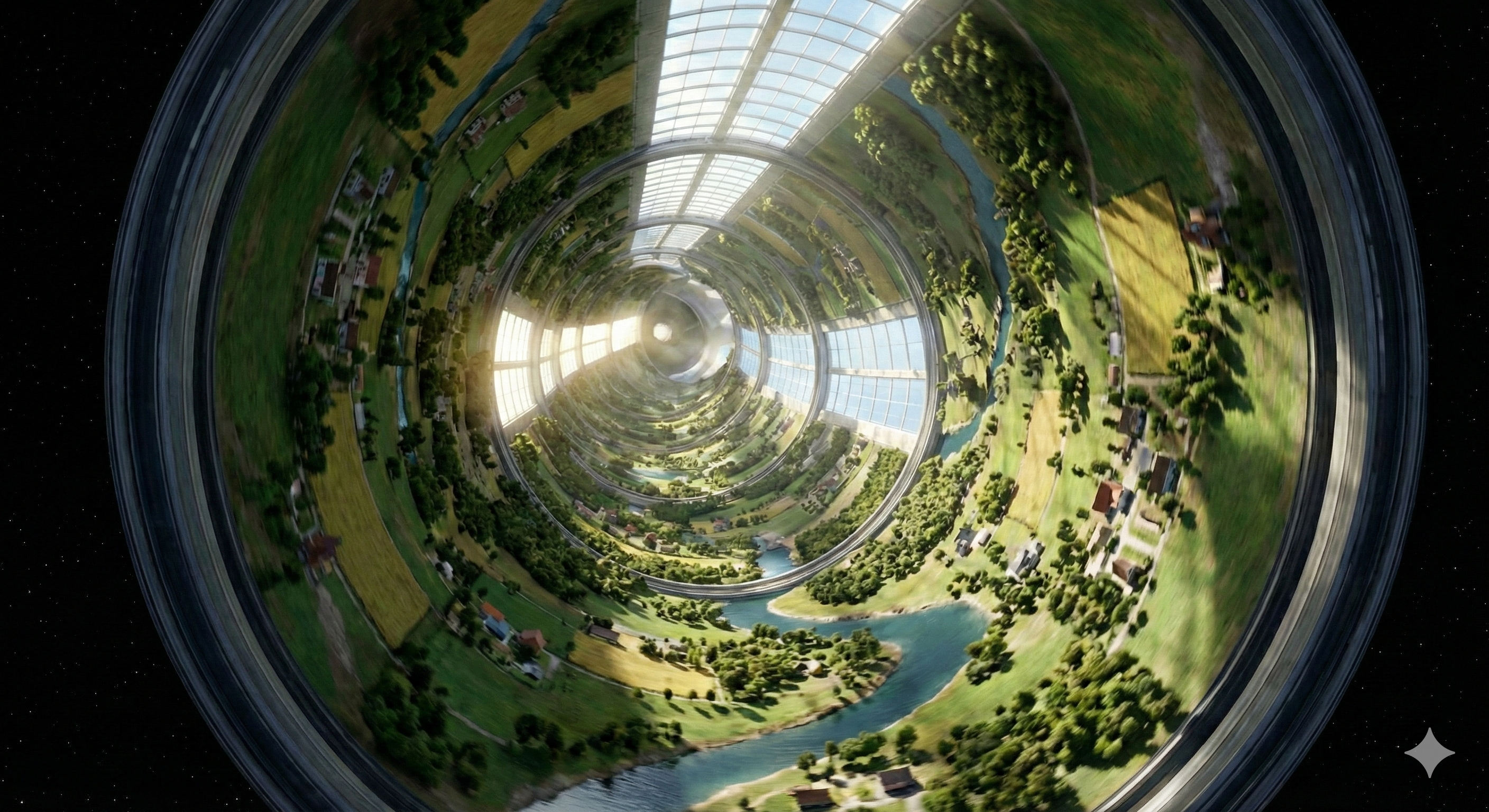
Imagine a gigantic soda can, miles long and wide, spinning slowly in space. That's the O'Neill Cylinder, also known as Island Three—O'Neill's biggest design for a space colony. Proposed in his 1976 book The High Frontier, it's like a floating city where you live on the inside walls, and the spin makes gravity pull you "down" toward the curve.
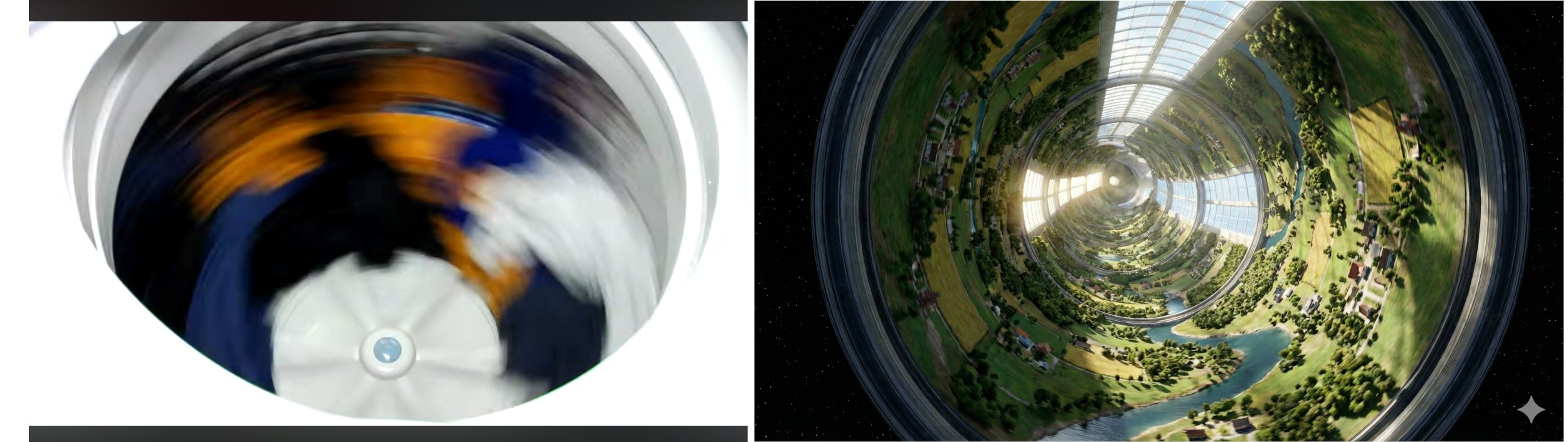
Think about a Washing Machine on the spin cycle:
The "All Sides" Push
When the washing machine spins super fast, the clothes don't all fall to the bottom. Instead, they
get plastered flat against the walls all the way around—top, bottom, and sides!
- The clothes at the top are pushed UP into the wall.
- The clothes at the bottom are pushed DOWN into the wall.
- The clothes on the sides are pushed LEFT or RIGHT into the wall.
Every single inch of that circle is pushing outward away from the center.
Back to the O’Neill Cylinder
The O’Neill Cylinder is just like that washing machine.
- Everything is Pushed Out: Because the whole tube is spinning, the "push" happens in every direction away from the middle.
- The Wall is the Floor: No matter where you stand on the inside of the tube, your feet are being pushed against the wall.
- Looking Across: If you are standing on the "bottom" wall, and your friend is standing on the "top" wall, you are both being pushed into your own "floors." Since the tube is hollow, when you look up, you aren't looking at space—you're looking through the empty air at your friend’s house on the other side just like how clothes at the bottom of a washing machine can look at clothes at the top of the washing machine!
"Think of it as a washing machine designed by a pacifist: it uses the same spin to keep you pinned to the floor, but it moves so slowly and gracefully that you'd never know you were rotating."
Here's how it works: The cylinder is about 5 miles (8 km) wide and 20 miles (32 km) long—bigger than some Earth cities! It rotates about 28 times an hour, creating Earth-like gravity through centrifugal force. Think of riding in a hamster wheel: The spin pushes you against the floor, so you can walk, run, or even ski on artificial hills without floating away. To keep it stable, there are usually two cylinders spinning in opposite directions, connected by rods—like twin tops balancing each other out.
Inside, it's paradise: Striped with windows and land areas (three clear for sunlight, three for living), plus a farming ring outside for growing food. Mirrors outside reflect sunlight in, and at night, they open for stargazing. The air is breathable, radiation is blocked by thick walls, and there's even weather—rain and wind from controlled systems. Population? Up to millions in bigger versions!
For asteroid mining, this is a game-changer. We could build it using metals from asteroids like Psyche (that metal-rich one from Chapter 3), turning mined resources into habitat parts. Launch materials from the Moon with magnetic rails, assemble in space, and boom—you've got a mining HQ with gravity, farms, and factories. Scaled-up ideas, like the McKendree Cylinder using super-strong carbon nanotubes, could be hundreds of miles wide, housing billions. But challenges? It's huge and expensive to build—though asteroids could cut costs. O'Neill dreamed of this as humanity's next step, even inspiring folks like Jeff Bezos to talk about space colonies over planets.
Fun analogy: It's like a massive RV park in orbit, where miners park their robots, process ore in zero-g factories at the center, and relax in full gravity after a shift.
The Stanford Torus: A Giant Donut for Space Living
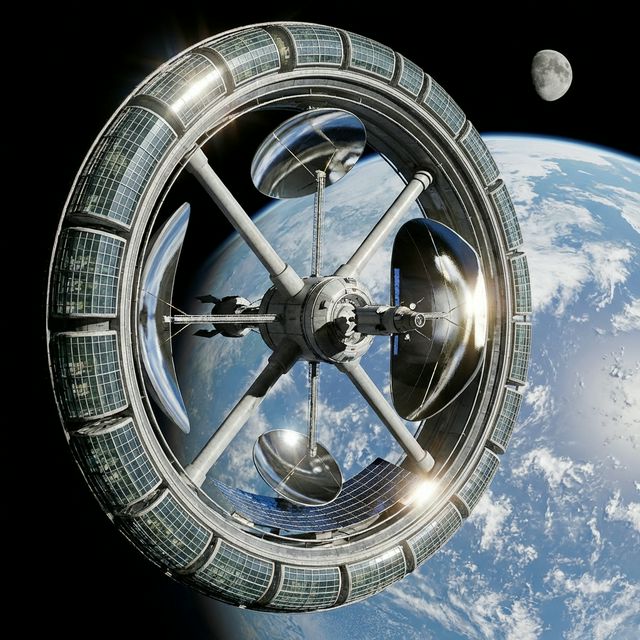
Now, swap the tube for a donut—that's the Stanford Torus, a ring-shaped habitat from a 1975 NASA study at Stanford University. Picture a bicycle wheel spinning in space, with the rim as your living room. It's designed for about 10,000 people, like a small town floating at a stable spot between Earth and the Moon (called L5 Lagrange point—think of it as a parking spot in gravity).
The design: A 1.1-mile (1.8 km) wide ring with a 130-meter tube for homes and farms. Six spokes connect to a non-spinning hub in the middle for docking spaceships—easy access for mining crews hauling asteroid goodies. The whole thing spins once a minute, creating near-Earth gravity on the inside curve. Sunlight bounces in via mirrors, like spotlights at a concert, lighting up terraced valleys with parks, streets, and buildings.
Features galore: Half the ring is farms (growing wheat, veggies, and even raising chickens), the other half is suburbs with schools, hospitals, and shops. Transportation? Monorails and moving sidewalks zip you around the 3.5-mile loop. Shielding from space radiation comes from lunar dirt piled on the outside—95% of the structure's mass!
Tying to asteroid mining: Built mostly from Moon materials, but asteroids could supply extras like rare metals for tools or water for farms. Once up, it could replicate itself, building more toruses as mining expands. A wild twist: Stack four for a "world ship" to travel between stars, with asteroid fuel along the way.
Analogy time: It's like a circular neighborhood where gravity keeps your coffee in the cup, and miners use the hub's zero-g for sorting asteroid chunks without them floating off.
O’Neill Cylinder vs. Stanford Torus: The Showdown
If the O’Neill Cylinder is a giant washing machine (a long tube that spins you around inside), then the Stanford Torus is a giant bicycle tire.
Here is the simplest way to see the difference:
1. The Shape
- O’Neill Cylinder (The Washing Machine): It is a long, straight tube. Imagine living inside a giant soda can or a rolling pin.
- Stanford Torus (The Bicycle Tire): It is a hollow ring. Imagine living inside a giant, silver donut or a hula hoop.
2. The Space
- In the Washing Machine (O’Neill): You have a huge amount of land. It’s like a massive indoor park that goes on for miles and miles in front of you.
- In the Bicycle Tire (Stanford): You are in a smaller, curved tunnel. If you walk far enough in one direction, you eventually end up right back where you started!
3. The "Sky"
- In the Washing Machine: If you look straight up, you see the neighborhood on the other side of the tube, like a giant ceiling made of houses and trees.
- In the Bicycle Tire: The "ceiling" is much closer. It feels more like living in a very wide, curved hallway that circles the sun.
In short: The O’Neill Cylinder is a giant spinning room, while the Stanford Torus is a giant spinning track.
The easiest way to think about why we have both is to compare a bicycle to a cruise ship. They both get you where you're going, but one is much easier to build, while the other holds a lot more people!
Here is how they compare in a "better or worse" way:
1. The Stanford Torus (The Bicycle Tire)
- The "Better" Part: It is much smaller and easier to build. If humans were going to build our first house in space, we would probably start with the Torus. It uses fewer materials (like rocks from the moon) to get started.
- The "Worse" Part: It’s a bit cramped. Because it's a narrow ring, you don’t have as much "sky" above your head. It feels more like living in a very fancy, circular tunnel.
2. The O’Neill Cylinder (The Washing Machine)
- The "Better" Part: It is enormous! It’s so big that it can actually have its own weather. You could have real clouds and even rain inside an O'Neill Cylinder because the "ceiling" is so high up. It feels like a real world, not just a space station.
- The "Worse" Part: It is really hard to build. You need a massive amount of metal and glass. It's like trying to build a whole city and a mountain range all at once.
Why do we have both? (The Purpose)
They serve two different stages of living in space:
| Concept | The Job (Purpose) |
|---|---|
| Stanford Torus | The Starter Home: It’s a workplace or a small town for about 10,000 people. Great for a first colony or a mining base. |
| O’Neill Cylinder | The Big City: It’s for millions of people to live their whole lives. It’s meant to be a permanent "New Earth." |
A Quick Summary
- The Stanford Torus is for when we want to get to space fast and efficiently.
- The O’Neill Cylinder is for when we want to stay there forever with plenty of room to grow.
Deep Dive: The Engineering Challenge
To understand why the Stanford Torus is the "starter home" and the O’Neill Cylinder is the "mega-mansion," we have to look at how much stuff you need to build them and how they handle the pressure of spinning.
1. The "Balloon" Problem (Air Pressure)
Imagine you are blowing up a balloon. A long, thin balloon (like the ones used to make balloon animals) is much harder to keep straight and strong than a round, donut-shaped one.
- The O’Neill Cylinder: It’s a massive tube. To keep enough air inside for people to breathe, the walls have to be incredibly thick and strong so they don't pop or bend under the pressure.
- The Stanford Torus: Because it’s a skinny ring, the "air pocket" is smaller. It’s much easier to build a strong "pipe" in a circle than it is to build a giant, hollow skyscraper-sized drum.
2. The Weight of the "Magic Gravity"
Remember, both of these stations spin to create fake gravity.
- The O’Neill Cylinder: It is huge. When you spin something that big, the metal at the edges feels a massive amount of "pull." It’s like trying to spin a giant bucket of water overhead—if the handle isn't strong enough, it snaps. We don't currently have a metal strong enough to hold a full-sized O'Neill Cylinder together without it tearing itself apart!
- The Stanford Torus: Because the ring is thinner and closer to the center, the "pull" isn't as violent on the structure. We can build it using materials we already have, like aluminum and steel.
3. Moon Rocks and Space Dirt (Shielding)
Space is full of "sunburn" (radiation) and tiny flying rocks. To stay safe, both stations need a thick layer of "dirt" on the outside—about 6 feet thick!
- The O’Neill Cylinder: Because it’s a giant, wide cylinder, you need a mountain's worth of dirt to cover the whole thing. Moving that much dirt from the Moon to the station is a massive job.
- The Stanford Torus: You only have to cover the "tube" part of the donut. It’s like painting a hula hoop versus painting a whole bus. You need way less "space dirt" to keep everyone safe.
4. Lighting the Room
- The O’Neill Cylinder: It needs giant, moving glass windows that run the whole length of the tube to let in sunlight. Making glass that big—and making sure it doesn't break—is a nightmare.
- The Stanford Torus: It uses a single, non-moving mirror that floats above the donut. It’s a much simpler "flashlight" system that doesn't require complex moving parts.
Summary Table
| Feature | Stanford Torus (The Donut) | O’Neill Cylinder (The Tube) |
|---|---|---|
| Material Needed | Much less (Cheaper) | A staggering amount (Expensive) |
| Strength | Easy to keep together | Needs "Super Materials" we don't have yet |
| Protection | Needs less "dirt" shielding | Needs a massive "shell" of dirt |
| Complexity | Simple mirrors | Massive moving windows |
In short, we could probably start building a Stanford Torus with the technology we are developing right now for asteroid mining. The O’Neill Cylinder is what we build 100 years after that, once we’ve become experts at living in the stars!
The Bernal Sphere (Island One): A Bubble World in Orbit
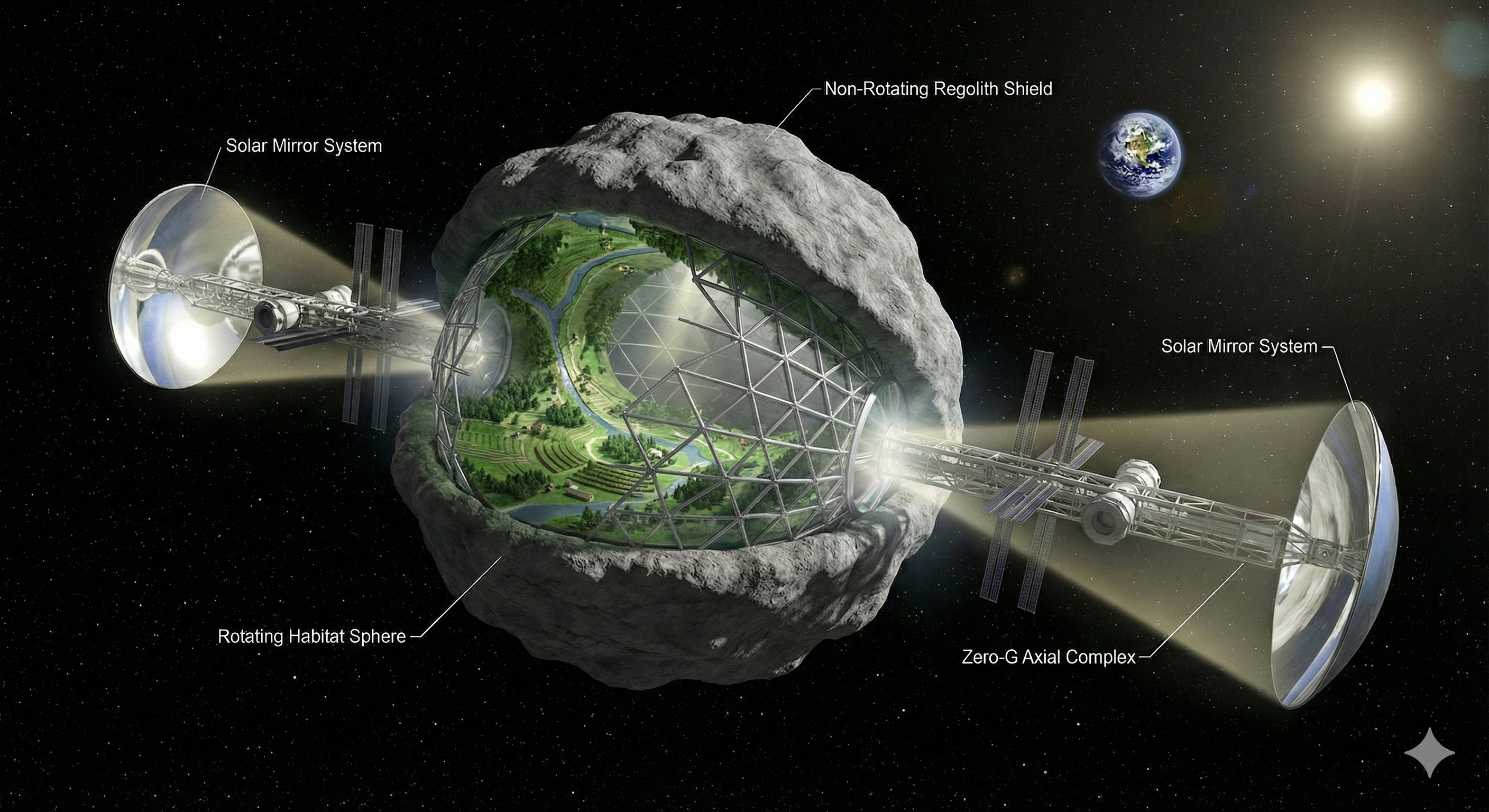
Last in this trio: the Bernal Sphere, a ball-shaped habitat like a giant soccer ball you live inside. Dreamed up in 1929 by John Desmond Bernal, it got upgraded in the 1970s by O'Neill as "Island One"—a starter colony for 10,000 folks.
Design basics: A hollow sphere about 1,600 feet (500 meters) across, spinning at 1.9 times a minute for gravity at the equator. The inside curves into a vast valley wrapping overhead—no flat floors here, just a seamless landscape. Windows at the poles let sunlight in via mirrors, and ring-shaped farms at the ends grow food like orbiting greenhouses.
Size options: Bernal's original was 10 miles wide for 20,000-30,000 people; O'Neill's smaller for practicality. Features: Thick walls block radiation, air pressure like Earth's, and space for homes, parks, and industry. Gravity fades toward the poles—great for low-g sports or factories.
For mining: Asteroids provide building blocks, turning the sphere into a processing plant. Mine water for air, metals for expansion—it's self-sustaining!
Analogy: Like living in a snow globe that spins, with gravity gluing you to the "ground" while asteroids supply the glitter (resources).
Why O’Neill Cylinder Can't Be a Big Sphere (The Drum Shape)
This is a great question! If a sphere is the "strongest" shape, why do we build the O’Neill Cylinder like a giant soda can instead of just making a much bigger Bernal Sphere?
It all comes down to Gravity and Real Estate.
1. The "Gravity" Problem (The Curve)
In space, we create "fake gravity" by spinning the station. The further you are from the center of the spin, the stronger the gravity feels.
- In a Cylinder (The Drum): The walls are flat and equal distance from the center. This means if you walk for 10 miles, the gravity stays exactly the same. It feels like walking on flat ground on Earth.
- In a Sphere (The Ball): Only the "Equator" (the very middle line) has full gravity. As you walk toward the "North Pole" or "South Pole" of the sphere, you are getting closer to the center of the spin.
The Result: Gravity gets weaker and weaker. Eventually, you’d be able to jump 50 feet in the air, and at the very top, you’d just float! This makes it very hard to build houses or grow crops everywhere inside a sphere.
2. The "Usable Land" Problem (The Real Estate)
Imagine you have a giant piece of paper and you want to build a city on it.
- The Cylinder: You can roll that paper into a tube. Every single inch of that paper is now a "floor" with the same gravity. You get a massive amount of flat land to build cities, forests, and lakes.
- The Sphere: You can't easily flatten a sphere. Most of the inside of the sphere has "weird" gravity (too light or sideways). Only a small strip around the middle is "prime real estate" where humans would feel comfortable living.
Basically: A Cylinder gives you a giant, flat "Earth" map. A Sphere gives you a bowl where you can only really live at the bottom.
3. The "Weather" Problem (The Air)
O’Neill Cylinders are designed to be huge—about 20 miles long!
Because a cylinder is so long and has so much air inside, it can actually have real clouds and rain. In a sphere, the air all gets pulled toward the middle in a messy way. In a long cylinder, the air stabilizes, allowing for a "sky" that looks and acts like the one we have on Earth.
Summary in Simple Words
The Bernal Sphere is like a small studio apartment: It’s strong and easy to build, but you run out of flat floor space quickly.
The O’Neill Cylinder is like a giant skyscraper laid on its side: It gives you miles and miles of perfectly flat ground where gravity feels "normal" everywhere you walk.
Since the goal of an O'Neill Cylinder is to hold millions of people, we need the "Drum" shape to give everyone a flat place to stand!
Why is 'The Bernal Sphere' Special?
Because it's a circle (a sphere), it is the strongest shape. It’s like a balloon that is really good at holding all the air inside so the space people can breathe easily. It’s also smaller than the others, making it a great "starter home" for humans moving to the stars.
Bernal Sphere vs. Stanford Torus: A Tale of Two Habitats
The Bernal Sphere and the Stanford Torus are both iconic concepts for permanent space habitats, designed during the 1970s NASA Summer Studies. While they share the goal of providing Earth-like gravity through rotation, they differ significantly in geometry, scale, and living experience.
Technical Comparison
| Feature | Bernal Sphere | Stanford Torus |
|---|---|---|
| Shape | Spherical (hollow globe) | Toroidal (donut-shaped) |
| Gravity Method | Centrifugal force (strongest at equator) | Centrifugal force (uniform across ring) |
| Population | ~10,000 to 30,000 people | ~10,000 to 140,000 people |
| Dimensions | ~500 meters diameter | ~1.8 kilometers diameter |
| Shielding | External non-rotating shell | External non-rotating shell |
Key Differences in Design and Purpose
1. Gravity Distribution
- Bernal Sphere: Gravity is strongest at the "equator" and weakens as you move toward the poles. This creates a unique environment where the poles could be used for low-gravity recreation or specialized industrial processes.
- Stanford Torus: Gravity is essentially uniform throughout the living area. This makes it much more predictable for urban planning and "normal" Earth-like living.
2. Natural Lighting
- Bernal Sphere: Uses a complex system of external mirrors to bounce sunlight through transparent "poles" and onto the internal landscape.
- Stanford Torus: Uses a large overhead mirror angled at 45° to reflect sunlight into the ring through a series of louvers, providing a more direct "sky-like" illumination.
3. Living Experience
- Bernal Sphere: Offers a "world-like" feel where you can look up and see the other side of the colony directly overhead. It feels more like being inside a small planet.
- Stanford Torus: The view is more of a "curving horizon." If you look up, you see the ceiling/other side of the ring, but it feels more like a continuous valley that loops back on itself.
Which is "Better"?
Neither is strictly "better," as they serve different phases of space colonization:
The Case for the Bernal Sphere (Better for Early Stages)
- Efficiency: A sphere has the lowest surface-area-to-volume ratio, meaning it requires less structural material to hold the same amount of air pressure.
- Industrial Use: The low-gravity areas at the poles are perfect for early space manufacturing or research that requires varied gravity levels.
The Case for the Stanford Torus (Better for Mature Colonies)
- Scalability: It is easier to expand a torus or build larger versions because the structural stresses are more localized.
- Social Stability: Having uniform gravity everywhere makes for a more "standardized" living environment, which might be preferable for long-term civilian populations.
Their Purpose in Space Settlement: While both were designed as long-term homes, the Bernal Sphere is often envisioned as a "Space Town"—a self-contained, highly efficient starter colony. The Stanford Torus is closer to a "Space City," designed for higher populations and a more conventional urban layout.
Modular Spacecraft Concepts: Nautilus-X
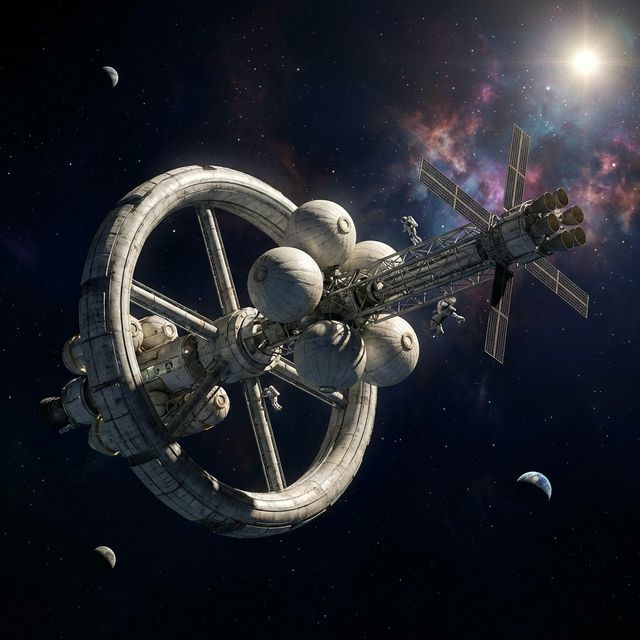
Shifting from mega-homes to something more mobile: Enter Nautilus-X, a futuristic spaceship idea from NASA in 2011. Think of it as a Lego spaceship—build it piece by piece, with a spinning wheel for gravity during long trips.
Design: A long hallway (21 by 46 feet) with inflatable modules (like blow-up tents) for crew quarters and storage. The star: A rotating centrifuge ring creating partial or full gravity—spin it like a Ferris wheel to keep astronauts fit. Add-ons include engines, solar panels, and even landing gear for Moon or asteroid hops.
How gravity works: The spin pushes you outward, mimicking weight—perfect for mining missions where crews need health during months of travel.
Size: Compact for launch but expandable; fits 6 people for up to 2 years.
Features: Radiation shielding from water tanks, docking ports for other ships, and a command deck like a spaceship bridge.
Relation to mining: Park at asteroids, use arms to grab resources, process in zero-g, then spin up for gravity breaks. Though canceled for budget reasons, it's a stepping stone for modular mining fleets.
Fun fact: Named after Jules Verne's submarine—exploration vibes!
Exotic Physics and Gravitational Manipulation
Now, let's get weird—ideas using fancy physics to create gravity without spinning. These are theoretical, but exciting for future mining where traditional methods fall short.
Diamagnetic Levitation: Magnetic Push for Floating Fun
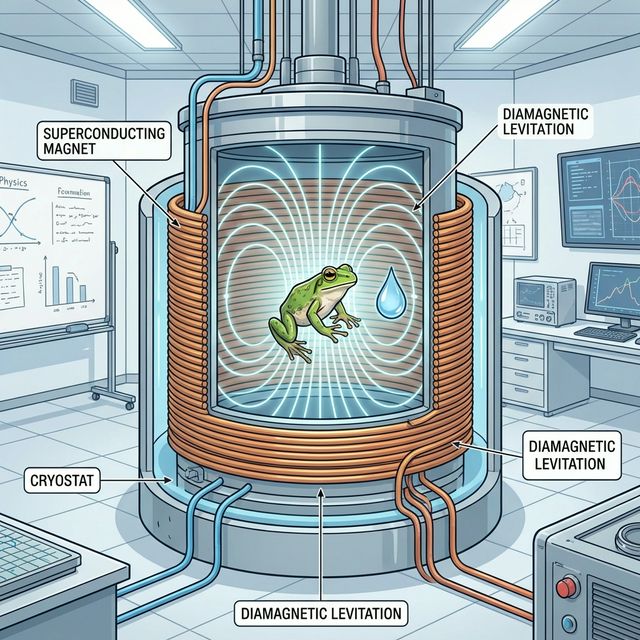
Ever seen a frog float in a lab? That's diamagnetic levitation—materials like water (or frogs!) get repelled by strong magnets, creating a lift against gravity.
How it works: Magnets induce an opposing field in the object, pushing it up. Analogy: Like two magnets north-to-north, they shove apart.
For space gravity: Super-strong fields could simulate pull by levitating people or tools—NASA tested mice this way to mimic zero-g effects.
Limitations: Needs massive power; weak for big things. For mining: Levitate ore in magnetic fields for sorting without dust flying.
Gravitomagnetism and the Tajmar Effect: Twisting Space Itself
Gravitomagnetism is gravity's "magnetic" side—rotating masses drag spacetime, like a whirlpool.
Analogy: Spinning Earth twists space slightly, measured by NASA's Gravity Probe B.
The Tajmar Effect: A 2006 experiment claimed spinning superconductors create gravitomagnetic fields—debated, but if real, could amp up effects.
For artificial gravity: Rotate masses to pull objects without contact—smooth propulsion for mining ships.
Controversies: Weak and hard to scale; still theoretical.
Mass-Based Artificial Gravity: Using Big Stuff to Pull
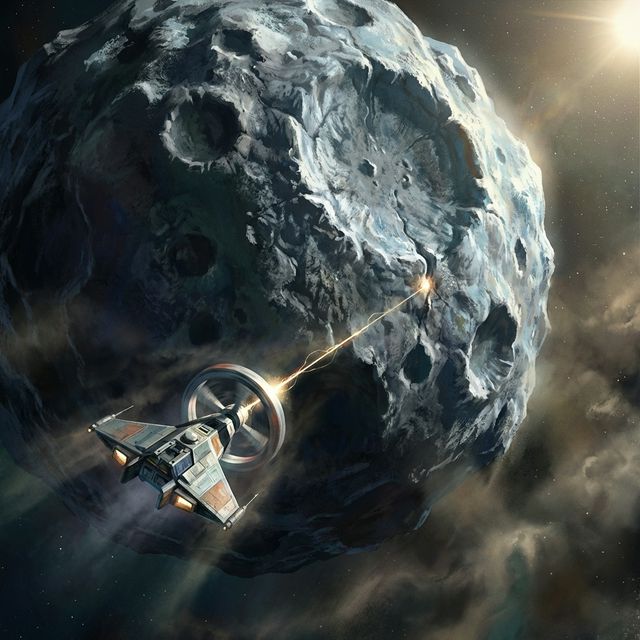
Finally, mass-based ideas: Use huge masses (like asteroids!) to create real gravity pulls.
How: Park near a big asteroid—its mass tugs you "down." Or, theoretical black holes (tiny ones) for intense fields—but that's super sci-fi and dangerous.
Analogy: Like Earth's gravity from its bulk.
For mining: Rotate tethered asteroids for centrifugal gravity, or use mined mass as ballast in habitats.
Limitations: Needs enormous sizes; unstable without tech.
Challenges: Power, stability, but ties perfectly to asteroid resources.
Wrapping Up: The Future Awaits
Whew, that was a whirlwind of wild ideas! From spinning cylinders to magnetic frogs, these concepts could make asteroid mining not just possible, but comfortable. They're futuristic now, but with advancing tech—like better materials from asteroids themselves—they might be our reality soon. What's next? In Chapter 13, we'll meet the companies making this real in 2026. Quiz time: Which megastructure would you live in—a tube, donut, or ball? Keep dreaming big!
Key Citations:

Santhosh M Kunthe
✉️ santhoshmkska@gmail.com
📞 +91 9110460837