Why Artificial Gravity Matters for Asteroid Mining
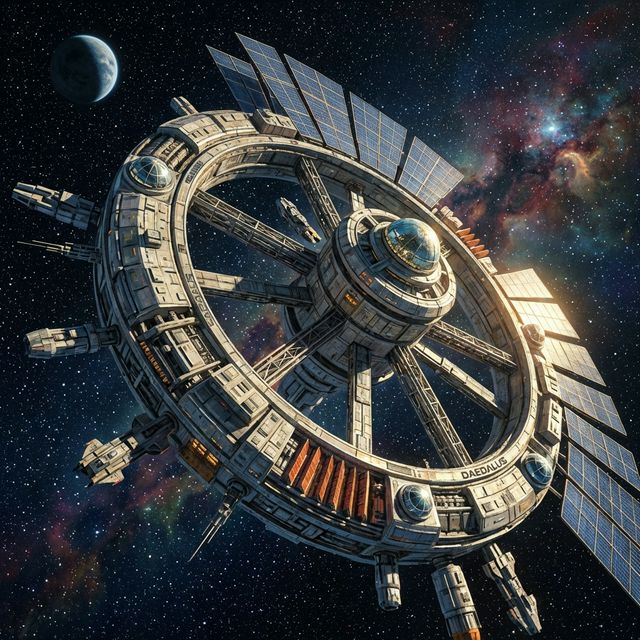
Imagine standing on an asteroid, trying to drill into rock while every loose bolt, dust particle, and drop of water floats away. Your muscles weaken after just weeks, bones lose density, and simple tasks become exhausting. For crews mining water ice or metals far from Earth, this is a real barrier. Artificial gravity—created by spinning—pulls things “down” so tools stay put, food doesn’t drift, and bodies stay healthy. It turns a hostile environment into a workable workplace.
The Problem: Why Weightlessness Is a Deal-Breaker for Miners
Without gravity, fluids don’t flow, dust doesn’t settle, and the human body slowly breaks down. Muscles atrophy at about 1–2 % per month. Bones lose density at roughly 1 % per month—faster than most Earth osteoporosis cases. Balance and coordination suffer because the inner ear no longer has a constant “down.” For a short tourist hop these effects are manageable with exercise, but for a mining crew that might stay six months or longer, they become safety and productivity killers. Tools float away, welds are harder to control, and medical evacuations become extremely expensive. Artificial gravity fixes the root cause instead of just treating the symptoms.
Linear Acceleration: The Simplest Artificial Gravity
Imagine you are sitting in a car and the driver hits the gas pedal to go fast. You feel your back get "squished" into the seat. That squish is substantially acceleration.
In a rocket ship, the floor is like the back of that car seat. If the rocket keeps zooming faster and faster, it pushes against your feet, making you feel like you have heavy, steady feet right on the ground.
The "Floor is Chasing You" Game
Think of it like an elevator. When an elevator starts to go up, you feel a little heavier for a second. In our rocket, the engines never stop pushing, so that "heavy" feeling never goes away. The floor is constantly pushing up against your shoes, so you feel like you are standing down!
Einstein’s Big Secret
A very smart man named Albert Einstein figured out a secret: Your body can’t tell the difference between a planet pulling you down and a rocket pushing you up!
- On Earth: The ground stays still, and gravity pulls you down.
- In the Rocket: The rocket pushes up against your feet so fast that it feels exactly the same.
If you closed your eyes, you wouldn't know if you were in a bedroom on Earth or a rocket in deep space. It’s like a giant, invisible hand gently holding you safe against the floor.
The "Just Right" Speed (9.81 m/s²)
To make it feel exactly like Earth, our rocket has to speed up at a very specific rate: 9.81 meters per second squared. This is the "Goldilocks" speed—not too soft (where you’d float) and not too hard (where you’d feel crushed).
As long as the rocket keeps speeding up at this rate, you can pour a glass of juice, drop a ball, or walk to the kitchen just like normal.
The Unlimited Zoom Problem
There is one big catch: to keep the gravity working, the rocket never stops speeding up. It’s like running on a treadmill that gets faster every second. If the engines turn off to "coast," the magic push disappears instantly, and you start floating.
Because satisfying this constant need for speed requires an impossible amount of fuel, this method is great for short trips but hard for long stays.
The Bucket of Water Experiment
This video demonstrates how a bucket of water stays inside when spun in a vertical circle. The presenter explores the relevant physics concepts, using a practical experiment to illustrate the principles involved. Visual aids further clarify the forces at play, providing insights.
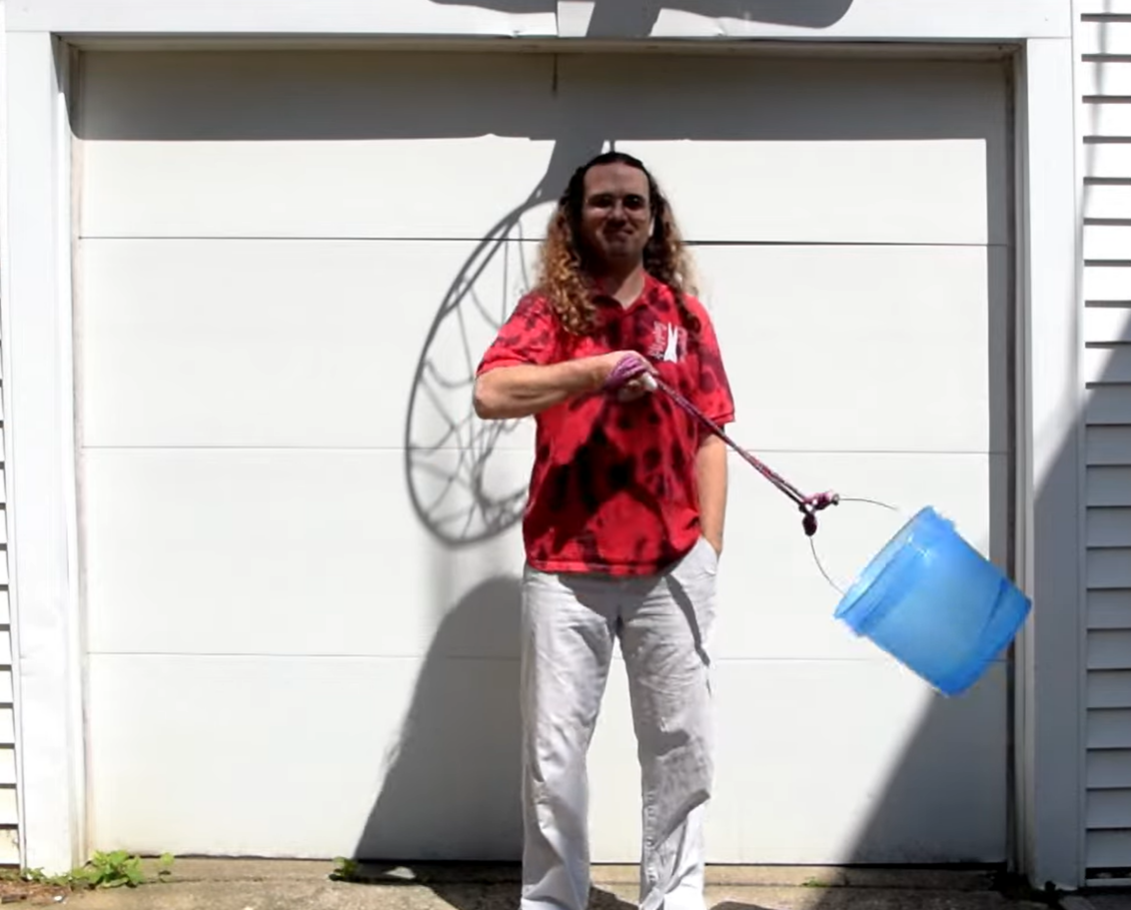
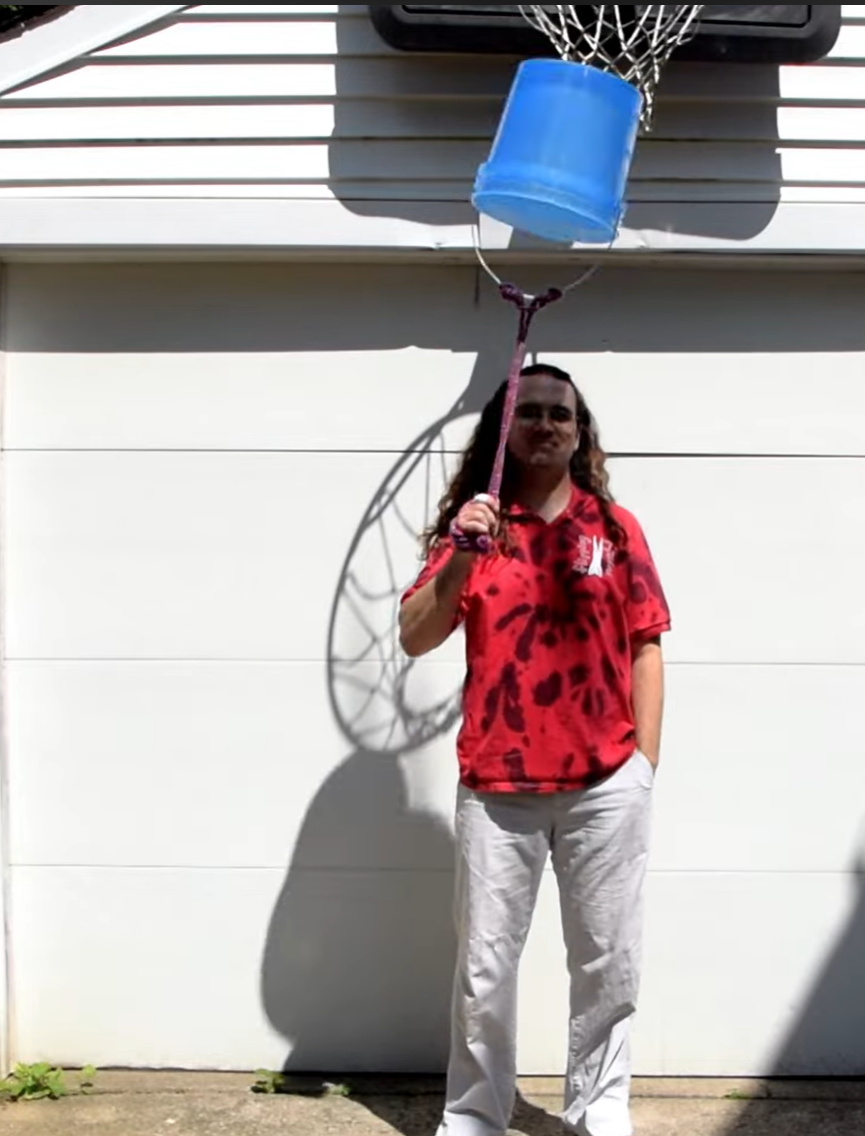

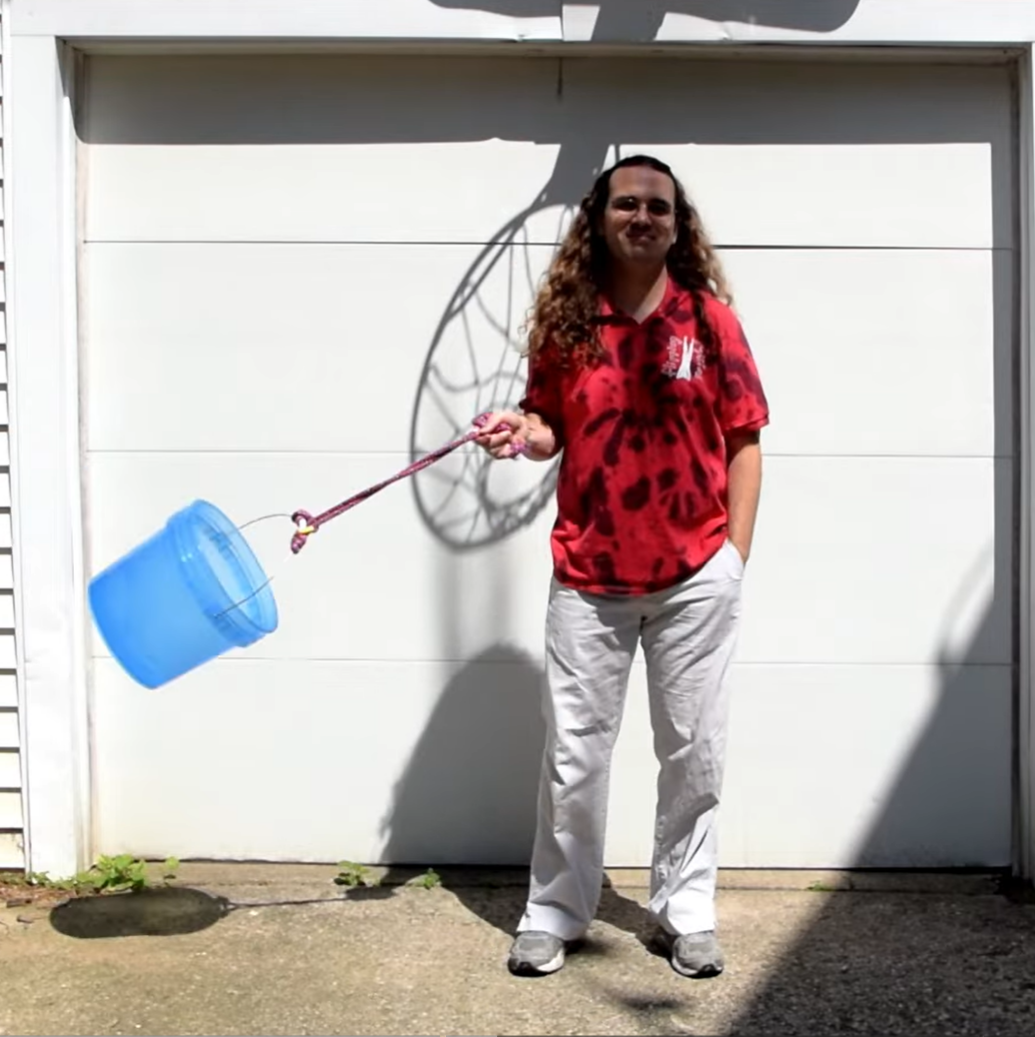
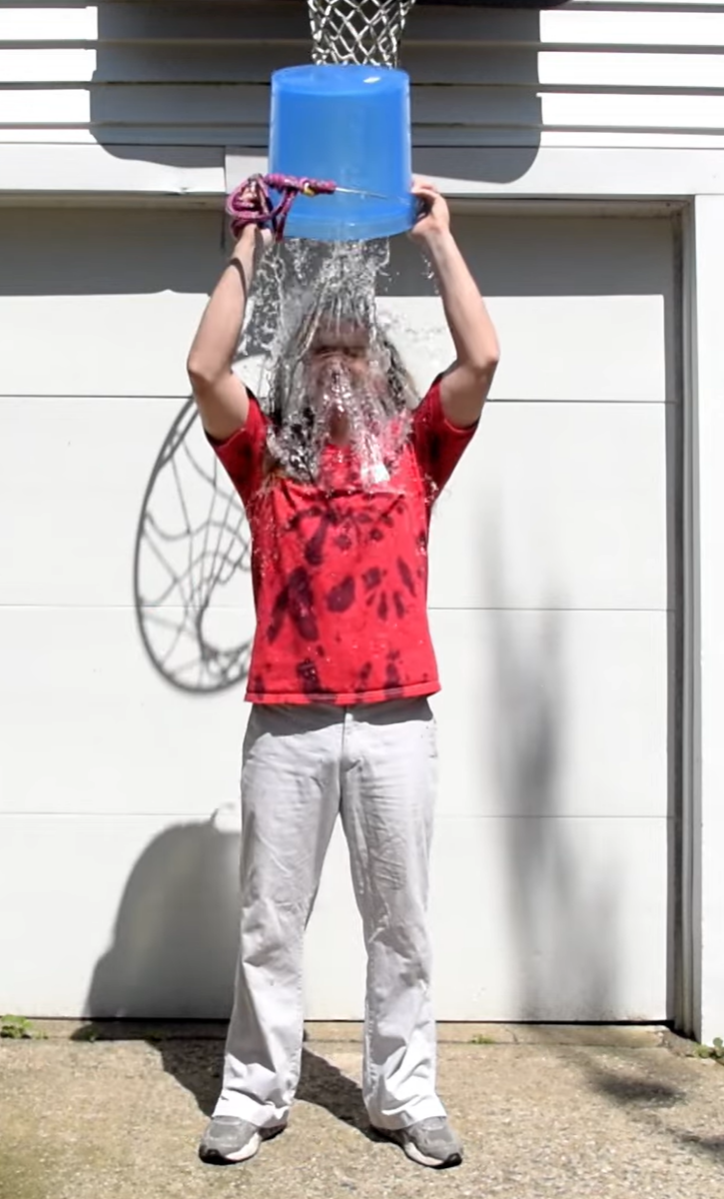
The classic "Bucket of Water" experiment demonstrating centripetal force.
Wait, why isn't he soaked?
It’s one of those classic "wait, why isn't he soaked?" moments. Even though gravity is pulling that water straight down toward the ground, the water stays glued to the bottom of the bucket—even when it's completely upside down.
The Force Behind the Magic: Centripetal Force
While it feels like there is an "invisible hand" pushing the water into the bucket, the actual physical force at work is Centripetal Force.
- Centripetal Force (The "Center-Seeking" Force): This is the force that pulls an object toward the center of a circle. In this experiment, the presenter’s arm and the rope are pulling the bucket inward to keep it moving in a loop rather than flying off in a straight line.
- Inertia (The "Straight-Line" Tendency): This is the real "hero" of the story. Objects in motion want to keep moving in a straight line. As the bucket spins, the water tries to fly off horizontally. The bottom of the bucket gets in the way, forcing the water to turn. Because the water is trying so hard to go straight, it presses firmly against the bottom of the bucket.
Why Doesn't the Water Fall Out at the Top?
When the bucket is at the very top of the circle, gravity is pulling the water down. However, if the bucket is moving fast enough, the water’s desire to keep moving forward (inertia) is stronger than gravity's pull downward.
Essentially, the bucket is "falling" toward the center just as fast as the water is, so the water never gets a chance to leave the bucket's floor.
Key Factors for Success
For this to work without a mess, two things are happening:
| Factor | Effect |
|---|---|
| Speed | The bucket must move fast enough so that the inward acceleration is greater than the pull of gravity. |
| Path | The circular path ensures there is constant "pressure" (the normal force) between the water and the bucket. |
A Note on "Centrifugal Force"
You’ve probably heard this term before. While physicists often call it a "fictitious" force because it’s really just the effect of inertia, it’s the word we use to describe that feeling of being pushed outward on a merry-go-round. In this experiment, it’s what keeps the water "pressed" to the plastic.
Early Proof-of-Concept: The Gemini 11 Tether Experiment
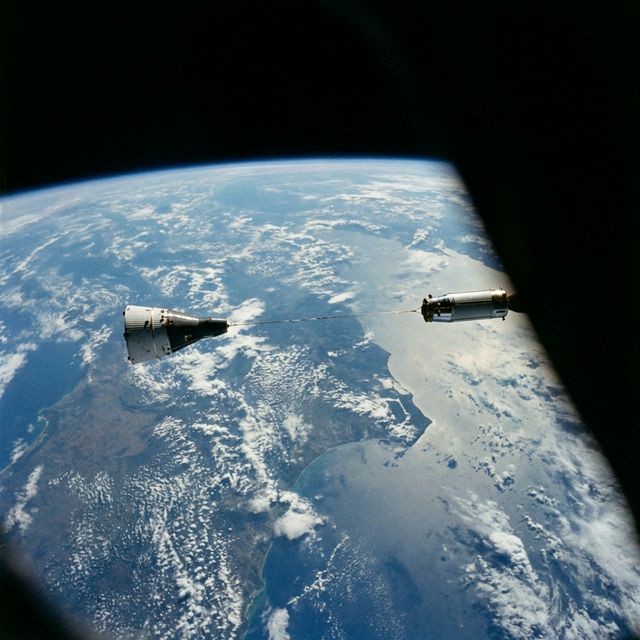
In 1966, NASA astronauts Pete Conrad and Dick Gordon docked Gemini 11 with an Agena target vehicle and connected them with a 30-metre nylon tether. They undocked, backed away, and used thrusters to spin the pair like a slow-motion bola. The result? About 0.00015 g of centrifugal force—tiny, but enough to make a camera slide toward the “floor.” It lasted a few hours and showed tethered rotation works in principle, though the motion was wobbly at first.
It wasn’t much, but it proved the physics: spin two objects connected by a cable and you get artificial gravity. The astronauts didn’t feel it physiologically, yet the experiment showed that passive attitude stabilisation works and that tethers can be controlled. For asteroid mining, a similar idea could link a habitat module to a counterweight or even to the asteroid itself, creating a gentle spin without huge structures.
The Dancers on Ice: A Physics Analogy
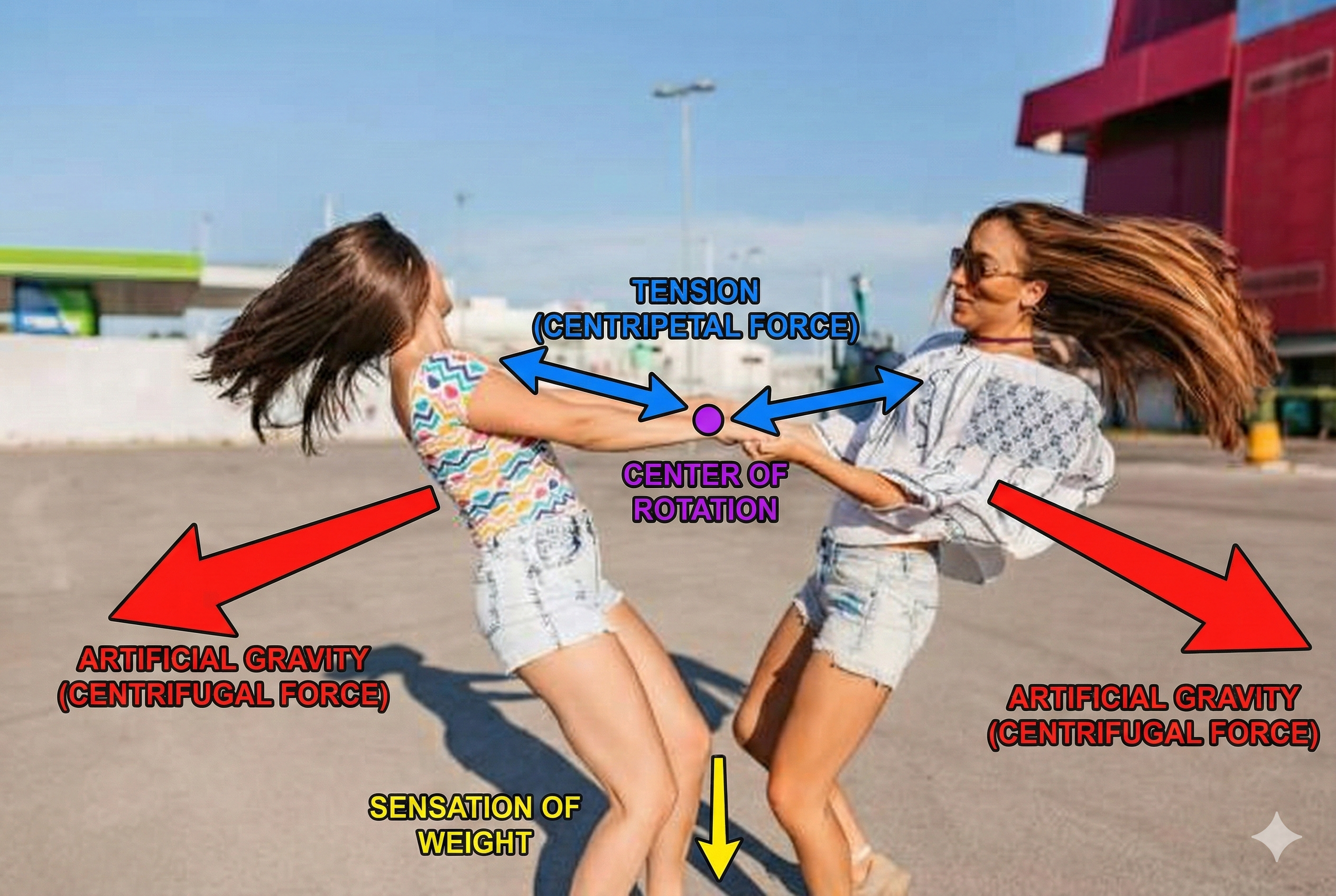
Imagine two dancers on a smooth or oily or ice surface. They stand face-to-face, reach out, and grab each other’s hands firmly. Now, they begin to spin around in a circle.
As they spin faster and faster, something interesting happens to their bodies:
The "Pull" Outward
Even though the dancers are spinning in a circle, their bodies feel like they want to fly away from each other. If you were one of the dancers, you would feel a heavy tugging on your arms. It feels as if a "phantom force" is pushing you backward, away from the center.
The Tension in the Arms
To keep from flying apart, the dancers have to grip each other's hands very tightly. Their arms become like a stiff bridge. That tension—the pull between them—is what keeps them moving in a circle instead of sliding away across the smooth or oily or ice surface.
The Sensation of Weight
If the dancers spin fast enough, that outward "push" starts to feel like weight.
- If they were spinning slowly, they would feel light.
- If they spin very rapidly, they feel "heavy," as if their feet are being pressed harder against the floor.
By simply spinning around a shared center point, the dancers have created a sensation that mimics gravity. Even though there is no "downward" pull from the ground, the motion itself creates a force that pushes them outward, making them feel like they have weight again.
Why This Analogy Works
This analogy of the dancers is spot on. It’s actually one of the most intuitive ways to explain the physics of the Gemini 11 tether experiment. It captures the relationship between motion, tension, and the sensation of weight perfectly.
There are no major "gaps" in the logic, but there are a few technical nuances and historical details that will help bridge the gap between your "dancers on ice" and "spacecraft in orbit."
The Three Pillars
The Tension (Centripetal Force): In the story, the dancers' arms provide the force. In 1966, the 100-foot polyester tether between the Gemini capsule and the Agena Target Vehicle was the "arms." Without that tether, the two crafts would have simply drifted apart.
The "Phantom Force" (Centrifugal Force): You correctly identified this as a sensation. In physics, we call this an inertial force. Because the dancers (or astronauts) are being forced to move in a circle, their inertia "wants" to keep them moving in a straight line. The result is the feeling of being pushed outward.
The Floor as "Down": In the example, the dancers' feet are on the ice. In the Gemini 11 experiment, the "floor" was the rear of the spacecraft. Anything not tied down would slowly drift toward the back of the cabin.
Refining the Understanding
While the analogy is excellent, here are three things to keep in mind to make it perfectly accurate to the Gemini 11 mission:
1. The Magnitude of the "Weight"
In the dancer example, you mention feeling "heavy." In reality, the Gemini 11 experiment was very
subtle. They rotated at a rate of about one revolution every 6 to 9 minutes.
The gravity produced was only 0.00015 g.
It wasn't enough to walk around, but it was enough that when astronaut Dick Gordon tossed a camera
bracket, it moved toward the "bottom" of the craft rather than floating aimlessly.
2. The Center of Mass
In the analogy, the dancers are likely equal in weight, so they spin around a point exactly between
them.
The Gemini capsule and the Agena rocket had different masses.
This meant they spun around a "shared center" that was closer to the heavier object. This is a key
concept in orbital mechanics called the barycenter.
3. The "Gravity" Direction
On ice, gravity is already pulling the dancers down into the floor. The spinning just adds an
outward pull.
In space, there is no "down" to begin with. The only sensation of weight comes from the spin.
If the dancers were in deep space, they wouldn't feel the floor beneath their feet unless their feet
were pointed away from the center of the circle. In Gemini 11, "down" was always the direction
pointing away from the tether.
Comparison Summary
| Feature | Dancer Analogy | Gemini 11 Reality |
|---|---|---|
| The Connection | Gripped Hands | 100ft Polyester Tether |
| The Surface | Ice/Oil (Low Friction) | Orbit (Vacuum/Microgravity) |
| The "Down" | The Ice Floor | The Outer Hull (Away from tether) |
| The Result | Feeling "Heavy" | "Artificial Gravity" (0.00015 g) |
One Final Historical Fun Fact
The Gemini 11 crew actually had a hard time getting the "dancers" to stop wobbling! Initially, the tether was slack, and the two vehicles moved erratically. They had to use thrusters to create just enough tension to keep the "arms" straight before the artificial gravity sensation could stabilize.
The Proof: Spinning Labs & Space Mice
We know artificial gravity works because we’ve been testing it for over 50 years.
It started in the 1970s with Soviet Biosatellites, which used small spinning cages for rats. The result was clear: the animals in the spinning cages kept their bone and muscle strength, while those in zero-g did not.
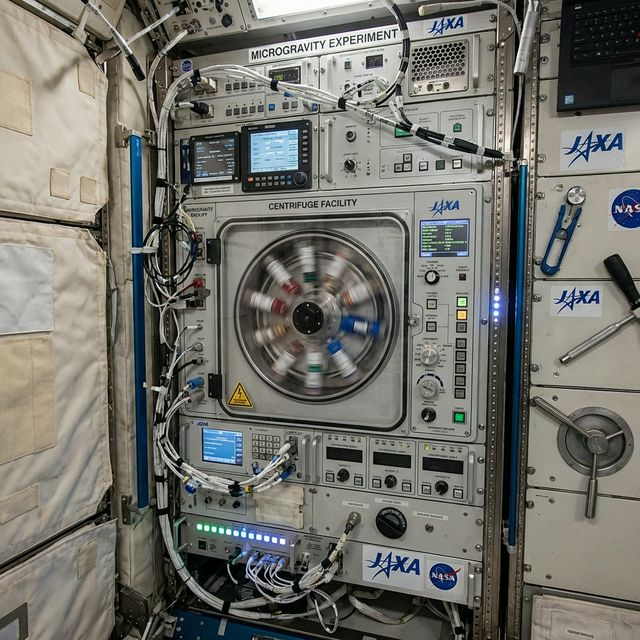
The ISS uses small centrifuges to study how plants and cells grow in artificial gravity.
Today, the International Space Station uses mini-centrifuges (like the CBEF and EMCS) to spin plants and cells. This allows scientists to "dial in" specific gravity levels to see how biology reacts. We have even launched spinning microsatellites like AOSAT-1 to test how asteroid soil behaves under artificial gravity without risking human lives.


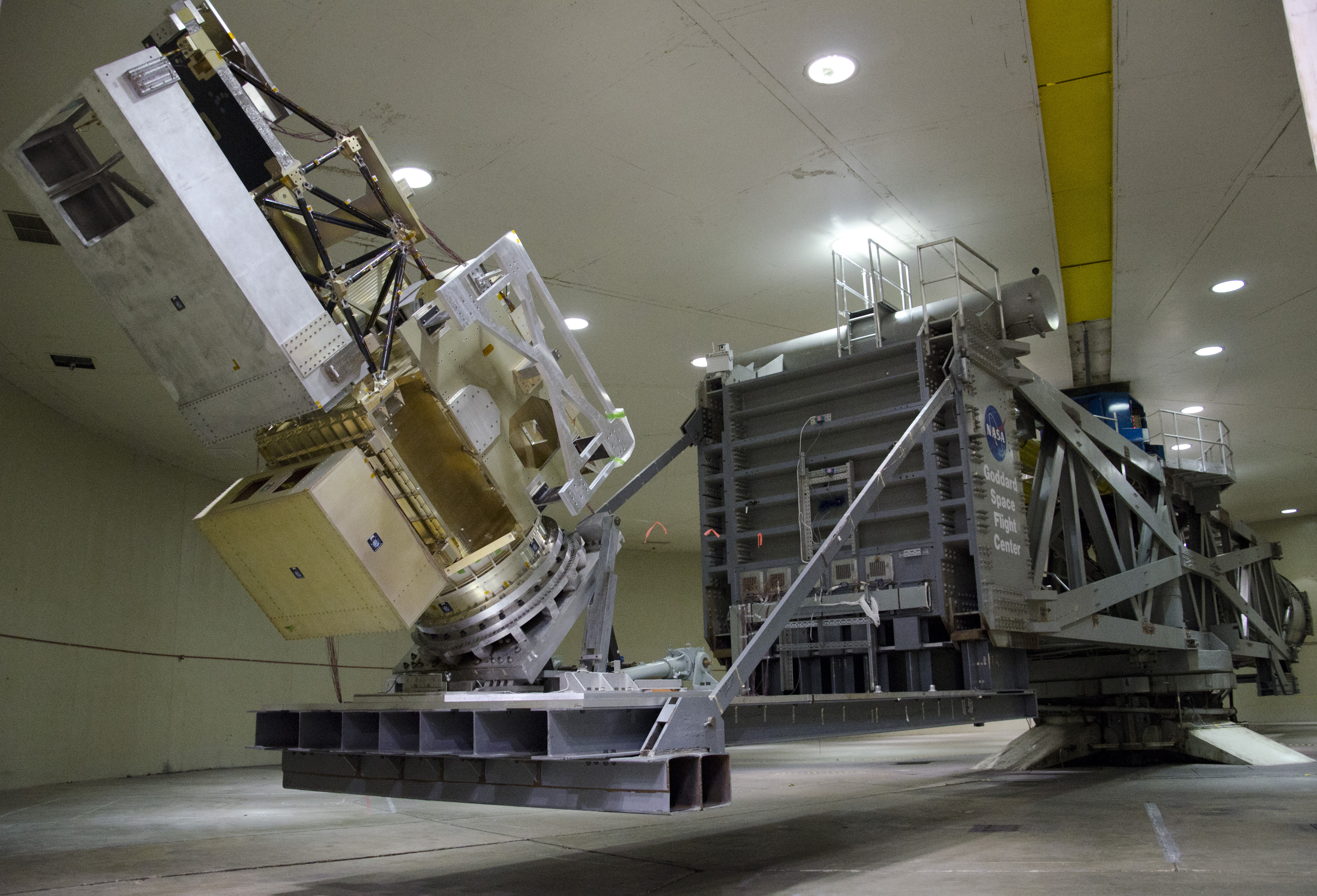

AOSAT-1: A shoebox-sized satellite that spun in space to test asteroid mining physics.
Putting It All Together: A Practical Mining Habitat
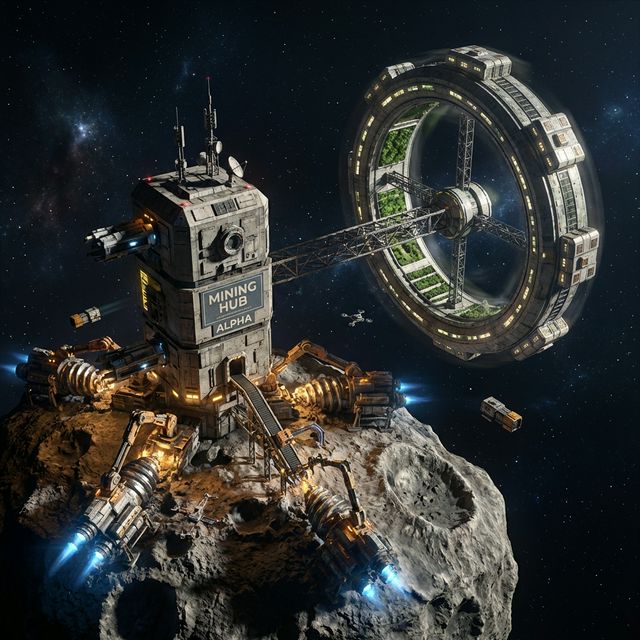
A realistic asteroid-mining outpost might combine these ideas:
- A central non-rotating docking and mining hub.
- A tethered or truss-linked habitat module that spins at 4–6 rpm to give 0.5–1 g for sleeping and eating.
- Small onboard centrifuges for daily exercise and plant growth.
- CubeSat-scale test beds to qualify mining tools under asteroid gravity.
Challenges and Common-Sense Solutions: Rotation brings side effects like Coriolis forces, but ground studies show most people adapt within days. Architects can align corridors with the spin axis and keep radii large enough to minimize dizziness. Artificial gravity is not a luxury for asteroid miners—it is the difference between a short visit and a sustainable, profitable operation.
What’s Next? The next chapter in this series will explore the more futuristic concepts—giant cylinders and exotic physics—but the practical tools we need are already flying today.
Key Citations

Santhosh M Kunthe
✉️ santhoshmkska@gmail.com
📞 +91 9110460837