Welcome to the Cosmic Treasure Hunt
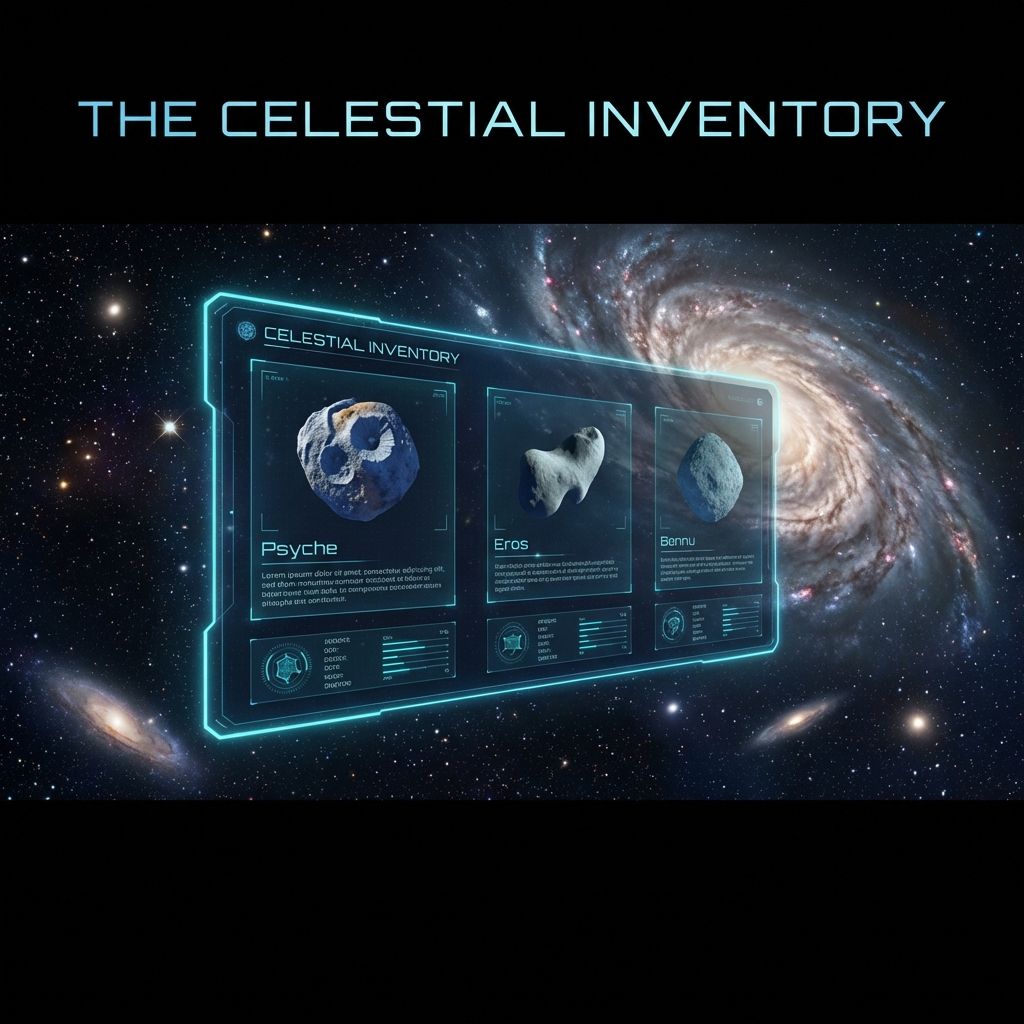
Welcome to the first chapter of our exciting journey into asteroid mining! If you're sitting there thinking, "Asteroids? Aren't those just the things that blow up spaceships in movies?"—well, buckle up, because we're about to turn that idea upside down. This chapter is all about starting from scratch, like explaining what a bicycle is before teaching you how to ride one. No fancy science degrees needed here; we'll use everyday examples, fun stories, and a dash of imagination to make it all click. By the end, you'll see asteroids not as scary space rocks, but as fascinating floating treasures waiting to be discovered.
Imagine you're at a family picnic, and someone scatters puzzle pieces all over the backyard. Some pieces are tiny, like pebbles, while others are as big as picnic tables. That's kind of what asteroids are like in our solar system—they're the leftover bits from when everything came together billions of years ago. We'll dive into where they come from, what they're made of, how we spot them, and why they're way cooler than just "rocks in space." Let's get started!
The Birth of the Solar System: Where Asteroids Come From
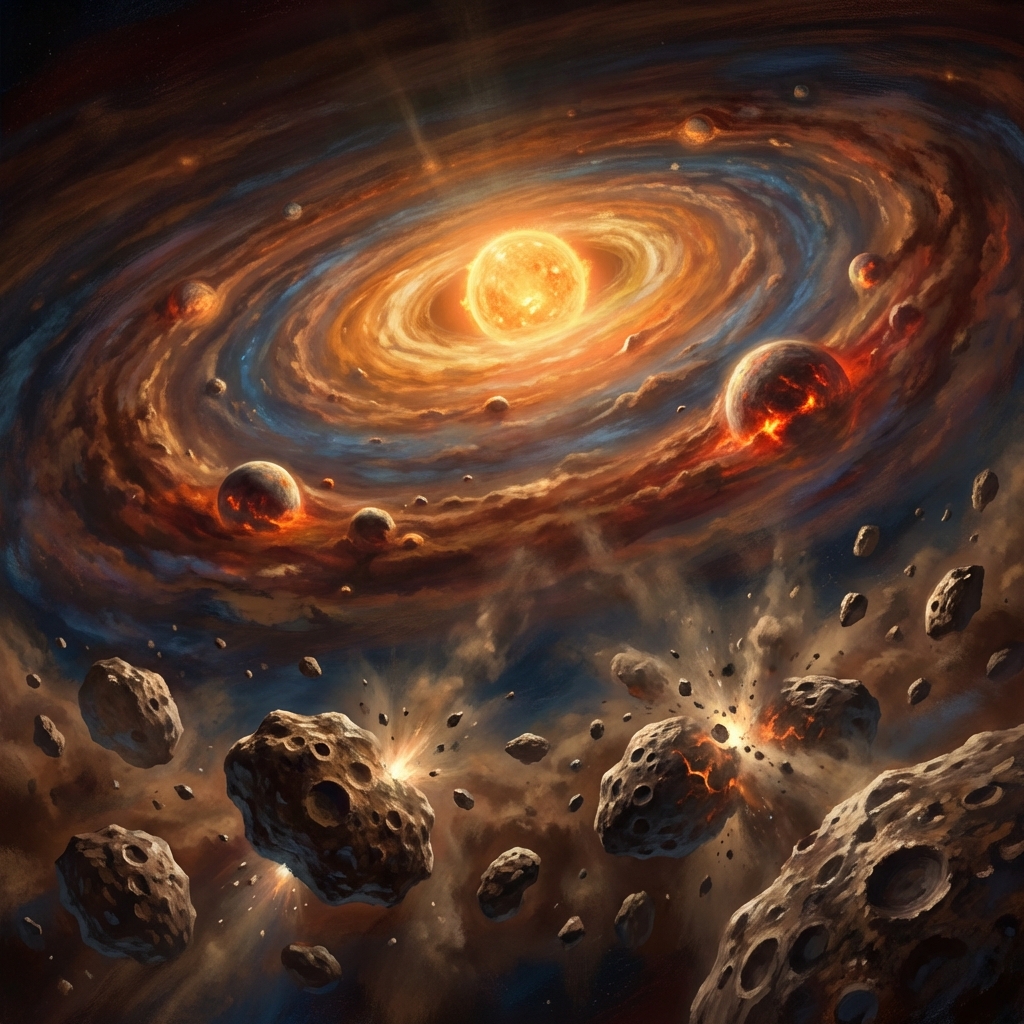
The early solar system: a cosmic construction site.
Picture this: About 4.6 billion years ago, our solar system was like a giant cosmic construction site. There was a huge cloud of gas and dust swirling around a young Sun, kind of like flour and eggs mixing in a bowl to make cake batter. As this cloud spun and cooled, bits started clumping together to form planets—big ones like Jupiter and smaller ones like Earth.
But not everything clumped perfectly. In some spots, especially between the orbits of Mars and Jupiter, the gravity from giant Jupiter acted like a big bully, shaking things up so much that these clumps couldn't stick together to make a full planet. Instead, they stayed as smaller chunks, bouncing around like popcorn in a hot pan. These are asteroids—the "failed planet" pieces that never quite made it.
Fun fact: Scientists estimate there are over a million asteroids bigger than a kilometer (that's about half a mile) wide, and billions of smaller ones. But don't worry—they're not all zooming toward Earth like in disaster movies. Most are chilling in the asteroid belt, a doughnut-shaped ring between Mars and Jupiter, orbiting the Sun just like planets do. It's like a busy highway where these rocks cruise along at speeds up to 25 kilometers per second (that's faster than a bullet train!).
To make it relatable, think of Earth rocks you might pick up on a hike. Asteroids are similar, but they've been floating in the cold vacuum of space for eons, untouched by weather or people. No rain to erode them, no wind to shape them—just pure, ancient material from the solar system's early days.
Sizes and Shapes: From Pebbles to Mountains
Asteroids aren't one-size-fits-all; they're as varied as the shoes in your closet. The smallest ones we know about are like gravel—tiny specks just a few meters across, small enough to fit in your backyard. On the other end, the biggest asteroid, Ceres, is about 940 kilometers (585 miles) wide. That's roughly the size of Texas! Ceres is so large it's actually classified as a dwarf planet, like Pluto, but it's still part of the asteroid family.
Most asteroids, though, are irregularly shaped, like lumpy potatoes or squished footballs. Why? Because they're not massive enough for their own gravity to pull them into a perfect sphere, like Earth or Mars. Instead, they look jagged and uneven, often with craters from bumping into each other over billions of years. Imagine taking a rock from your garden and tossing it around in a tumble dryer for ages—that's the kind of battered look many asteroids have.
Here's a quick rundown of some famous ones to spark your imagination:
- Vesta: About 525 kilometers (326 miles) wide, it's one of the brightest asteroids you can see from Earth with a good telescope. It has a huge crater that's like a giant bite taken out of it.
- Eros: Shaped like a peanut, about 34 kilometers (21 miles) long. NASA's NEAR Shoemaker spacecraft actually landed on it in 2001—the first time we touched down on an asteroid!
- Bennu: A diamond-shaped rock about 500 meters (1,640 feet) wide. NASA's OSIRIS-REx mission visited it and even brought back samples in 2023, giving us real pieces of an asteroid to study.
These examples show how asteroids can be as small as a car (think of a Volkswagen Beetle floating in space) or bigger than some cities. And get this: If you could stand on a small asteroid, its gravity is so weak you'd feel like a superhero—able to jump hundreds of feet high without even trying!
What Are They Made Of? Rocky, Metallic, or Icy Treasures
Okay, let's crack open these space rocks and see what's inside. Asteroids come in three main flavors, based on what they're built from—kind of like how ice cream can be chocolate, vanilla, or strawberry.
Rocky (S-type)
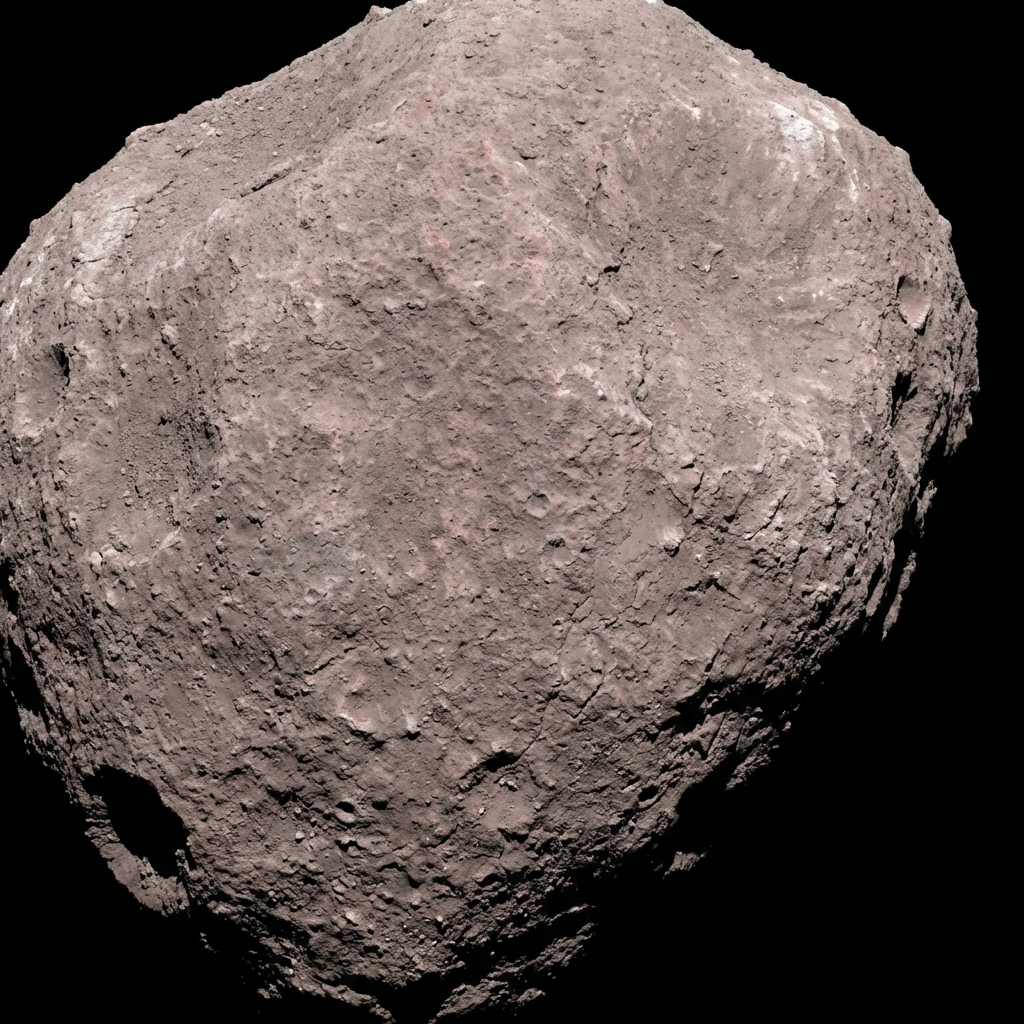
These are the most common in the inner asteroid belt. They're made mostly of silicate rocks, like the stuff in Earth's crust, mixed with metals such as iron and nickel. Think of them as tough, stony boulders—great for building if we ever need materials in space.
Metallic (M-type)
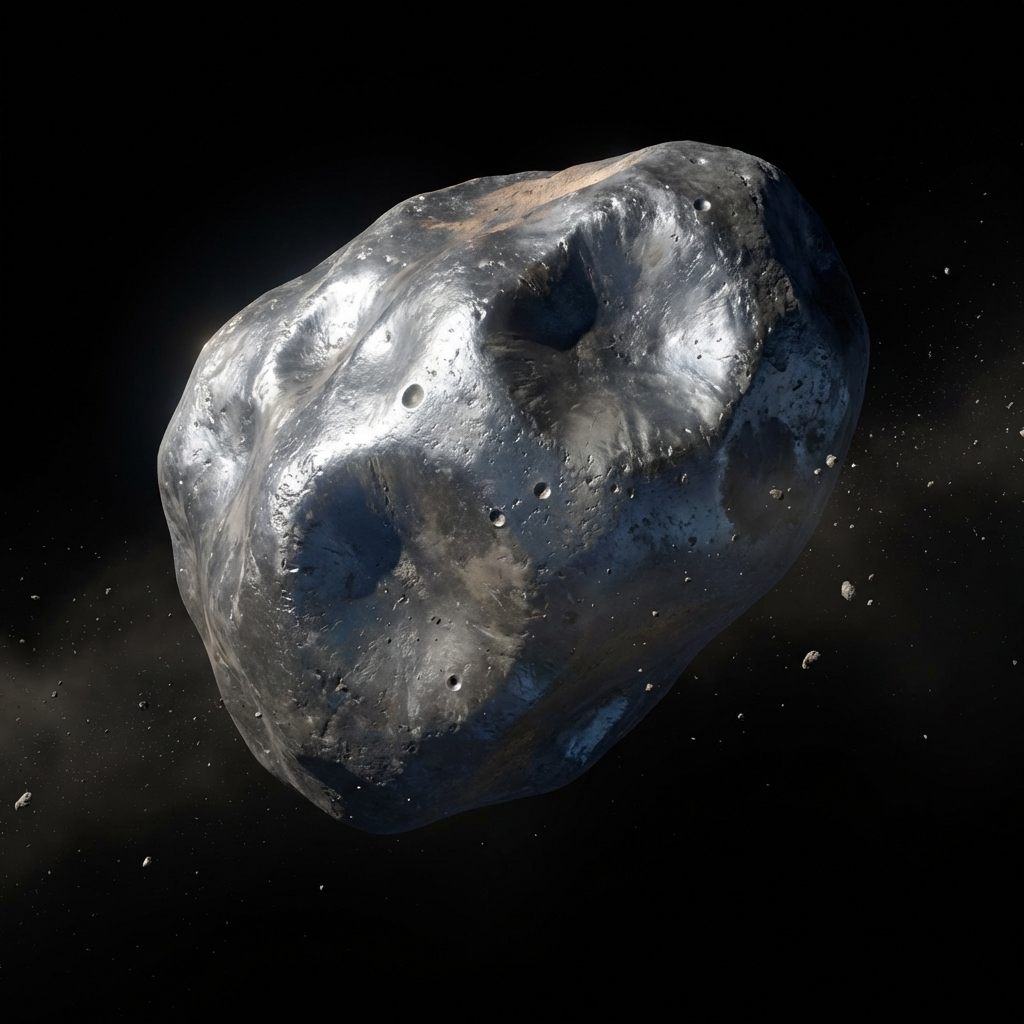
These are the shiny ones, packed with iron, nickel, and precious metals like platinum or gold. Imagine a floating chunk of metal ore, straight out of a miner's dream. Asteroid Psyche is a famous M-type, and scientists think it might be the exposed core of a long-lost planet.
Icy or Carbon-rich (C-type)
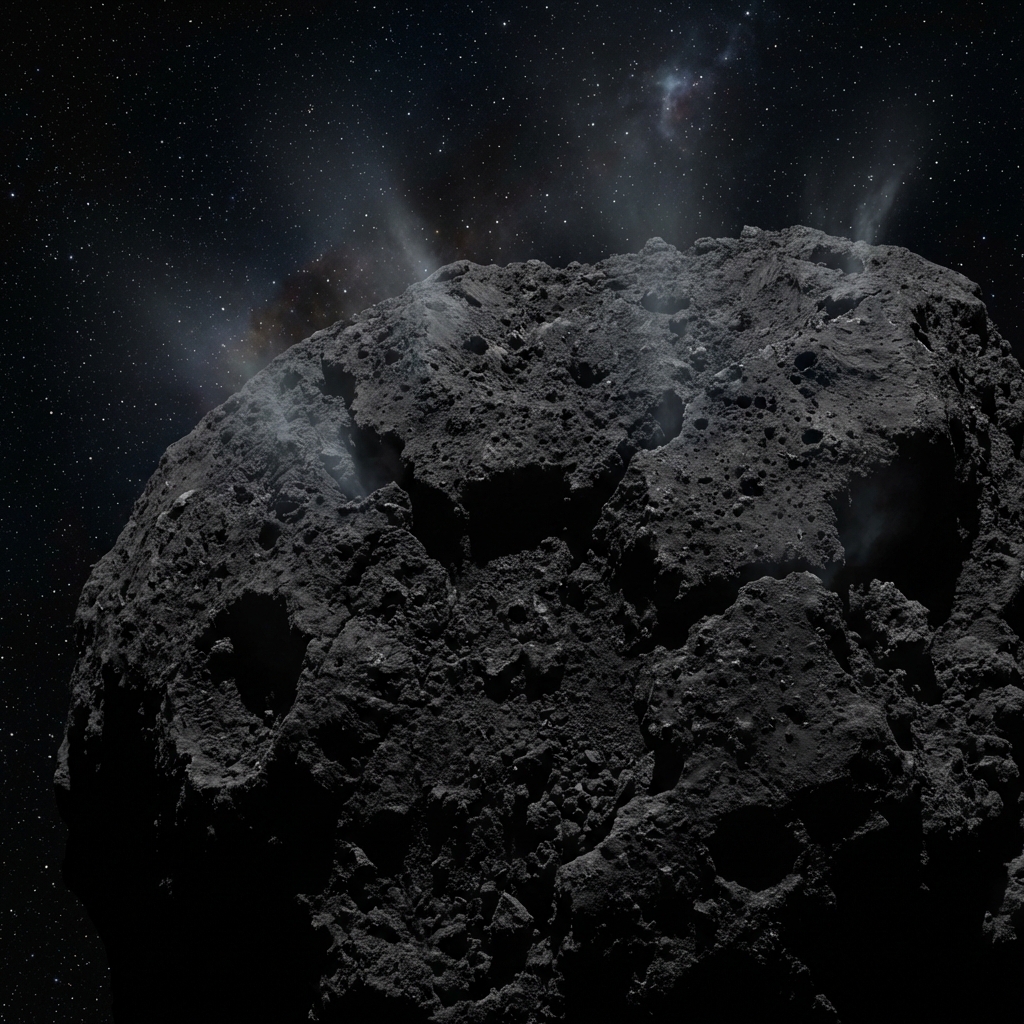
Often darker and found farther out, these have water ice, organic compounds (the building blocks of life), and carbon. They're like frozen mud balls, holding water that could be turned into fuel or drinking water for astronauts.
Why does this matter? Well, asteroids aren't just random debris; they're time capsules. Their compositions tell us about the solar system's history. For example, the water on some asteroids might be similar to Earth's oceans, hinting that asteroids could have delivered water to our planet long ago via impacts.
To keep it simple, compare them to your kitchen pantry: Some asteroids are like cans of beans (basic rocky stuff), others like bars of chocolate (metallic goodies), and some like frozen veggies (icy resources). And just like how we recycle cans or melt chocolate, these materials could one day help us build space stations or fuel rockets without stripping Earth bare.
How Do We Spot These Floating Rocks? Tools of the Trade
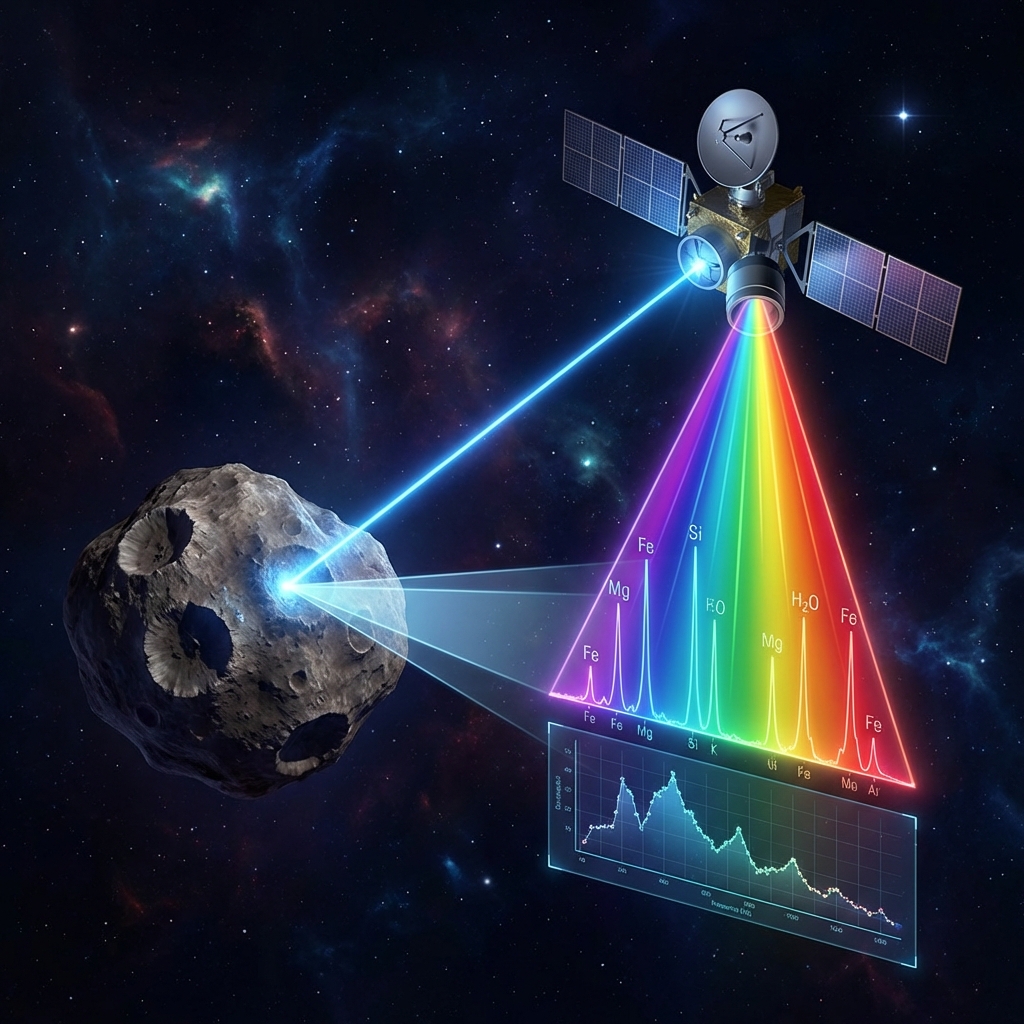
Now, you might be wondering: How do we even know about these asteroids if they're so far away? Enter the heroes of this chapter—basic observation tools that let us peek into space without leaving our comfy chairs on Earth.
The main tool is the telescope, but not the little one you might have in your attic. We're talking ground-based telescopes, like giant binoculars mounted on mountains. These bad boys can spot asteroids as tiny dots of light moving across the sky. For instance, the Catalina Sky Survey in Arizona scans the night sky every clear night, hunting for near-Earth asteroids that might come close to us.
No rocket science here yet—just smart people using big lenses to track these rocks' paths. It's like birdwatching, but instead of eagles, you're spotting space boulders. Fun fact: The first asteroid ever discovered was Ceres in 1801 by an Italian astronomer named Giuseppe Piazzi. He thought it was a planet at first! Since then, we've found hundreds of thousands, thanks to telescopes and even space-based ones like NASA's Hubble.
We also use radar sometimes, bouncing radio waves off asteroids to map their shapes—like sonar for dolphins, but in space. But remember, this chapter is about basics, so we're not diving into fancy tech. The key is that with these simple tools, we've turned asteroids from mysterious specks into known neighbors.
Why Asteroids Aren't Just Space Junk: A Teaser for What's Next
Here's where it gets exciting: Asteroids might look like boring rocks, but they're potential goldmines—literally! That metallic M-type asteroid? It could hold more platinum than we've ever mined on Earth. The icy ones? Water for future space travelers, split into hydrogen and oxygen for rocket fuel. They're not trash; they're resource hubs that could help us explore deeper into space or even ease shortages on Earth.
Of course, like any big idea, there are debates. Some worry about space pollution or who gets to claim these resources, but research points to international teamwork making it fair and sustainable. As we wrap up this chapter, think of asteroids as the unsung heroes of the solar system—quietly orbiting, holding secrets and treasures.
Fun Facts and Quick Quiz to Keep You Engaged
Bite-sized Fun Facts
- Asteroids can spin super fast; some rotate every few minutes, like a top gone wild.
- About 150 asteroids have their own moons—tiny companions orbiting them!
- The total mass of all asteroids combined is less than our Moon's, so they're not a threat to the solar system's balance.
Quick Quiz
Now, test yourself with a quick quiz (answers at the bottom—no peeking!):
- Where do most asteroids hang out?
- What's the largest asteroid called?
- Name one type of asteroid and what it's made of.
- How do we spot asteroids from Earth?
Click to reveal answers
- Between Mars and Jupiter.
- Ceres.
- E.g., Metallic—iron and nickel.
- Using telescopes.
Wrapping It Up: Your Foundation for Asteroid Adventures
Whew, we've covered a lot—from the solar system's messy birth to the lumpy shapes and hidden treasures of asteroids. We've kept it simple, like chatting over coffee, using analogies from puzzles to pantries. This sets the stage for why we'd want to mine them (spoiler: resources galore!), but for now, pat yourself on the back—you're no longer a space newbie.
If this sparked questions, jot them down—we'll build on this in the next chapters. Remember, asteroids are like old friends in the sky: familiar once you get to know them, and full of surprises. Stay curious!
Key Citations:

Santhosh M Kunthe
✉️ santhoshmkska@gmail.com
📞 +91 9110460837